
Sep 7, 2026News & Insights
Chain Elongation Guide: Why It’s Critical for Lifting & Towing Safety
Understanding chain elongation is vital for safety. Learn how to measure stretch, compare G30-G100 ductility, and know exactly when to retire your lifting chains
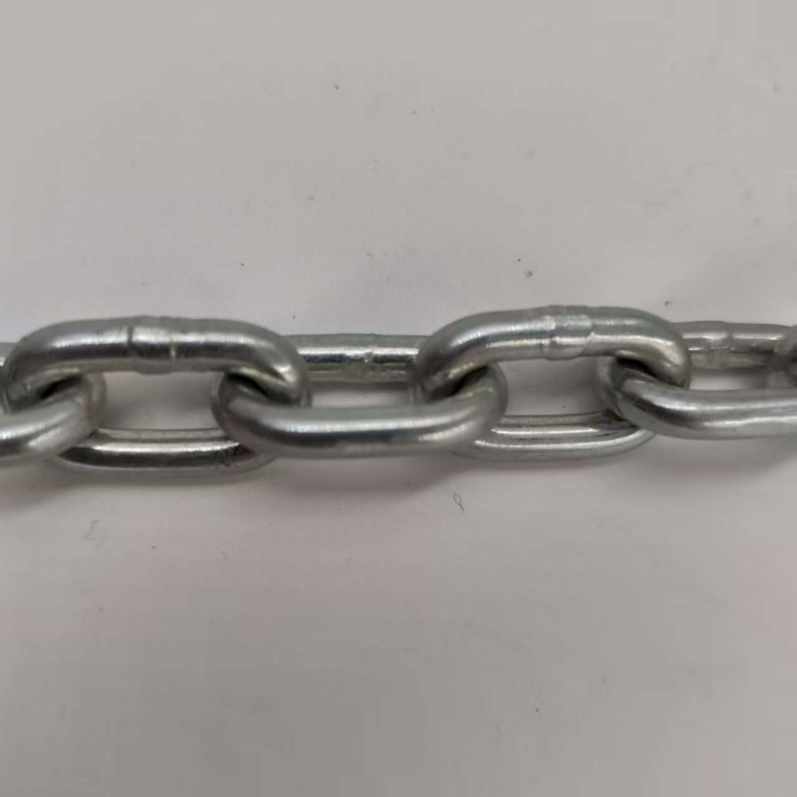
The Critical Role of Chain Elongation in Lifting and Towing Safety
When purchasing industrial chains, most buyers focus on two primary specs: breaking strengthand corrosion resistance. However, there is a third parameter that is just as vital for safety and longevity—yet often overlooked: Chain Elongation.
Chain elongation is the most reliable indicator of a chain's ductility and its ability to handle shock loads. For professionals in lifting, towing, mooring, or conveying, understanding elongation is not just a technicality—it is an essential safety protocol.
What is Chain Elongation?
Chain elongation refers to the permanent stretch a chain undergoes under load. In the industry, we measure this as a percentage of the chain's original length.
The Formula:
Elongation (%) = (Length at Break – Original Length) ÷ Original Length × 100%
Elastic vs. Plastic Elongation: What’s the Difference?
It is crucial to distinguish between temporary stretch and permanent damage:
Type | Description | Reversible? |
Elastic Elongation | Occurs within the Working Load Limit (WLL); the chain returns to its original length. | Yes |
Plastic (Permanent) Elongation | Occurs when the chain is overloaded or worn out; the chain remains stretched. | No |
SEO Tip:Within its WLL, a chain should only experience elastic elongation. Permanent elongation is a "red flag" signaling overload or the end of its safe service life.
Why Elongation is a "Life-Saving" Metric
1. The Last Warning Before Failure
A chain with high ductility (good elongation) will stretch significantly before it snaps. This visible deformation is the final warning for operators. In contrast, a chain with poor elongation may fail catastrophically without warning, leading to serious accidents.
2. Shock Load Absorption
Industrial environments are rarely static. Chains face sudden forces from braking, wave impacts, or load shifts. A chain with adequate elongation acts like a "shock absorber," dissipating energy through deformation rather than snapping. This is critical for:
- Mooring and Anchor Chains
- Towing and Recovery
- Dynamic Lifting with Swinging Loads
3. Objective Replacement Decisions
Measuring elongation removes the guesswork from maintenance. By tracking stretch, you can move from "reactive" to "predictive" maintenance.
Elongation Percentage | Status | Action Required |
Under 3% | Normal | Continue regular inspections. |
3% – 5% | Warning | Increase inspection frequency; plan for replacement. |
Over 5% | Critical | Remove from service immediately. |
The Trade-off: Strength vs. Ductility (G30 to G100)
As the Grade (strength) of the chain increases, the ductility (elongation) typically decreases. This is a fundamental material trade-off.
Grade | Breaking Stress | Typical Elongation at Break | Character |
G30 | 300 N/mm² | 20%+ | High ductility, low strength |
G43 | 430 N/mm² | 15–20% | Balanced performance |
G70 | 700 N/mm² | 12–14% | High strength, transport use |
G80 | 800 N/mm² | 10–12% | Standard for overhead lifting |
G100 | 1000 N/mm² | 8–10% | Ultra-high strength, limited ductility |
Expert Insight:While G100 is incredibly strong, it requires much more rigorous inspection because it gives less visible warning before failure compared to G43 or G80.
International Standards for Chain Elongation
To ensure safety, various international bodies set minimum elongation requirements. A chain that does not meet these cannot be certified for lifting.
- EN 818-2 / EN 818-4:Minimum 10% elongation at break; retire at 5% permanent stretch.
- ISO 7591 (Anchor Chains):Mandatory retirement at 5% permanent elongation.
- ASTM A391:Minimum 10% elongation for alloy steel chains.
How to Measure Chain Elongation in the Field
Professional inspectors use this simple 5-step method:
- Identify a Section:Select a straight, clean portion of the chain.
- Mark the Gauge Length:Usually, a span of 11 linksis measured.
- Measure:Use a caliper or tape to measure the distance under no tension.
- Compare:Compare the current measurement against the original "as-new" length.
- Calculate:Use the formula: (New Length - Original Length) / Original Length.
Factors That Accelerate Chain Stretch
Several environmental factors can compromise your chain's ductility:
- Fatigue:Repeated loading/unloading cycles.
- Heat Exposure:High temperatures increase elongation but drastically lower strength.
- Corrosion Pitting:Rust creates stress points that reduce the chain's ability to stretch safely.
- Poor Welding:Inferior manufacturing creates brittle spots in the links.
Conclusion: Balancing Strength and Safety
Don't just buy the strongest chain—buy the right chain for your application. A chain that balances high breaking strength with adequate elongation is safer, lasts longer in dynamic conditions, and provides a crucial window for intervention before failure.
Get Expert Advice on Chain Selection
At Boyuan Metal, we provide G30 through G100 chains manufactured to EN, ISO, and ASTM standards. All our products come with full mill test certification, ensuring they meet both strength and elongation requirements.