
Oct 26, 2026News & Insights
Chain Safety Factor Explained: Working Load, Proof Load and Breaking Load
Three load figures sit behind every rated chain, and they are not interchangeable. What working load, proof load and breaking load each mean, and where the safety factor fits.
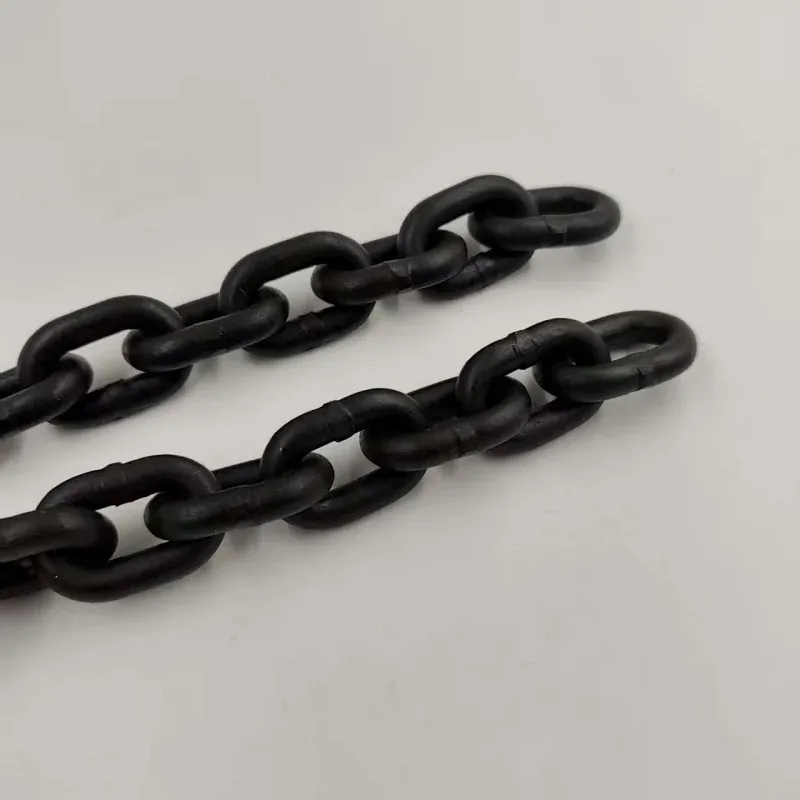
Every rated chain carries more than one load figure, and the three most quoted are easy to mix up. The working load limit is what it is allowed to carry. The proof load is what it was tested against before delivery. The breaking load is where it fails. Knowing what separates them is the difference between reading a rating and guessing.
Working Load Limit
The working load limit is the maximum load the chain is rated to carry in service. It is set with a margin below the point where the chain would fail, so a chain used within its limit is inside its intended range. Having a working load limit does not make a chain a lifting chain: grade 43 for towing and general use and grade 70 for load securement both carry a limit, and only grade-marked lifting chain belongs in an overhead lift.
Proof Load
Proof load is a test load applied by the manufacturer to every chain, or to a lot depending on the standard, before supply. It is higher than the working load, and its purpose is to catch a defective link before the chain reaches a user. Passing a proof test shows the chain held above its rating; it does not mean it can be worked at it.
Breaking Load
Breaking load is the load at which the chain fails. It is not a working figure - it is the end of the curve, and a chain taken near it has lost its margin. The safety factor is the relationship between the two: the breaking load is the working load multiplied by a coefficient, set by the technical rules that apply. It is not the same for every standard or duty.
Why the Factor Is Not a Single Number
Buyers often ask for one safety factor as though it were universal. It is not: different standards and duties prescribe different coefficients, and a chain rated to one regime is not automatically rated to another. The working load is set so the stress stays within the elastic range of the stress-strain curve, where the chain returns to its original length when the load is removed. So the load itself does not leave a permanent set. A chain can still grow longer over time through wear at the link contacts, which is why elongation is checked at inspection.
What to Ask For
When ordering, ask for the working load limit at the size you need, the standard the chain is made to, and whether it is proof tested. Those answers tell you what it is rated for, what regime it was built under, and whether it was verified before delivery. A supplier who can only quote a breaking load has not given you the figure you work from.
Frequently Asked Questions
Can I work a chain at its proof load?
No. Proof load is a test figure above the rating. The working load limit is the figure for service. Working at proof load means working above the rating.
Is the safety factor the same for every chain?
No. It is set by the technical rules that apply to the chain and its duty. Confirm the regime the chain is rated to rather than assuming one factor applies to all.
Does a chain stretch under its rated load?
Because the working load is set so the stress stays within the elastic range, where the chain returns to its original length when the load is removed - so the load itself leaves no permanent set. A chain can still elongate over time through wear at the link contacts, which is why elongation is checked at inspection.
Boyuan Metal supplies grade 80 lifting chain and grade 100 lifting chain, with the working load limit stated for each size, plus fittings rated to match. Tell us the load and the assembly and we will confirm both.