
Sep 16, 2026Services Overview
Custom Agricultural Feeding Chains: Precision Solutions for Modern Livestock Farming
This guide covers what makes agricultural feeding chains different, what to look for when sourcing them, and how the right specification improves reliability and reduces downtime.
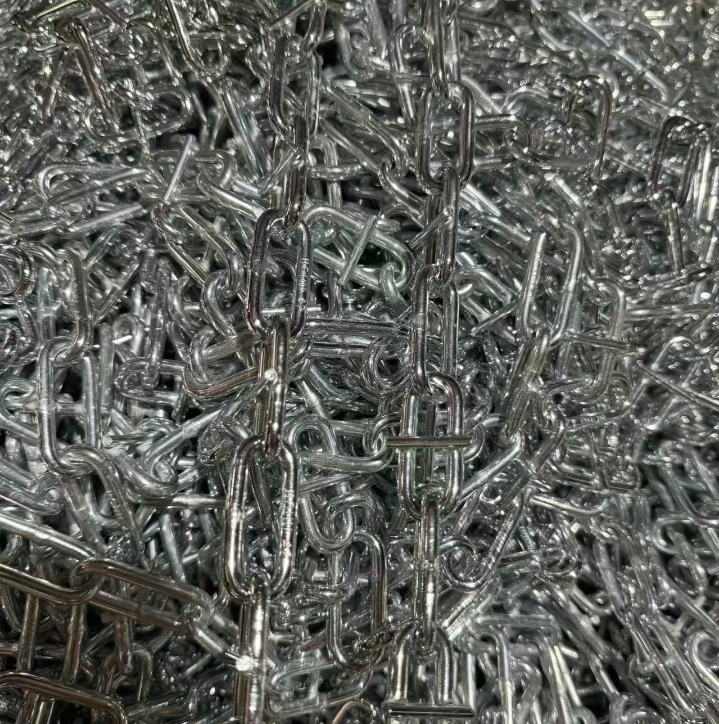
Behind every automated poultry, swine, or cattle feeding system is a component that rarely gets noticed: the feeding chain. It runs for hours each day, often through hundreds of metres of pipe, pushing measured portions of feed to thousands of animals.
But a standard industrial chain will not work here. Feeding chains must meet precise dimensional tolerances, retain plastic discs securely, resist constant wear, and operate smoothly inside feed pipelines — sometimes for years without a break.
This guide covers what makes agricultural feeding chains different, what to look for when sourcing them, and how the right specification improves reliability and reduces downtime.
What Makes a Feeding Chain Different?
Requirement | Why It Matters |
|---|---|
Precise pitch calibration | The chain must engage perfectly with the drive sprocket and run smoothly inside feed pipes without binding |
Consistent link spacing | Uneven spacing means uneven feed portions and potential jamming |
Plastic disc retention | Discs must stay firmly in position on the chain links to maintain correct feed spacing |
Wear resistance | Many systems run 24/7 — standard chains wear rapidly under continuous load |
Corrosion resistance | Exposure to moisture, feed acids, and cleaning chemicals is constant |
Precision Calibration: The Foundation of Reliable Feeding
The most important technical requirement for a feeding chain is pitch accuracy across multiple links. Unlike standard chain, where slight variations are acceptable, a feeding chain must hold tight tolerances over a set number of links — typically measured over 11 links.
This is important for two reasons. First, the chain must mesh perfectly with the drive sprocket, and any pitch variation can cause skipping. Second, plastic discs are attached at specific intervals, and inconsistent pitch means inconsistent feed volumes.
Chain Size (Wire × Pitch) | Typical Tolerance (11 Links) | Application |
|---|---|---|
4.4 mm × 25 mm | +1.0 / -0.5 mm | Poultry feeding |
6 mm × 41.7 mm | +1.7 / -0.5 mm | Swine and large poultry |
7.5 mm × 40 mm | +1.0 / -0.5 mm | Heavy-duty feeding |
10 mm × 65 mm | +2.0 / -1.0 mm | Cattle and large livestock |
The Welding Burr: A Small Detail That Makes a Big Difference
A unique feature of agricultural feeding chains is the welding burr — a small protrusion left at the weld point on each link. This is not a defect. It is a deliberate design element that keeps plastic feed discs from sliding along the chain.
Plastic discs are pressed or injected onto the chain links at set intervals. The burr acts as a mechanical stop. Without it — or with the wrong burr profile — discs can shift during operation, causing inconsistent feed delivery and system faults.
Burr Type | Best For |
|---|---|
Standard burr | General feeding applications |
Collar burr (raised shoulder) | Maximum disc retention, high-speed systems |
Every link | Discs mounted on every link |
Alternating links | Discs mounted on alternating links |
No burr | Special applications requiring low friction |
Material and Heat Treatment
Material Options
Material | Best For |
|---|---|
Carbon steel | Dry indoor environments, cost-sensitive operations |
Manganese-boron alloy steel | High-throughput systems where wear resistance is critical |
AISI 304 stainless steel | Moderate humidity or outdoor exposure |
AISI 316L stainless steel | Wet, acidic feed, or strict hygiene requirements |
Heat Treatment
Treatment | What It Does | Best For |
|---|---|---|
Quenching & tempering | Improves core strength and impact resistance | Frequent start-stop operations |
Case hardening(carburisation) | Hard, wear-resistant surface with a tough core | Continuous high-speed running |
For most feeding applications, case-hardened alloy steel provides the best combination of wear resistance, strength, and service life.
Surface Finishes
Finish | Corrosion Protection | Best For |
|---|---|---|
Natural (uncoated) | Minimal | Dry indoor use |
Electro galvanized | Moderate | Standard choice for most indoor feeding systems |
Hot dip galvanized | Excellent | Outdoor, wet, or acidic environments |
Stainless steel polished | Superior | Hygienic or food-contact applications |
Applications Across Livestock Sectors
Sector | Typical Chain Size | Key Requirements |
|---|---|---|
Poultry | 4–6 mm wire diameter | Tight calibration, smooth operation, long runs |
Swine | 6–8 mm wire diameter | Robust disc retention, wear resistance |
Cattle | 8–10 mm wire diameter | Heavy-duty, case-hardened, corrosion-resistant |
How to Select the Right Feeding Chain
To specify the correct chain, confirm the following:
- Chain dimensions: wire diameter and pitch to match your sprocket
- Calibration tolerance: how many links measured, and to what tolerance
- Burr type and frequency: matched to your disc design and spacing
- Material: carbon steel, alloy steel, or stainless
- Heat treatment: quenched & tempered, case hardened, or combined
- Surface finish: electro galvanized, hot dip galvanized, or stainless
- Length and packaging: bundles, drums, reels, or pre-cut lengths
Frequently Asked Questions
Why not use standard industrial chain?
Standard chain lacks the precision calibration and custom burr design required for disc retention and reliable sprocket engagement inside feed pipes.
How long does a feeding chain last?
With correct specification and maintenance, typically 3–5 years. Harsh environments may reduce this.
When should a feeding chain be replaced?
Replace when elongation exceeds 3–5% of original length, wire diameter reduces by more than 10%, or disc retention fails.
What does "calibrated chain" mean?
A chain that has been precision-tensioned to maintain consistent pitch within a specified tolerance across a defined number of links.
What chain size is used for a feeding system?
Commonly 4 to 6 mm wire diameter where tight calibration and long runs matter, 6 to 8 mm for robust disc retention and wear resistance, and 8 to 10 mm for heavy-duty, case-hardened and corrosion-resistant service. The final size follows the feeding system design and the required tension.
Which materials and finishes are available for feeding chains?
Carbon steel, manganese-boron alloy steel, AISI 304 stainless steel and AISI 316L stainless steel, with finishes including natural uncoated, electro galvanized, hot dip galvanized and polished stainless steel. Stainless or galvanized is used for wet, acidic feed or strict hygiene requirements.
What tolerance can be held on a feeding chain?
Calibration is specified per 11 links: about +1.7 / -0.5 mm for poultry feeding, +1.0 / -0.5 mm for swine and large poultry, and +2.0 / -1.0 mm for heavy-duty and cattle feeding.