Sep 16, 2026Success Stories
FC vs IWRC Wire Rope Core: Which to Choose
Fiber core or independent wire rope core? How the two differ in flexibility, crush resistance, temperature limits and breaking strength - and how to pick.
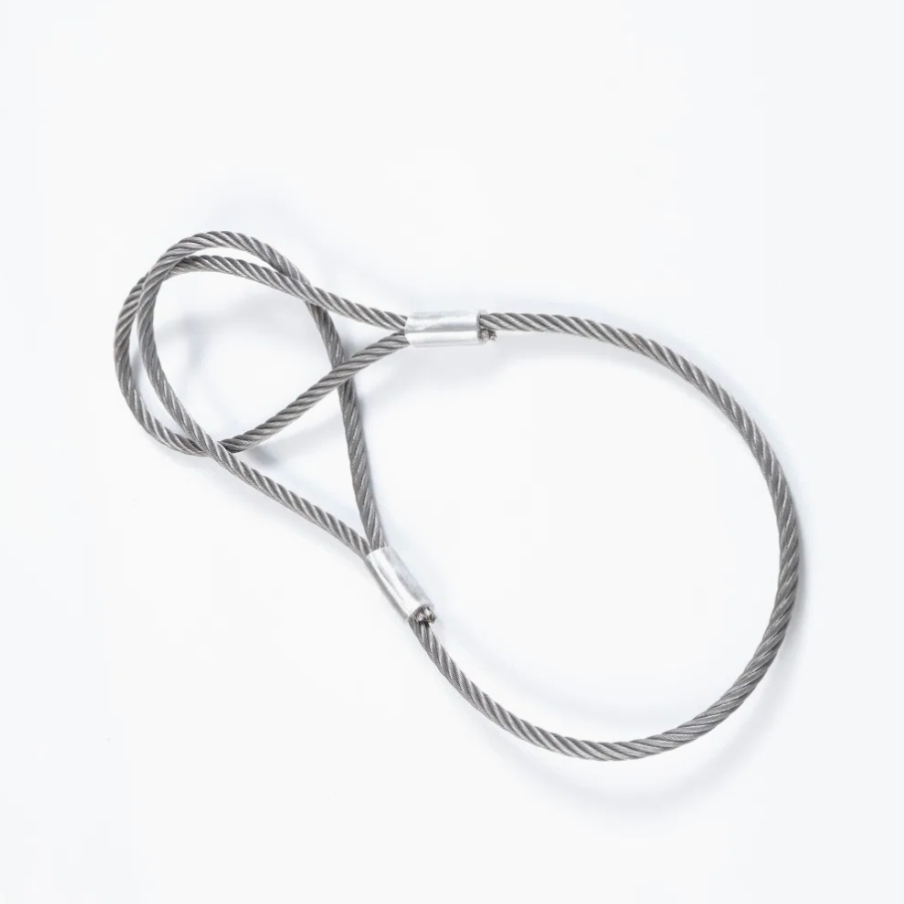
While they may look similar from the outside, the core material fundamentally affects how the rope performs, how long it lasts, and what applications it can safely handle.
This guide explains the key differences, helps you choose the right core for your application, and answers common questions buyers have when specifying wire rope.
What Is a Wire Rope Core?
A steel wire rope is made up of strands twisted around a central core. The core serves as the foundation of the rope — it supports the strands, maintains the rope's round shape under load, and in some cases, provides internal lubrication.
The choice of core is not a minor detail. It affects:
- The rope's breaking strength
- Its flexibility and bending fatigue life
- Crush resistance and structural stability
- Suitability for high-temperature environments
- Overall service life in the intended application
FC Wire Rope: Fiber Core
FC stands for Fiber Core. This core is made from natural fibers (such as sisal) or synthetic fibers (such as polypropylene).
Key Characteristics
Property | FC (Fiber Core) |
|---|---|
Material | Natural sisal or synthetic PP |
Strength contribution | Minimal — the core itself does not add to the rope's breaking strength |
Flexibility | Excellent — more flexible and easier to handle than IWRC |
Lubrication | Acts as a lubricant reservoir — fiber absorbs oil and releases it gradually during use, reducing internal friction |
Crush resistance | Lower — fiber core can deform under heavy radial pressure |
Temperature resistance | Limited — not suitable for high-heat environments. Sisal core degrades above 100°C |
Cost | Lower than IWRC |
Typical Applications
FC wire rope is ideal for applications where flexibility is more important than maximum strength, and where the rope is not subjected to heavy crushing forces or extreme temperatures:
- Elevator traction ropes (low to medium speed)
- General engineering and construction
- Guy ropes and static lines
- Winch lines for light to medium loads
- Applications where the rope needs to bend frequently around sheaves
IWRC Wire Rope: Independent Wire Rope Core
IWRC stands for Independent Wire Rope Core. This core is itself a small, independent wire rope — typically a 7×7 or 7×19 construction — around which the outer strands are laid.
Key Characteristics
Property | IWRC (Independent Wire Rope Core) |
|---|---|
Material | Steel wire — same grade as the outer strands |
Strength contribution | Significant — IWRC adds approximately 7-10% to the rope's breaking strength compared to FC of the same diameter and construction |
Flexibility | Lower than FC — the rope is stiffer and requires larger bending radii |
Lubrication | Requires external lubrication; the steel core does not hold oil like fiber does |
Crush resistance | Excellent — steel core provides strong resistance to radial pressure and crushing |
Temperature resistance | Higher — suitable for applications involving elevated temperatures |
Cost | Higher than FC |
Typical Applications
IWRC wire rope is designed for heavy-duty applications where strength, durability, and crush resistance are essential:
- Crane hoist ropes (tower cranes, mobile cranes, overhead cranes)
- Multi-layer spooling on winch drums
- Heavy lifting and rigging
- Mining and quarrying
- Marine and offshore mooring
- Any application where the rope is subjected to high tension and radial pressure
FC vs IWRC: Direct Comparison
Dimension | FC (Fiber Core) | IWRC (Steel Core) |
|---|---|---|
Breaking Strength | Baseline | 7-10% higher than FC of same diameter |
Flexibility | More flexible, easier to handle | Stiffer, requires larger sheave diameters |
Crush Resistance | Lower — can deform under radial loads | High — resists crushing on multi-layer drums |
Lubrication | Self-lubricating (fiber absorbs and releases oil) | Requires external lubrication |
Temperature Resistance | Low — not for high-heat applications | Higher — suitable for elevated temperatures |
Fatigue Life | Good for light to medium duty | Superior for heavy cyclic loading |
Cost | Lower | Higher |
Weight | Lighter | Heavier |
How to Choose Between FC and IWRC
To select the right core, ask yourself these questions:
1. What is the load requirement?
- Light to medium loads, flexibility is important → FC
- Heavy loads, maximum strength required → IWRC
2. How is the rope being used?
- Single layer spooling, frequent bending over sheaves → FC (elevator ropes, winch lines)
- Multi-layer spooling on a drum → IWRC (crane hoists, mining winches)
3. Is there radial pressure or crushing force?
- Low radial pressure → FC
- High radial pressure (e.g., rope wound under tension on a drum) → IWRC
4. What is the operating temperature?
- Ambient or moderate temperatures → either core works
- Elevated temperatures (above 100°C) → IWRC only. Fiber core will degrade under high heat
5. What is the budget?
- Cost-sensitive, standard application → FC is more economical
- Long-term investment, heavy-duty application → IWRC offers better durability and lower total cost of ownership through longer service life
Frequently Asked Questions
Can I use FC wire rope on a crane?
It depends on the crane type and load. For overhead cranes and tower cranes where the rope runs over sheaves with single-layer spooling, FC can be suitable. For mobile cranes and winches with multi-layer drum spooling, IWRC is strongly recommended due to the crushing forces between rope layers.
Does IWRC always mean stronger?
Yes — for the same diameter and construction, IWRC rope has approximately 7-10% higher breaking strength than FC. However, the trade-off is reduced flexibility.
How do I know which core a rope has?
The construction description tells you. For example, 6×19 + FC means a 6-strand, 19-wire-per-strand rope with a fiber core. 6×36 + IWRC means a 6-strand, 36-wire-per-strand rope with an independent wire rope core.
Can I use FC rope in marine environments?
Yes, but with consideration. FC rope with galvanized outer strands can be used in marine environments. However, if the rope is subject to heavy loads and crushing (e.g., mooring winches), IWRC with hot-dip galvanized finish is a better choice. The fiber core can absorb moisture over time, which may accelerate internal corrosion if the rope is not properly maintained.
Summary
Your Priority | Recommended Core |
|---|---|
Maximum flexibility, light to medium loads | FC (Fiber Core) |
Maximum strength, heavy loads | IWRC (Independent Wire Rope Core) |
Multi-layer drum spooling | IWRC |
Frequent bending over sheaves | FC |
High-temperature environment | IWRC |
Budget-sensitive, general-purpose use | FC |
Boyuan Metal supplies steel wire ropes with both FC and IWRC cores, in a wide range of diameters, constructions, and surface finishes. Tell us your application and working conditions — we will recommend the right core and construction for your needs.
Contact us today to discuss your wire rope requirements or request a quotation.