Sep 15, 2026News & Insights
Fishing Chains: The Complete Buyer's Guide to Materials, Types & Selection
In commercial fishing and aquaculture, a chain is never just a chain. It secures offshore cages against ocean swells. It tows heavy trawl nets through abrasive seabeds
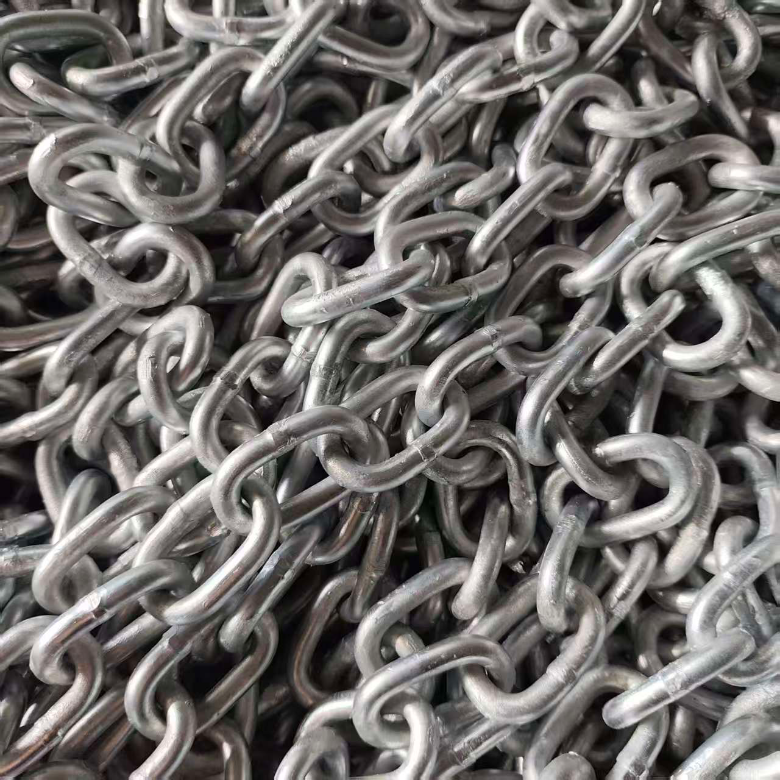
It holds catches suspended over deep water. When a chain fails in these conditions, the cost is measured in lost equipment, damaged nets, lost stock, and serious safety risks.
Choosing the right fishing chain means understanding three things: how the chain type affects strength and weight, how the material determines corrosion resistance, and how the grade matches the working load. This guide covers all three.
What Fishing Chains Do
Fishing chains serve multiple roles across marine and aquaculture operations:
Application | Chain Function |
|---|---|
Net fixing & suspension | Securing nets in position underwater |
Aquaculture cage mooring | Anchoring fish cages in open water |
Trawl net towing | Main tow lines for bottom and midwater trawling |
Lifting & hauling | Winch chains, catch lifting |
Anchoring & mooring | Fixed net cages, vessel mooring |
Deck lashing | Cargo securing during fishing operations |
Every one of these applications demands three things from the chain: salt spray resistance, high breaking strength, and wear resistance.
Chain Types by Link Length
Fishing chains are classified into three link lengths. Each offers a different balance of strength, weight, and flexibility.
Short Link Chain
Short link chains have the tightest link spacing. More links per metre means more steel, higher weight, and the greatest strength and wear resistance of the three types.
Common diameters: 7mm, 10mm, 13mm, 16mm, 19mm, 20mm
Best for: Maximum strength applications — heavy-load connections, main tow lines, high-wear areas where chain weight is an advantage.
Mid Link Chain
Mid link chains match the breaking strength of short link chains but weigh less per metre. Fewer links per metre also means less internal wear between links.
Common diameters: 10mm, 13mm, 14mm, 16mm, 19mm, 22mm, 26mm
Best for: Applications requiring a balance of strength and weight — trawl chains, general aquaculture mooring.
Long Link Chain
Long link chains are the lightest of the three types. The longer spacing between links also provides more room for accessories and connectors.
Common diameters: 7mm, 9mm, 11mm, 13mm, 16mm, 19mm, 22mm, 28mm
Best for: Lightweight applications where accessory installation flexibility matters — net suspension systems, lightweight mooring.
Chain Grades and What They Mean
A chain's grade indicates its minimum breaking strength. A higher grade delivers more strength from the same diameter.
Grade | Minimum Breaking Strength | Typical Use |
|---|---|---|
G30 | 300 N/mm² | Light-duty, general use |
G43 | 430 N/mm² | Standard fishing applications |
G70 | 700 N/mm² | Purse seine, tuna fishing |
G80 | 800 N/mm² | Heavy-duty towing & lifting |
G95 | 950 N/mm² | Extreme heavy-load trawling |
G100 | 1000 N/mm² | Ultra-high-strength lifting |
For deep-sea trawling and heavy-load operations, G80 and G95 mid-link chains are the industry standard. A G80 22mm chain, for example, delivers a minimum breaking load of over 410 kN.
Material Selection: The Corrosion Question
Saltwater is unforgiving. Material choice is the single largest factor in how long a fishing chain lasts.
Stainless Steel Fishing Chains
Stainless steel chains resist corrosion through their alloy composition — chromium and nickel form a self-healing passivation layer on the surface. There is no coating to wear off or scratch through.
Grade | Corrosion Resistance | Best Application |
|---|---|---|
304 Stainless | Good | Coastal, freshwater, mild salt spray |
316 Stainless | Excellent | Offshore, seawater immersion, high salinity |
316 stainless contains molybdenum, which significantly improves resistance to saltwater pitting. For offshore fish cages and long-term seawater exposure, 316 is the recommended choice.
Typical seawater service life: 304 — 3 to 5 years; 316 — 4 to 6 years.
Galvanized Steel Fishing Chains
Galvanized chains use a zinc coating to protect the carbon steel core. The zinc corrodes first, shielding the steel beneath. Coating quality determines how long this protection lasts.
Coating Type | Zinc Thickness | Seawater Service Life |
|---|---|---|
Electro-galvanized | 10–30 μm | 6–12 months |
Hot-dip galvanized | 80–120 μm | 1–2 years |
For marine use, always specify hot-dip galvanized chain with a zinc thickness ≥ 80 μm.
Material Comparison at a Glance
Factor | Stainless Steel (316) | Hot-Dip Galvanized |
|---|---|---|
Seawater life | 4–6 years | 1–2 years |
Freshwater life | 8+ years | 2–3 years |
Initial cost | Higher | Lower (roughly 1/3 to 1/2) |
Maintenance | Minimal | Periodic inspection required |
Best for | Offshore, long-term immersion | Inland, budget-sensitive, seasonal use |
How to Select the Right Fishing Chain
1. Load Capacity and Safety Factor
Select a chain with a breaking load at least 3 to 5 times the maximum working load. This margin absorbs the shock loads generated during towing, lifting, and storm conditions.
2. Diameter and Pitch
Chain diameter and pitch must match the vessel's winch drum, pulley, and connector specifications. Confirm dimensions against the equipment before ordering.
3. Surface Protection
Finish | Best For |
|---|---|
Hot-dip galvanized (≥ 80 μm) | Standard marine use |
Zinc-infused (Sherardizing) | Long-term seawater, 1000+ hours salt spray |
Plastic-coated | Reduced friction, extra corrosion barrier |
4. Standards and Certification
Check that the chain meets recognised international standards:
- ISO, DIN, EN (general manufacturing)
- GB/T 12718 (China national standard)
- ABS, DNV, BV, LR, CCS (marine classification societies — required for classed vessels)
Maintenance
Practice | Frequency |
|---|---|
Rinse with fresh water | After each use |
Visual inspection for wear, corrosion, damage | Before each use |
Measure elongation | At regular intervals — replace when elongation exceeds 3–5% |
Check galvanized coating | Touch up damaged areas with zinc-rich paint |
Monitor for red rust | Replace immediately if red rust appears through the coating |
Boyuan Metal supplies fishing chains in stainless steel (304 and 316) and hot-dip galvanized finishes, in short link, mid link, and long link configurations from 7mm to 30mm, covering grades G30 through G100. Contact us to discuss your requirements or request a quotation.
Frequently Asked Questions
What types of fishing chain are there?
Fishing chain is classified by link length. Short link chain comes in common diameters of 7 mm, 10 mm, 13 mm, 16 mm, 19 mm and 20 mm; mid link chain in 10 mm, 13 mm, 14 mm, 16 mm, 19 mm, 22 mm and 26 mm; and long link chain in 7 mm, 9 mm, 11 mm, 13 mm, 16 mm, 19 mm, 22 mm and 28 mm.
What chain grade is used for deep-sea trawling?
G80 and G95 mid-link chains are the industry standard for deep-sea trawling and heavy-load operations. A G80 22 mm chain, for example, delivers a minimum breaking load of over 410 kN.
Stainless steel or galvanized chain for seawater?
Both are used. 316 stainless contains molybdenum, which significantly improves resistance to saltwater pitting. Typical seawater service life is 3 to 5 years for 304 and 4 to 6 years for 316. For galvanized chain, always specify hot-dip galvanized with a zinc thickness of at least 80 μm.
How much safety margin should I specify?
Select a chain with a breaking load at least 3 to 5 times the maximum working load. This margin absorbs the shock loads generated during towing, lifting and storm conditions.
Which material suits which environment?
For inland, budget-sensitive and seasonal use, hot-dip galvanized chain with a zinc thickness of at least 80 μm is appropriate. For long-term seawater exposure, specify a chain tested to 1000+ hours of salt spray, or stainless steel.
When should a fishing chain be replaced?
Inspect at regular intervals, and replace the chain when elongation exceeds 3–5%.