Jul 31, 2026Services Overview
G50 Stainless Steel Chain: The Perfect Balance of Strength, Durability, and Corrosion Resistance
In demanding industrial and marine environments, chain performance is measured not by a single attribute but by the perfect balance of multiple properties.
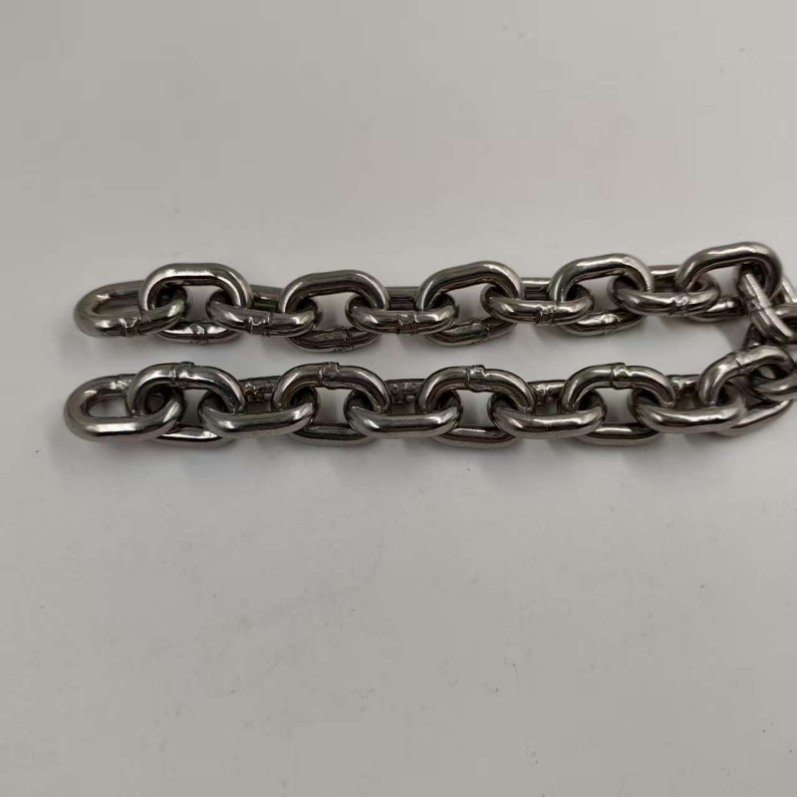
The G50 stainless steel chain represents this equilibrium—offering an optimal combination of high tensile strength, excellent elongation characteristics, superior corrosion resistance, and extended service life.
Whether used in marine anchoring systems, food processing conveyors, chemical plants, or agricultural equipment, G50 stainless steel chains deliver reliable performance where ordinary chains fail. This article explores the material composition, mechanical properties, and diverse applications of G50 chains, providing a comprehensive guide for engineers, procurement professionals, and maintenance managers.
What Is a G50 Stainless Steel Chain?
The G50 Grade Standard
The "G" in G50 stands for Grade, indicating the chain's minimum tensile strength. Specifically, G50 chains achieve a minimum breaking load of 500 N/mm² (500 MPa) . This places them between standard Grade 30 chains (300 N/mm²) and high-strength Grade 80 lifting chains (800 N/mm²), offering an ideal middle ground for applications requiring both strength and corrosion resistance.
Stainless Steel Types Used in G50 Chains
Two primary stainless steel grades are commonly used in G50 chain production:
Stainless Steel Type | Composition Highlights | Corrosion Resistance | Typical Application |
|---|---|---|---|
AISI 304 (1.4301) | 18% Chromium, 8% Nickel | Good for atmospheric exposure | General industrial, architectural, and mild chemical environments |
AISI 316L (1.4404) | 16% Chromium, 10% Nickel, 2% Molybdenum | Superior resistance to chlorides and acids | Marine environments, chemical plants, food processing |
AISI 316L is the preferred choice for G50 chains in demanding applications because:
- Molybdenum content provides enhanced resistance to pitting and crevice corrosion, especially in chloride-rich environments like seawater.
- Low carbon content (L grade) prevents intergranular corrosion after welding, ensuring the chain's integrity at welded joints.
- Austenitic structure maintains toughness at both high and low temperatures.
Polished Finish
G50 stainless steel chains typically undergo a bright polishing process at the end of production. This mechanical finishing:
- Creates a smooth, shiny surface
- Reduces friction between links
- Improves cleanability (critical for food applications)
- Enhances aesthetic appearance
- Removes surface contaminants that could initiate corrosion
Mechanical Properties: Strength and Elongation
Tensile Strength and Breaking Load
The defining characteristic of G50 chains is their minimum breaking load of 500 N/mm². This translates into practical working loads that significantly exceed those of standard Grade 30 or Grade 40 chains.
Comparison of Breaking Loads:
Chain Grade | Minimum Breaking Load (N/mm²) | Performance vs. G40 |
|---|---|---|
Grade 30 | 300 N/mm² | -33% (lower than G50) |
Grade 40 | 400 N/mm² | -20% (lower than G50) |
Grade 50 (G50) | 500 N/mm² | Baseline |
Grade 70 | 700 N/mm² | +40% (higher) |
Grade 80 | 800 N/mm² | +60% (higher) |
For example, a G50 chain with a wire diameter of 10 mm can achieve a breaking load of approximately 125 kN and a working load limit (WLL) of around 1,950 kg (with a 4:1 safety factor). This represents a 25% increase in breaking load compared to a Grade 40 chain of the same diameter.
Elongation and Ductility
Chain elongation—the ability to stretch before breaking—is a critical safety and performance parameter.
Typical elongation characteristics of G50 stainless steel chains:
- Elongation at break: Generally 15–20% (depending on specific material and heat treatment)
- Working elongation: Chains stretch elastically under load and return to their original length when the load is removed, as long as the working load limit is not exceeded.
- Permanent deformation: Occurs only when the chain is overloaded beyond its yield point.
The balanced ductility of G50 stainless steel ensures that:
- Safe operation: The chain provides visual warning (noticeable stretching) before catastrophic failure, allowing for timely replacement.
- Shock absorption: Adequate elongation absorbs sudden impact loads, reducing the risk of brittle fracture.
- Flexibility: The chain articulates smoothly over sprockets and sheaves.
Proof Load Testing
All G50 chains undergo rigorous quality testing:
- 100% proof load testing: Every chain is tested at twice (2×) the working load limit to ensure structural integrity.
- Destructive testing: A minimum of three samples from each production lot are pulled to failure to verify the breaking load meets the G50 standard.
G50 vs. G40: The Performance Advantage
Property | Grade 40 Chain | Grade 50 Chain | Advantage of G50 |
|---|---|---|---|
Minimum tensile strength | 400 N/mm² | 500 N/mm² | +25% higher |
Breaking load | Lower | Higher | +25% greater capacity |
Working load limit | Lower | Higher | Enables use of smaller diameters for same load |
Weight for equivalent capacity | Heavier | Lighter | Reduces weight in handling and installation |
Elastic range | Standard | Extended | Wider field of application |
Corrosion resistance | Depends on material | Superior (stainless steel) | Longer service life in aggressive environments |
Application versatility | Limited | Expanded | Suitable for marine, chemical, food |
Key advantage: By increasing the breaking load by 25%, G50 chains achieve the same working load with approximately 20% less chain diameter, reducing weight and improving handling while maintaining safety.
Elongation and Elasticity: Why It Matters
Understanding Chain Elongation
Chain elongation occurs in two forms:
- Elastic elongation: Temporary stretching under load that is fully recovered when the load is removed. This is safe and expected within the working load range.
- Permanent elongation: Plastic deformation caused by overloading or fatigue. This indicates the chain has been compromised and should be replaced.
G50 Elongation Characteristics
G50 stainless steel chains offer:
- Extended elastic range: The higher strength allows the chain to remain within its elastic limit over a wider range of loads, accommodating variations in service conditions.
- Controlled permanent elongation: The G50 grade ensures that any permanent elongation occurs only at loads well above the working limit, providing a safety margin.
- Consistent pitch over time: The combination of material quality and proper heat treatment maintains dimensional stability, preventing premature sprocket misalignment.
When to Replace Based on Elongation
Industry best practice recommends replacing chains when:
- Elongation exceeds 3–5% of the original length (per EN 818-4 standard).
- Visual wear shows a reduction in wire diameter of more than 10%.
- Cracks or deformation are visible on any link.
Application Scenarios for G50 Stainless Steel Chains
1. Marine and Offshore Applications
The marine environment is one of the most aggressive for metal components, combining saltwater, humidity, and galvanic corrosion.
Common uses:
- Anchor chains for small to medium vessels
- Mooring lines
- Winch chains
- Deck hardware and lashing
- Submersible pump lifting chains
Why G50 stainless steel is preferred:
- AISI 316L grade resists saltwater corrosion and pitting
- Strength-to-weight ratio allows handling ease
- Bright polished finish reduces marine growth adhesion
- Long service life minimizes maintenance and replacement
Available standards for marine applications include DIN 766 and ISO 4565 calibrated chains for windlasses.
2. Food and Beverage Processing
Food processing facilities require chains that are corrosion-resistant, easy to clean, and safe for contact with food products.
Common uses:
- Conveyor chains for poultry, meat, and fish processing
- Feed delivery chains in livestock facilities
- Bottling line conveyors
- Washdown-resistant equipment chains
Why G50 stainless steel is preferred:
- AISI 304L or 316L meets food-grade hygiene requirements
- Smooth polished surface prevents bacterial growth
- No galvanic corrosion when used with other stainless components
- Resists acidic and alkaline cleaning agents
Hygiene tip: Regular cleaning with fresh water and mild detergents maintains the chain's appearance and prevents corrosion.
3. Chemical and Pharmaceutical Plants
Chemical processing environments expose chains to acids, solvents, and corrosive fumes.
Common uses:
- Conveyor chains in chemical manufacturing
- Agitator drive chains
- Packaging line conveyors
- Submersible pump chains in chemical tanks
Why G50 stainless steel is preferred:
- AISI 316L offers intergranular corrosion resistance
- Withstands a wide pH range
- Minimal maintenance in aggressive environments
4. Agricultural and Animal Farming
Agricultural chains face moisture, manure, fertilizers, and abrasive feed materials.
Common uses:
- Poultry feeding systems (with plastic discs)
- Manure scraper chains
- Livestock feed conveyors
- Barn cleaning equipment
Why G50 stainless steel is preferred:
- Resists corrosion from ammonia and manure
- Hard polished surface reduces wear from abrasive feed
- FDA-compliant for food contact
- Durable in wet, dirty environments
5. Urban and Architectural Applications
Aesthetic and functional considerations make stainless steel chains ideal for public and architectural use.
Common uses:
- Barrier chains in public spaces
- Bicycle parking chains
- Decorative chains for urban furniture
- Playground equipment (EN 1176 compliant)
Why G50 stainless steel is preferred:
- Attractive bright finish enhances visual appeal
- Weather-resistant without painting
- Low maintenance for public installations
- Strength ensures safety and security
6. General Industrial and Transport Applications
Many industrial environments benefit from the durability of G50 stainless steel.
Common uses:
- Conveyor chains for bulk materials
- Guardrail chains
- Transport and lashing chains
- Pump lifting chains in water treatment
Why G50 stainless steel is preferred:
- Versatile strength for various load requirements
- Corrosion resistance extends life in outdoor installations
- Reduced weight simplifies installation
Selecting the Right G50 Chain for Your Application
When choosing a G50 stainless steel chain, consider the following factors:
Factor | Consideration |
|---|---|
Chain diameter (w) | Choose based on required working load. Larger diameters offer higher capacity but weigh more. |
Pitch (p) | Match to sprocket tooth spacing for smooth engagement. |
Stainless steel grade | AISI 304 for general use; AISI 316L for marine, chemical, and acidic environments. |
Calibration | Calibrated chains (per DIN 766/ISO 4565) are essential for windlass and sprocket applications. |
Finish | Polished for hygiene and appearance; hot dip galvanized available for added corrosion protection. |
Length and packaging | Available in bundles, drums, reels, or boxes for retail sales. |
Maintenance Tips for G50 Stainless Steel Chains
To maximize service life:
Maintenance Practice | Frequency | Benefit |
|---|---|---|
Clean with fresh water | After each marine/outdoor use | Removes salt, dirt, and contaminants |
Lubricate lightly | As needed (dry or light oil) | Reduces friction and wear |
Inspect for wear | Monthly or per manufacturer recommendation | Identifies elongation or damage early |
Check for corrosion | Regularly in aggressive environments | Prevents pitting and stress corrosion cracking |
Replace when worn | When elongation exceeds 3% or diameter loss >10% | Maintains safety and performance |
Why Choose a Professional G50 Chain Supplier?
Choosing the right supplier for your G50 stainless steel chains ensures:
- Material authenticity: Certified stainless steel grades (304/316L) with full traceability
- Quality control: 100% tested products that meet international standards
- Customization options: Tailored dimensions, finishes, and packaging to suit your specific needs
- Technical expertise: Guidance in selecting the optimal chain for your application
- Reliable delivery: Consistent supply to support your production and maintenance schedules
Conclusion
The G50 stainless steel chain offers a unique balance of strength, durability, and corrosion resistance that makes it the preferred choice for a wide range of demanding applications. Its 25% higher breaking load compared to Grade 40 chains provides a significant performance advantage while maintaining excellent ductility and elongation characteristics.
From marine anchor chains to food processing conveyors, chemical plants to agricultural equipment, G50 stainless steel chains deliver reliable performance, extended service life, and reduced total cost of ownership.
Choose G50 stainless steel chains when you need:
- ✅ Superior corrosion resistance
- ✅ High strength-to-weight ratio
- ✅ Excellent elongation and toughness
- ✅ Versatility across multiple applications
- ✅ Compliance with international standards (DIN 766, ISO 4565, EN 818-3)
Get a Free Quote
Interested in G50 stainless steel chains for your application?
[Contact us today] — our technical experts are ready to help you select the right chain for your needs. We offer fast response, professional support, competitive pricing, and on-time delivery worldwide.