Aug 4, 2026Services Overview
How Chain Is Made: From Raw Material to Finished Product
This article walks through the key stages of chain production — from raw material selection to final testing.
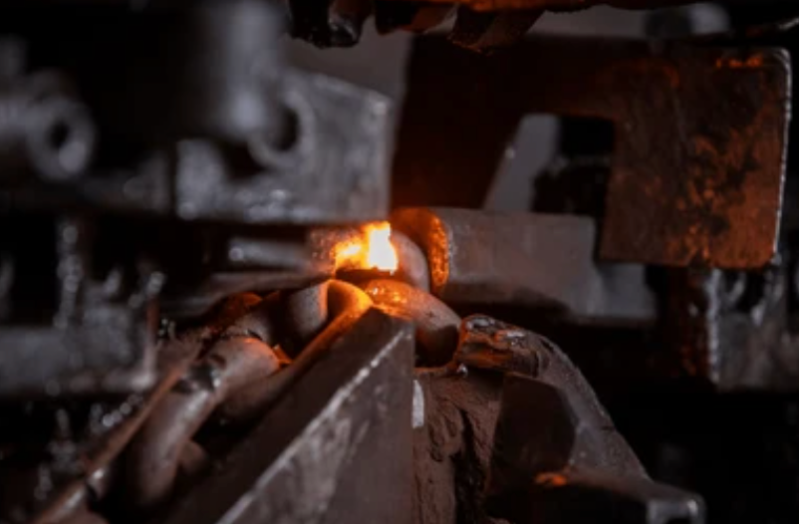
Behind every lifting operation, mooring system, and safety barrier is a chain that must perform without compromise. Understanding how a chain is manufactured helps buyers assess quality, compare suppliers, and make informed procurement decisions. This article walks through the key stages of chain production — from raw material selection to final testing.
Raw Material: Where Quality Begins
A chain is only as good as the steel it starts with. Selecting the right raw material is the first and most critical step in production.
Two Forms of Raw Material
Chain manufacturers work with steel in two primary forms, each suited to different chain sizes:
Raw Material Form | Best Suited For | Characteristics |
|---|---|---|
Wire Rod (Coil) | Smaller diameter chains, typically up to 13mm | More cost-efficient, less material loss during processing, ideal for high-volume production |
Bar Stock | Larger diameter chains, typically above 13mm | Higher raw material cost, greater processing loss, necessary for producing heavy-duty and large-size chains |
For smaller chains — such as DIN766 swing chains, general hardware chains, and light-duty lifting chains — wire rod is the standard input. For large-diameter lifting chains, mooring chains, and anchor chains, bar stock is required, despite its higher cost and greater material waste, because the final product demands a thicker cross-section that wire rod cannot provide.
Material Grades
The steel grade is selected based on the chain's intended application:
- Carbon steel (Q195, Q235) — General-purpose chains, hardware chains
- Alloy steel (20Mn2, 25MnV) — Grade 80 and Grade 100 lifting chains
- Stainless steel (AISI 304, 316) — Marine, food-grade, and corrosive environments
High-quality raw material is non-negotiable. A chain's breaking strength, fatigue life, and corrosion resistance are all determined at this stage.
Step 1: Wire Drawing — Achieving the Required Diameter
Once the raw material arrives at the factory, the first step is wire drawing. The steel rod or bar is pulled through a series of progressively smaller dies until it reaches the precise diameter required for the target chain.
This cold-working process not only shapes the wire but also increases its tensile strength through work hardening. For alloy steels used in G80 and G100 chains, the wire drawing parameters are tightly controlled, as they affect the grain structure that will later be refined through heat treatment.
After drawing, the wire is inspected for surface defects, dimensional accuracy, and mechanical properties before moving to the next stage.
Step 2: Forming — Shaping the Chain Links
The drawn wire is fed into a chain-making machine, where it is bent and formed into individual links. Each link is interlocked with the next to create the continuous chain structure.
The forming process requires precise tooling and machine calibration. The inside length, inside width, and link geometry must be consistent across every link. For safety-critical chains — such as those used in playground swings or lifting slings — even small dimensional variations can cause functional problems or safety hazards.
Step 3: Welding — The Critical Joint
After forming, each link must be welded at the join. This is the most critical quality point in chain production. A poorly welded link can become the single point of failure that causes an entire chain assembly to break under load.
The welding process uses electric resistance or flash-butt welding, where heat and pressure fuse the ends of each link together. Key quality control checks at this stage include:
- Weld integrity: ensuring full fusion with no cracks or porosity
- Weld flash removal: excess material from the weld is trimmed to ensure a smooth, uniform link profile
- Visual inspection: each link is checked for surface defects
Step 4: Heat Treatment — Strength and Toughness
For chains that must carry load — particularly Grade 80 and Grade 100 lifting chains — heat treatment is the step that transforms a shaped piece of steel into a load-rated product.
The chain passes through a controlled heating and quenching process, followed by tempering. This achieves:
- Increased tensile strength to meet the required grade (e.g., G80, G100)
- Improved ductility so the chain can absorb impact without fracturing
- Stress relief to remove internal stresses introduced during forming and welding
Heat treatment furnaces are carefully monitored for temperature uniformity. A chain that is unevenly heated or improperly quenched will have inconsistent mechanical properties — a serious safety risk.
Step 5: Proof Load Testing — Verifying Every Link
Every chain that will be used for lifting is subjected to a proof load test. This is a mandatory requirement under standards such as EN 818-2, where the chain is loaded to a specified percentage of its minimum breaking force (MBF) — typically 2.5 times the working load limit (WLL) for G80 chains — and held under tension for a defined period.
The proof load test serves two purposes:
- Quality verification: any link with a welding defect or material flaw will fail at this stage
- Stress equalisation: the controlled overload stabilises residual stresses within the chain
After testing, each link is visually inspected again. The chain is then measured to ensure no permanent deformation has occurred.
Surface Finishing: The Final Touch
Once the chain passes all tests, it moves to surface finishing. The most common finishes are:
- Self-colored (raw): left in its natural state, often with a light oil coating
- Electro-galvanized: a thin, uniform zinc layer for general outdoor use
- Hot-dip galvanized: a thick zinc layer for heavy-duty and marine environments
- Black oxide: a chemical blackening for reduced reflection
- Powder coating or PVC coating: for decorative or specialised applications
The choice of finish depends on the customer's application, environment, and budget.
What This Means for Buyers
Understanding the production process helps you ask better questions when sourcing chains:
- Raw material: What steel grade is being used? Is it traceable?
- Welding: Is there an inspection protocol in place for weld quality?
- Heat treatment: Is it performed in-house or outsourced? How is temperature controlled?
- Testing: Is every chain proof load tested? Can a test certificate be provided?
A supplier who can answer these questions clearly is one who understands their own production — and one you can trust.
Boyuan Metal works with qualified manufacturing partners who follow rigorous production and quality control processes. We supply chains in carbon steel, alloy steel, and stainless steel, with surface finishes tailored to your application. Contact us to discuss your chain requirements.