Jul 23, 2026Services Overview
How Steel Wire Rope Is Made: From Wire Rod to Finished Rope
A steel wire rope may look simple from the outside, but its production involves multiple precision-controlled stages.
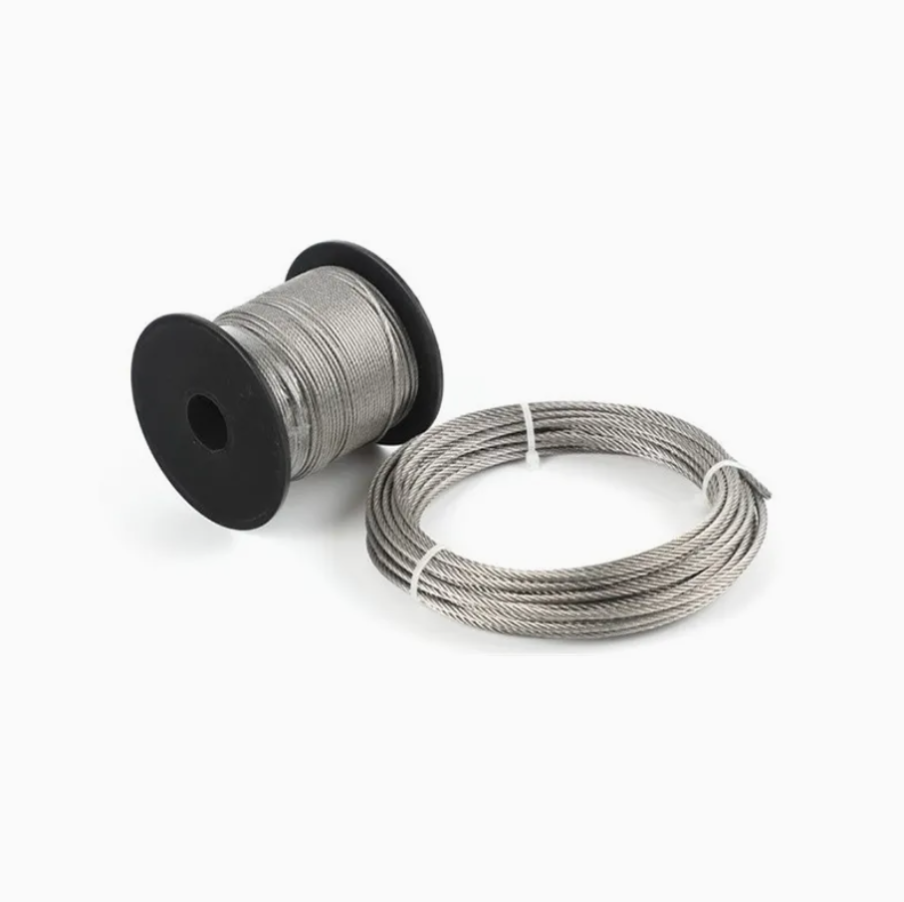
Each step — from raw material selection to final testing — directly affects the rope's strength, fatigue life, and reliability in the field. Here is how a quality wire rope is manufactured.
Step 1: Raw Material — Wire Rod
Wire rope production begins with hot-rolled steel wire rod, typically 5.5mm to 14mm in diameter. The steel grade is selected according to the rope's intended application:
Application | Common Steel Grade | Tensile Strength |
|---|---|---|
General lifting | 45#, 55#, 65# carbon steel | 1570–1770 MPa |
High-strength lifting | 70#, 80# carbon steel | 1960–2160 MPa |
Marine & corrosive environments | AISI 304 / 316 stainless steel | Varies by grade |
The wire rod is inspected upon arrival for chemical composition, surface defects, and mechanical properties. Only material that meets the required specification moves to the next stage.
Step 2: Surface Preparation (Pickling & Coating)
Before drawing, the wire rod must be cleaned and prepared:
- Pickling: The rod passes through an acid bath (typically hydrochloric or sulfuric acid) to remove mill scale and rust from the surface.
- Phosphating or Borax Coating: After pickling, a phosphate or borax coating is applied. This serves as a dry lubricant carrier, reducing friction and preventing the wire from cracking during the subsequent drawing process.
- For stainless steel wire rod, a different surface treatment process is used due to its corrosion resistance.
Step 3: Wire Drawing — Achieving the Target Diameter
The cleaned and coated wire rod is pulled through a series of progressively smaller tungsten carbide or diamond dies. This cold-working process:
- Reduces the wire to the precise diameter required for the rope's construction
- Increases tensile strength through work hardening
- Controls the final wire tolerance, typically within ±0.01mm
The number of drawing passes depends on the target wire diameter. For example, reducing a 5.5mm rod to 0.5mm wire may require 15–20 passes. Each pass reduces the diameter by a controlled percentage, and the drawing speed and lubrication are carefully monitored.
Quality check after drawing:
- Tensile strength of each wire coil
- Diameter tolerance
- Surface finish
Step 4: Stranding — Twisting Wires into Strands
The drawn wires are fed into a stranding machine (also called a buncher or tubular strander), where multiple wires are twisted together into a single strand.
Key parameters controlled at this stage:
Parameter | What It Affects |
|---|---|
Lay length (捻距) | Flexibility, strength, and rope stability |
Lay direction (捻向): right or left, regular or lang | Rope rotation characteristics and drum winding behaviour |
Pre-forming | Ensures wires stay in position and don't spring out when cut |
For example, a 6×36 rope contains 6 strands, each made up of 36 individual wires. The stranding machine carefully arranges wires in layers (inner and outer) with precise tension control.
Step 5: Closing — Laying Strands into a Rope
The strands are then fed into a closing machine, where they are twisted together around a core to form the finished rope.
- Core types:
- Fibre core (FC): Natural (sisal) or synthetic (PP) — provides flexibility and acts as a lubricant reservoir for the rope's interior. Common in elevator and general engineering ropes.
- Steel core (IWRC): Independent Wire Rope Core — increases strength and crush resistance. Used in heavy lifting and multi-layer spooling applications.
- Lubrication: During closing, a rust-preventive lubricant is applied to the rope. This reduces internal friction between wires and strands, protects against corrosion, and extends service life. The type and amount of lubricant can be customised based on customer requirements.
Step 6: Final Testing — Verifying Performance
Every batch of wire rope undergoes testing before it can be shipped:
Test | What It Checks | Standard Reference |
|---|---|---|
Breaking force test | The rope's actual breaking force vs. the specified minimum | ISO 3108 / EN 12385-1 |
Diameter measurement | Tolerance compliance along the full length | EN 12385-1 |
Lay length measurement | Consistency of stranding and closing | EN 12385-1 |
Surface inspection | Visual check for wire breaks, kinks, or corrosion | Internal QC |
Zinc coating test (galvanised rope) | Coating weight or salt spray resistance | ISO 1461 / ASTM A90 |
For ropes requiring classification society certification (ABS, DNV, LR, etc.), a third-party surveyor witnesses the testing and issues the relevant certificates.
Step 7: Packaging & Delivery
The finished rope is wound onto wooden reels, iron reels, or in coils, depending on customer requirements. Each package is labelled with:
- Rope diameter, construction, length
- Tensile strength grade
- Lay direction and type
- Batch number for full traceability
The rope is then ready for shipment.
Summary: The Complete Production Flow
Stage | Key Process | Quality Control Point |
|---|---|---|
1. Raw Material | Wire rod inspection | Chemical & mechanical properties |
2. Surface Preparation | Pickling & coating | Surface cleanliness |
3. Wire Drawing | Drawing to target diameter | Diameter tolerance, tensile strength |
4. Stranding | Twisting wires into strands | Lay length, pre-forming, wire tension |
5. Closing | Laying strands around core | Rope diameter, lubrication |
6. Testing | Breaking force, dimensions, surface | Compliance with standards |
7. Packaging | Reeling & labelling | Full traceability |
Boyuan Metal supplies steel wire ropes in various constructions, diameters, and finishes, manufactured under strict quality control and backed by mill test certificates. Contact us to discuss your wire rope requirements.