News & Insights
How to Specify DIN 764 Calibrated Chain: What Calibrated Actually Means
DIN 764 is the German calibrated general purpose chain, and the word calibrated is the part that matters. What the dimension control buys you, and what it does not.
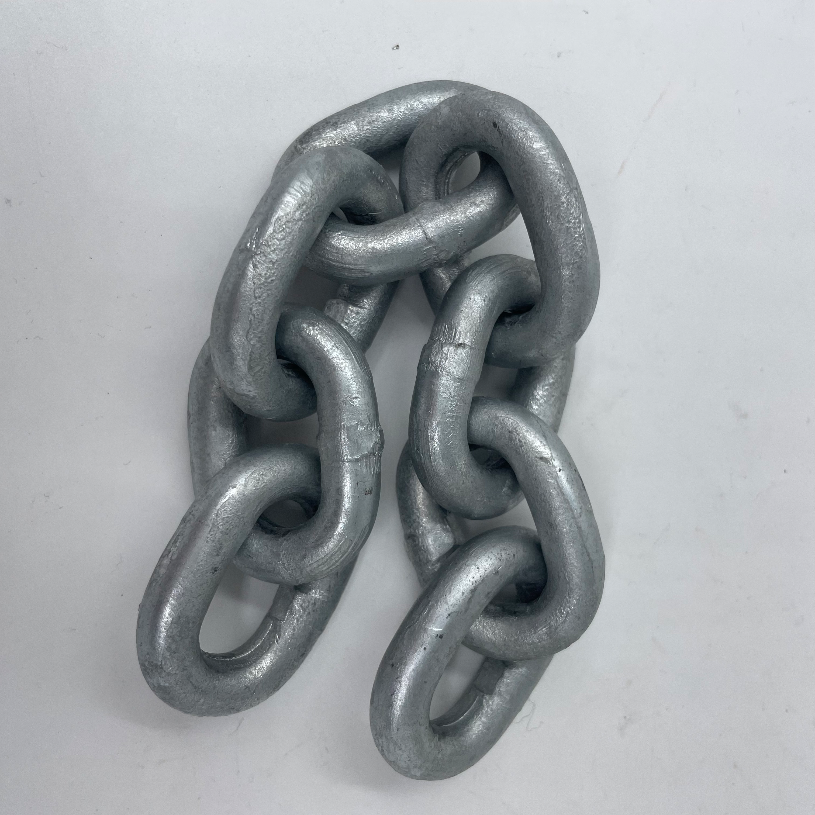
DIN 764 is usually listed next to DIN 763 and DIN 766 as German general purpose chains, and on a shortlist the three look interchangeable. The word that separates DIN 764 is in its name: calibrated. What that means decides whether the chain is right for a job, and sets the limit of what the standard promises.
What Calibrated Means
A calibrated chain has its links dimensionally controlled, so it runs evenly over sheaves and through hooks and shackles. The links are made to a consistent pitch, not merely to the right wire diameter. That consistency is the point: uneven pitch wears both the chain and the part it runs on.
This is why the standard is common in European and marine work. Where a chain passes a wheel, fairlead or series of hooks, even pitch keeps engagement regular. On a chain tied off and never running over anything, the dimension control buys nothing.
Where It Is Used
DIN 764 is a general purpose chain for rigging, lashing and mooring lines, and for marine and industrial work where an even, calibrated link is wanted. It is not a grade-marked lifting chain and must not be used for overhead lifting.
That separates two things buyers often merge. Calibrated is a dimensional property, not a strength rating: a chain can be perfectly calibrated and still be general purpose, and the calibration says nothing about lifting a load above people.
The Size Range
Standard production runs from 4 mm to 26 mm diameter, with inside length from 16 mm to 91 mm, inside width from 5 mm to 35 mm and outside width from 14 mm to 94 mm. Unit weight ranges from 31.3 kg to 1400 kg per 100 m, with breaking load from 7 kN to 320 kN.
Read those as a spread, not a specification: the low end suits light rigging, the high end mooring and heavy industrial work. The size that matters matches the load and the sheave or hook it engages; the full size table is available on request.
Finish
The base product is carbon steel, self colour. Zinc plated, electro galvanized and hot dip galvanized versions can be supplied for outdoor and marine work on request. The choice follows exposure: self colour for dry indoor work, electro galvanized for sheltered outdoor, hot dip galvanized where the chain stays outside or sees salt, as on a quay or in mooring service.
What to Put on the Order
Give the diameter, the finish and the total length. The diameter follows from the load and from what the chain engages; the finish from where it lives; the length is usually cut to the run. If the chain will run over a sheave, say so, because that is the condition the calibrated standard exists for.
Frequently Asked Questions
What is the difference between DIN 764 and DIN 766?
Both are German general purpose chains. DIN 764 is the calibrated form, with dimensionally controlled links for even running; DIN 766 is the standard short link chain. For a chain that runs over a wheel, calibration is the reason to choose the 764. Our standard comparison sets the German standards side by side.
Is calibrated chain a lifting chain?
No. Calibration is a dimensional property, not a strength rating. DIN 764 is a general purpose chain and must not be used for overhead lifting.
Boyuan Metal supplies DIN 764 calibrated chain in carbon steel from 4 mm to 26 mm, in self colour or zinc plated, electro galvanized or hot dip galvanized, cut to length. Tell us the diameter, finish and run, and we will confirm size and packing.