Jul 14, 2026Services Overview
Iron Barrier Chain vs. Plastic Barrier Chain: A Complete Comparison & Selection Guide
Choosing between iron and plastic barrier chain is fundamentally a trade-off between strength and convenience/corrosion resistance
Iron Barrier Chain vs. Plastic Barrier Chain: A Complete Comparison & Selection Guide
Barrier chains are a common and practical tool in safety isolation, crowd control, and hazard warning applications. Two main types dominate the market: iron (steel) barrier chains and plastic barrier chains. Each has distinct characteristics — iron chains represent the traditional route with strength as their advantage, while plastic chains are increasingly favoured in modern applications for their lightweight, corrosion resistance, and versatility.
To help you make a quick and informed decision, we've broken down the comparison below.
Key Comparison: Iron Chain vs. Plastic Chain
Dimension | Iron Barrier Chain (Steel / Cast Iron) | Plastic Barrier Chain (Polyethylene / PE) | What This Means |
|---|---|---|---|
Material & Strength | Very high strength. Can withstand heavy impact and pressure. | Lower strength. Primarily used for light-duty warning and guidance. | Determines the level of physical protection the chain provides. |
Corrosion Resistance | Prone to rust if not galvanised or coated. Requires regular maintenance. | Fully waterproof, rustproof, acid and alkali resistant. Anti-ageing lifespan of 10+ years. | Affects service life and ongoing maintenance costs. |
Maintenance & Repair | Easily deformed under impact. Repair is complex (welding or replacement). | Elastic — rebounds after light collision. Replacement is quick and safe. | Affects long-term workload and operational efficiency. |
Weight & Installation | Very heavy. Transport and installation are labour-intensive. | Lightweight. Easy to carry, install, and store. | Affects labour cost and setup speed. |
Cost Considerations | Lower initial purchase cost, but higher long-term costs from maintenance, road surface repair, and replacement. | Higher initial investment, but lower total cost of ownership (TCO) due to durability and zero maintenance. | Affects budget planning and long-term economics. |
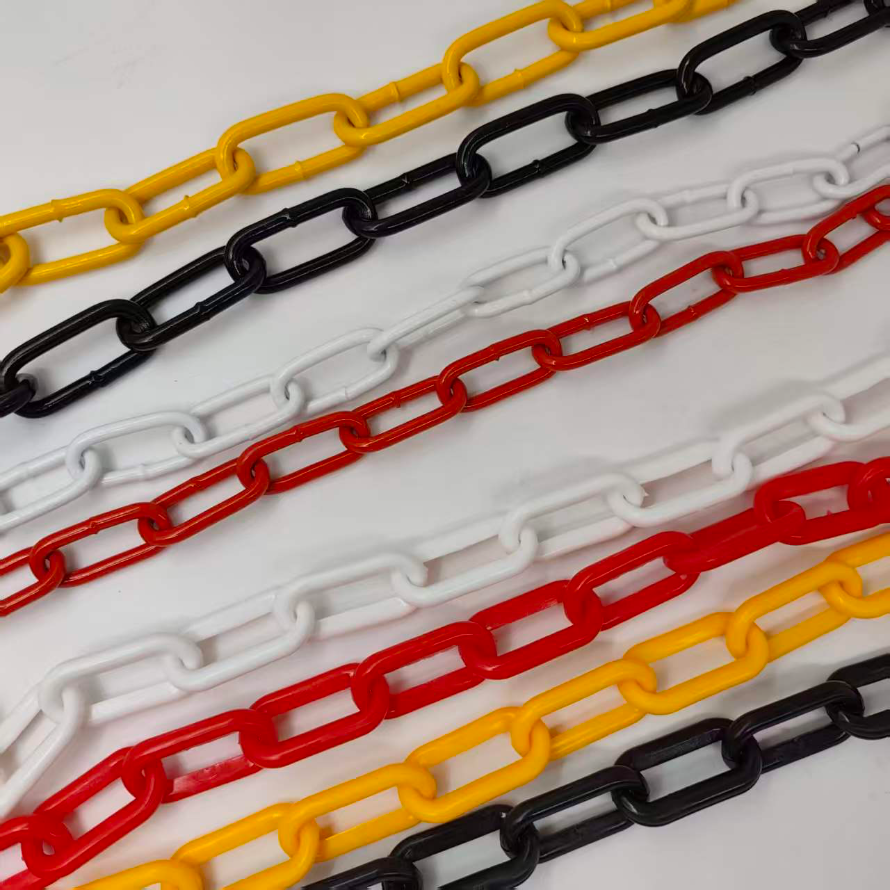
Appearance & Visibility | Mostly metallic in colour. Prone to rust staining on surrounding surfaces. | Available in vivid colours (warning yellow, orange). Colour does not fade. Outdoor chains can be fitted with reflective panels. | Affects warning effectiveness and aesthetics. |
Noise Level | Noticeable clanking noise when chains collide. | Quieter during handling and collision. | Affects workplace comfort. |
A Middle Option: Plastic-Coated Steel Chain
If your application sits between the two — requiring the strength of steel but also the corrosion resistance and appearance of plastic — consider plastic-coated steel chain (steel core wrapped in a PE/PVC layer). This combines high tensile strength with weather resistance, at a higher but often justifiable cost.
How to Choose the Right Chain for Your Application
Based on the comparison above, applications can be divided into two broad categories:
When to Choose Iron Barrier Chain
Iron chain is best suited for applications requiring high-strength physical isolation, where the chain must effectively block vehicles or heavy equipment. Typical scenarios include:
- Safety perimeters around large factory machinery
- Heavy vehicle lanes and loading bay areas
- High-security warehouse enclosures
When to Choose Plastic Barrier Chain
Plastic chain is ideal for warning, guidance, and temporary isolation where lightweight handling and high visibility are more important than physical strength. Common applications include:
- Temporary construction zones and road maintenance warnings
- Queue management (banks, ticket counters, event venues)
- Hazard area marking (excavations, electrical installations)
- Car park bay guidance and zoning
- Highly corrosive environments (coastal areas, chemical plants)
- Commercial premises where appearance matters
Summary
Choosing between iron and plastic barrier chain is fundamentally a trade-off between strength and convenience/corrosion resistance. Iron chain is for "hard protection" — cost-effective upfront but requires upkeep. Plastic chain is for "soft protection" — a higher initial outlay but virtually maintenance-free.
We recommend evaluating your specific environment, installation conditions, available maintenance resources, and budget before making a decision. If feasible, trialling a small batch first is always a prudent approach.
Boyuan Metal supplies both plastic powder coating steel barrier chains and plastic barrier chains in various diameters and colours. Contact us to discuss your requirements — we'll help you select the right product for your application.