Sep 16, 2026News & Insights
Marine and Offshore Wire Rope
Mooring, towing, offshore crane and permanent mooring ropes: the constructions, galvanizing classes and classification society requirements that apply at sea.
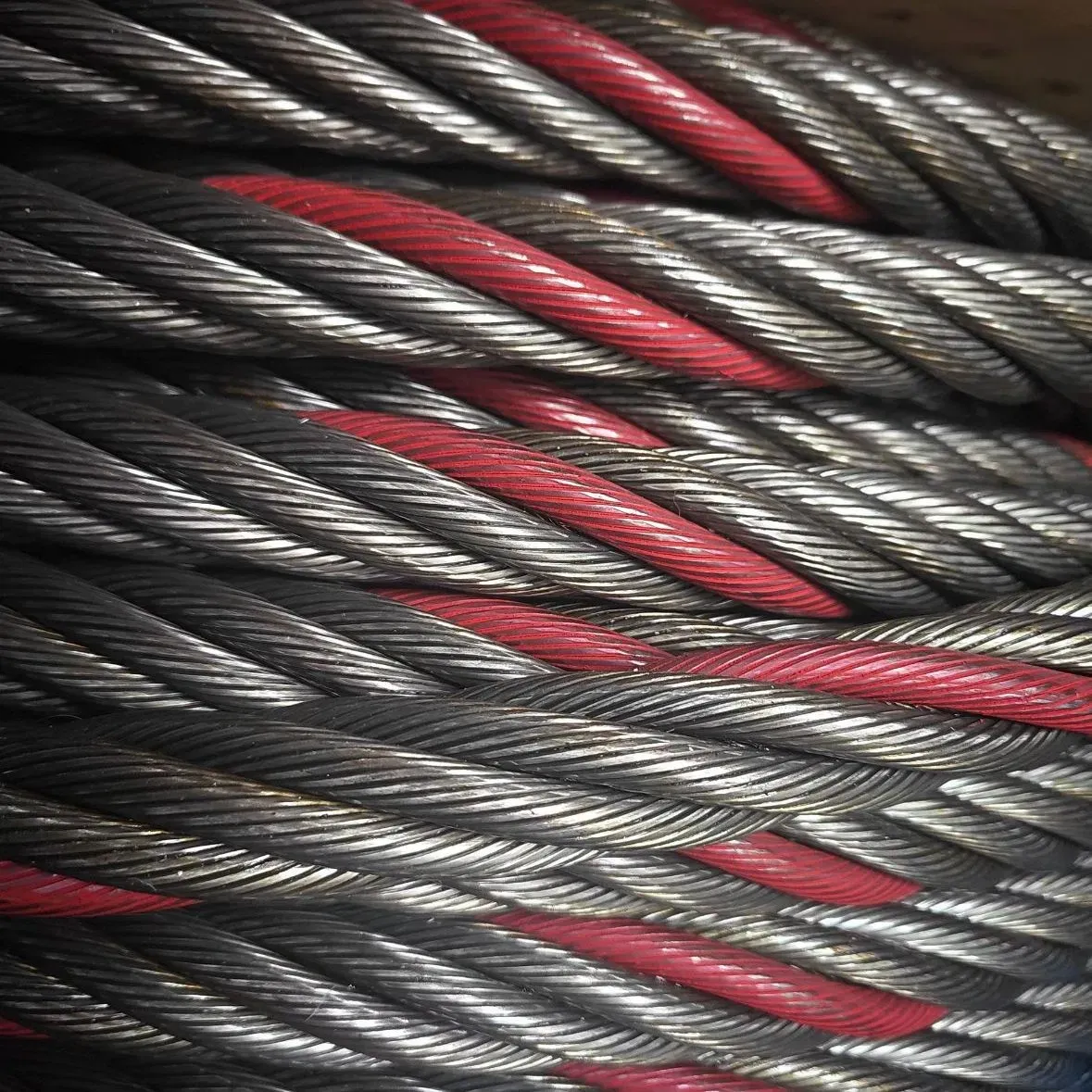
Steel wire rope is a critical component in virtually every marine and offshore operation — from securing a fishing vessel to a quay, to anchoring a floating production platform in 3,000 metres of water. The marine environment, however, is among the most aggressive on earth: constant saltwater exposure, dynamic wave loads, UV radiation, and high humidity combine to test every material and construction choice.
This guide explains the main applications, rope constructions, materials, coatings, certification requirements, and selection factors for marine and offshore wire rope.
What Makes Marine Wire Rope Different?
A wire rope used at sea is not simply a standard industrial rope used outdoors. It must withstand:
Challenge | Consequence |
|---|---|
Saltwater corrosion | Rapid loss of steel cross-section, pitting, premature failure |
Dynamic loading | Constant wave-induced tension cycles cause fatigue |
Bending over sheaves and drums | Fatigue at the rope surface and internal wire contact points |
Abrasion | Contact with fairleads, winch drums, and deck equipment |
Marine growth | Micro-organisms and algae accelerate corrosion under coatings |
UV exposure | Degrades fibre cores and some synthetic lubricants |
This is why marine wire rope is almost always hot-dip galvanized or manufactured from stainless steel, and why certification by a recognised classification society is frequently required.
Key Applications in Marine & Offshore
1. Vessel Mooring Lines
Mooring lines hold vessels alongside quays, piers, or other ships. They must be flexible enough to handle easily by crew, yet strong enough to absorb shock loads from waves and wind.
Typical specification:
- Construction: 6×36 + IWRC or 6×37 + IWRC
- Finish: Hot-dip galvanized, Class A or B according to ISO 2232
- Diameter: commonly 20 mm to 48 mm for merchant vessels
- Key properties: high flexibility, good shock load capacity, ease of splicing
2. Offshore Platform Permanent Mooring
Permanent mooring systems anchor floating oil and gas platforms, FPSOs, and floating wind turbines to the seabed for decades. These systems demand maximum reliability and are designed for fatigue lives of 30 to 50 years.
Two main rope types:
Rope Type | Characteristics |
|---|---|
Six-strand rope (6×36, 6×41, 6×49) | Flexible, lower cost, used on mobile moorings and smaller installations |
Spiral strand rope | High axial stiffness, excellent corrosion resistance, low rotation, used for permanent deepwater mooring |
Spiral strand ropes are manufactured with galvanized wires and often have a zinc-aluminium alloy coating plus a protective outer sheath. They are produced to extremely tight diameter tolerances and delivered in single lengths up to several thousand metres.
3. Anchor and Towing Lines
For anchoring vessels, towing barges, and positioning offshore support vessels, wire rope must combine high strength with controlled stretch.
Typical specification:
- Construction: 6×36 + IWRC
- Finish: hot-dip galvanized
- Key properties: high breaking strength, moderate flexibility, good wear resistance on winch drums
4. Offshore Crane Hoist Ropes
Offshore cranes — on platforms, FPSOs, and construction vessels — lift everything from food containers to 500-tonne subsea modules. Rope failure during lifting is unacceptable.
Typical specification:
- Construction: compacted, rotation-resistant types (e.g., 35×7, 34×7)
- Finish: hot-dip galvanized or stainless steel
- Strength: 1960 MPa or 2160 MPa grades
- Certification: DNV, ABS, Lloyd's Register, BV, or CCS product certificates
5. Shipboard Cranes, Winches, and Davits
General shipboard lifting equipment — provision cranes, hose-handling cranes, lifeboat davits — uses galvanized flexible wire ropes with good fatigue life. Stainless steel ropes are preferred for lifeboat falls and other safety-critical applications because they resist corrosion even when rarely used.
6. Subsea Lifting and Recovery
For lowering and recovering subsea equipment — ROVs, manifolds, templates, and survey equipment — the wire rope must perform reliably in seawater at depth. This is one of the most demanding applications, requiring:
- High strength-to-weight ratio
- Excellent corrosion resistance
- Minimal rotation (to avoid twisting subsea loads)
- Frequent inspection and retirement
Stainless steel or heavily galvanized compacted ropes are commonly specified.
Rope Constructions for Marine Use
Construction | Characteristics | Common Applications |
|---|---|---|
6×19 + IWRC | Moderate flexibility, good abrasion resistance | Standing rigging, light mooring |
6×36 + IWRC | High flexibility, good fatigue life, standard mooring choice | Mooring lines, towing, winches |
6×37 + IWRC | Similar to 6×36, slightly more flexible | Mooring, shipboard cranes |
6×41 + IWRC | High flexibility, good for multi-layer spooling | Offshore crane hoist ropes |
Compacted / swaged | Higher breaking strength, better crush resistance | Offshore cranes, deepwater lifting |
35×7 / 34×7 rotation-resistant | Minimises rotation under load | High-lift offshore cranes, subsea lifts |
Spiral strand | High stiffness, low rotation, extreme corrosion resistance | Permanent offshore mooring |
Materials and Corrosion Protection
Hot-Dip Galvanized Wire Rope
The standard choice for most marine applications. The zinc coating acts as a sacrificial anode — it corrodes before the steel does — and provides robust, long-term protection.
Coating Class | Zinc Mass | Typical Use |
|---|---|---|
Class A (heavy) | ≥ 240 g/m² per wire surface | Permanent mooring, subsea, critical applications |
Class B (standard) | 130–200 g/m² | General shipboard and mooring use |
For marine environments, Class A galvanizing is strongly preferred.
Zinc-Aluminium Alloy Coating (e.g., Galfan)
A zinc-aluminium alloy coating offers 2–3 times the corrosion resistance of pure zinc at the same thickness. It is increasingly used for spiral strand and high-performance mooring ropes.
Stainless Steel Wire Rope
For maximum corrosion resistance and long service life in seawater, AISI 316 stainless steel is the standard. It requires no sacrificial coating and is ideal for:
- Lifeboat falls
- Safety-critical rigging
- Architectural marine applications (railings, balustrades)
- Subsea instrumentation cables
AISI 304 can be used in coastal environments where exposure is intermittent, but is not recommended for continuous seawater immersion.
Lubrication
Marine wire rope is supplied with a corrosion-inhibiting lubricant, applied either as a manufacturing lubricant or as a heavy post-production coating. Some permanent mooring ropes also have an outer polyurethane sheath for additional protection.
Certification and Classification Societies
Any wire rope used on a classed vessel or offshore installation must be certified by a recognised classification society. The most common are:
Society | Full Name | Origin |
|---|---|---|
DNV | Det Norske Veritas | Norway |
ABS | American Bureau of Shipping | USA |
LR | Lloyd's Register | UK |
BV | Bureau Veritas | France |
CCS | China Classification Society | China |
RINA | Registro Italiano Navale | Italy |
Certification involves:
- Factory approval of the rope manufacturer
- Product design approval (for specific constructions)
- Witnessed testing of each production batch
- Issuance of a product certificate for the final delivered rope
For permanent mooring systems, the entire chain — from wire rod through rope manufacture to final installation — is documented and certified.
How to Select the Right Marine Wire Rope
Use this decision path to specify the correct rope:
Step 1: Define the Application
- Mooring line? Offshore crane? Anchor line? Subsea lift?
- The function determines the required flexibility, rotation resistance, and fatigue life.
Step 2: Determine Loading Conditions
- What is the maximum working load?
- What is the safety factor required by the class rules or installation standard?
- Is the load static, dynamic, or cyclic?
Step 3: Select the Construction
- For general mooring: 6×36 + IWRC
- For high-lift cranes: compacted rotation-resistant
- For permanent mooring: spiral strand
Step 4: Choose Corrosion Protection
- General shipboard use: hot-dip galvanized Class B or A
- Permanent or subsea: Class A galvanized or zinc-aluminium alloy
- Safety-critical or aesthetic: AISI 316 stainless steel
Step 5: Confirm Certification
- Which classification society is required by the vessel or operator?
- Is a product certificate needed, or is a mill test certificate sufficient?
Maintenance and Retirement
Marine wire rope requires regular inspection and maintenance. Key practices include:
- Rinse with fresh water after exposure to salt spray
- Inspect for broken wires, corrosion, and deformation before each critical lift
- Measure rope diameter at regular intervals — retire if diameter reduces by more than 6–10%, depending on the standard
- Lubricate according to manufacturer recommendations
- Track service history for fatigue-critical applications, particularly offshore crane and permanent mooring ropes
Summary
Marine and offshore wire rope is a specialist product category. Every decision — construction, diameter, coating, and certification — must be justified by the application's mechanical and environmental demands. Cutting corners on corrosion protection or certification is never worth the long-term risk.
Boyuan Metal supplies hot-dip galvanized and stainless steel wire ropes for marine and offshore applications, including 6×36 + IWRC mooring ropes, compacted rotation-resistant constructions, and subsea lifting ropes. Through our approved partner factories, we can arrange classification society certification to DNV, ABS, LR, BV, or CCS as required. Contact us to discuss your project requirements.
Frequently Asked Questions
Why is marine wire rope different from standard industrial rope?
A rope used at sea has to withstand continuous saltwater corrosion, dynamic loading and constant movement. That is why marine wire rope is almost always hot-dip galvanized or manufactured from stainless steel, and why classification society certification is normally specified for it.
What construction is used for vessel mooring lines?
6x36 + IWRC or 6x37 + IWRC, hot-dip galvanized to Class A or B according to ISO 2232, commonly 20 mm to 48 mm diameter for merchant vessels. The priority is high flexibility, good shock load capacity and ease of splicing.
What is the difference between Class A and Class B galvanizing?
Class A is the heavy coating, at not less than 240 g/m2 of wire surface, and is used for permanent mooring, subsea and other critical applications. Class B is the standard coating at 130-200 g/m2, used for general shipboard and mooring duty.
Which classification societies are relevant for marine wire rope?
Common societies include DNV (Det Norske Veritas, Norway), ABS (American Bureau of Shipping, USA), LR (Lloyd's Register, UK), BV (Bureau Veritas, France), CCS (China Classification Society) and RINA (Registro Italiano Navale, Italy).
What wire rope is used for permanent offshore mooring?
Spiral strand ropes, manufactured with galvanized wires and often a zinc-aluminium alloy coating plus a protective outer sheath. They provide high stiffness, low rotation and extreme corrosion resistance for the decades-long design life of permanent mooring systems.