
Oct 31, 2026News & Insights
S Hook vs Snap Hook: What the Missing Gate Changes
An S hook and a snap hook both join things quickly, but only one has a gate. That difference decides what each hook can hold, how it is fitted, and where it must not be used.
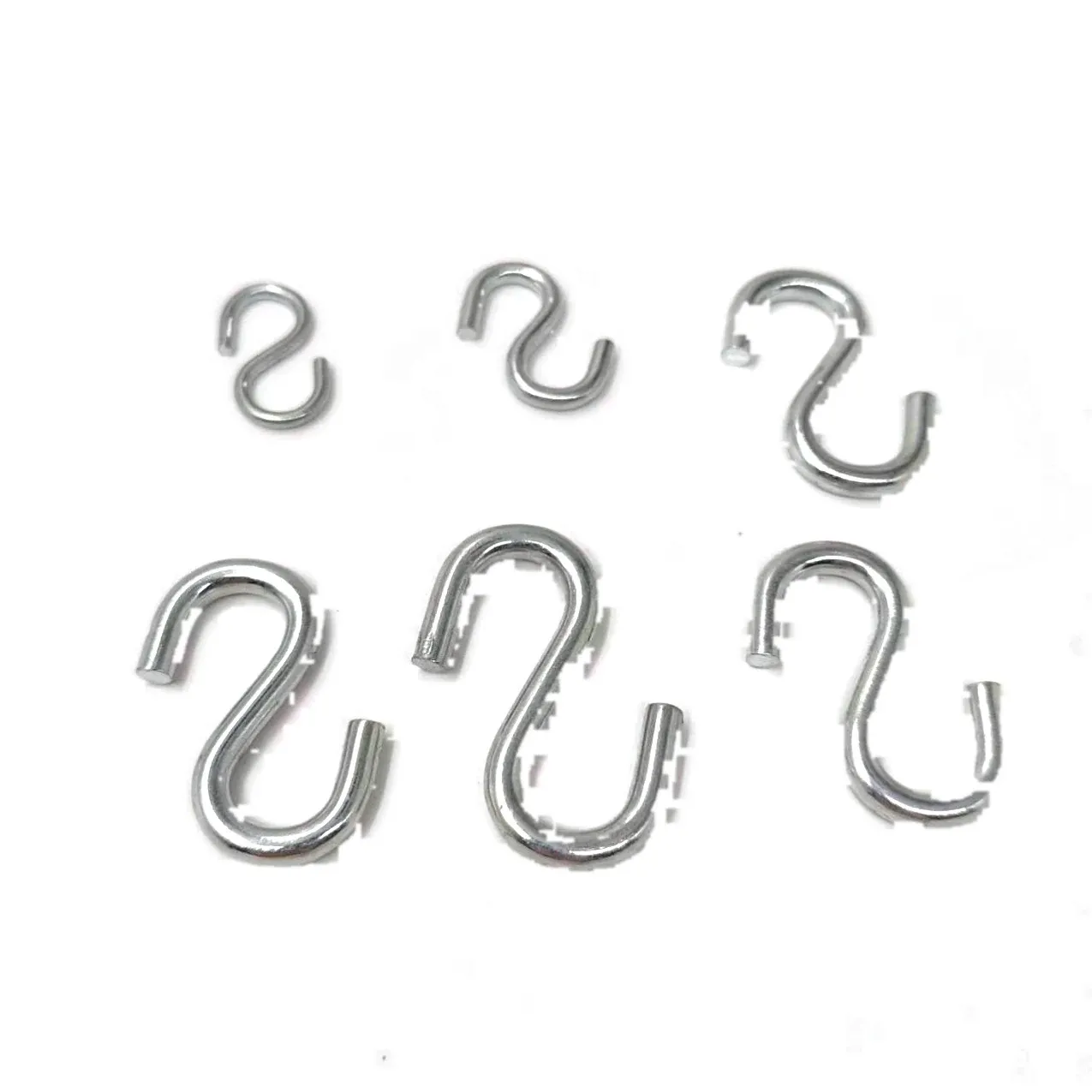
Put an S hook and a snap hook side by side and the difference is easy to miss. Both are open hooks and both hang something in seconds. The one structural difference is a spring-loaded gate, and nearly everything else follows.
The Difference in One Line
A snap hook has a gate; an S hook does not. The gate springs shut after clipping on, blocking the opening until someone presses it open. An S hook has two open ends and nothing that closes: it holds by the bend and the hanging weight.
What the Gate Buys You
The gate turns an open hook into a connection that resists coming off: once clipped on, a snap hook stays attached until deliberately released. That is why it suits quick connections in rigging, leashes and tethers.
The gate must never carry load. The hook takes the pull along its body with the load in the bowl; a pull on the gate or a load on the tip can open or bend it, and the hook then fails below its rating. A bent, non-closing or missing gate means it should not be used. Our guide to choosing a snap hook covers the gate rule in full.
What the Missing Gate Means for an S Hook
An S hook is a double-ended hook: one bend takes the chain, the other the thing being hung. It needs no tools, which is the point of it. With knotted, single jack and decorative chain it hangs lamps, signs and planters and makes light connections.
Because nothing closes, an S hook relies on gravity and geometry: it is for hanging and light connections, not for pulling or a load under variable tension. Since the opening stays open, it suits a connection made and remade, not one that must stay shut against vibration or slack.
Material and Finish
Fitting follows the same split. A snap hook is worked with the thumb: press the gate, clip on, let it close; release is the same motion. An S hook is hung over a bar, rail or link, with nothing to press, so removal is a lift and a turn.
Both come in carbon steel, zinc plated or electro galvanized, with stainless steel for outdoor or salt-water use. Snap hooks come in DIN 5299 A (with eyelet) and C forms; S hooks are specified by wire diameter and opening size.
Where Neither Hook Belongs
Neither hook is a rated lifting fitting. Chain supplied with S hooks is commercial, not grade-marked lifting chain, and must not be used for overhead lifting; nor may a snap hook suspend a load or person overhead. Overhead lifting needs fittings made and marked for it.
Frequently Asked Questions
What is the difference between an S hook and a snap hook?
A snap hook has a spring-loaded gate that closes the opening after clipping on; an S hook has no gate and is held by its shape and the load. The gate makes a snap hook resist coming off; an S hook is for hanging and light connections.
Can an S hook be used instead of a snap hook?
Only where the connection need not stay closed. An S hook can be lifted off, so it suits hanging signs, lamps and planters and quick repositioning. Where the connection must stay shut, a snap hook with a gate is the right fitting.
Can either hook be used for lifting?
No. Neither is a rated lifting fitting, and chain supplied with S hooks is not grade-marked lifting chain. Overhead lifting requires fittings made and marked for lifting, rated to match the chain.
Boyuan Metal supplies S hooks in carbon steel, zinc plated or electro galvanized, with stainless steel available, and snap hooks in DIN 5299 A and C forms. Tell us what the hook holds and what it connects to, and we will confirm the fitting.