
Sep 16, 2026News & Insights
Swing Chain: Stainless or Galvanized
Which DIN 766 swing chain suits a playground: stainless steel AISI 304 or 316, or hot-dip galvanized carbon steel? Materials, coatings and safety points compared.
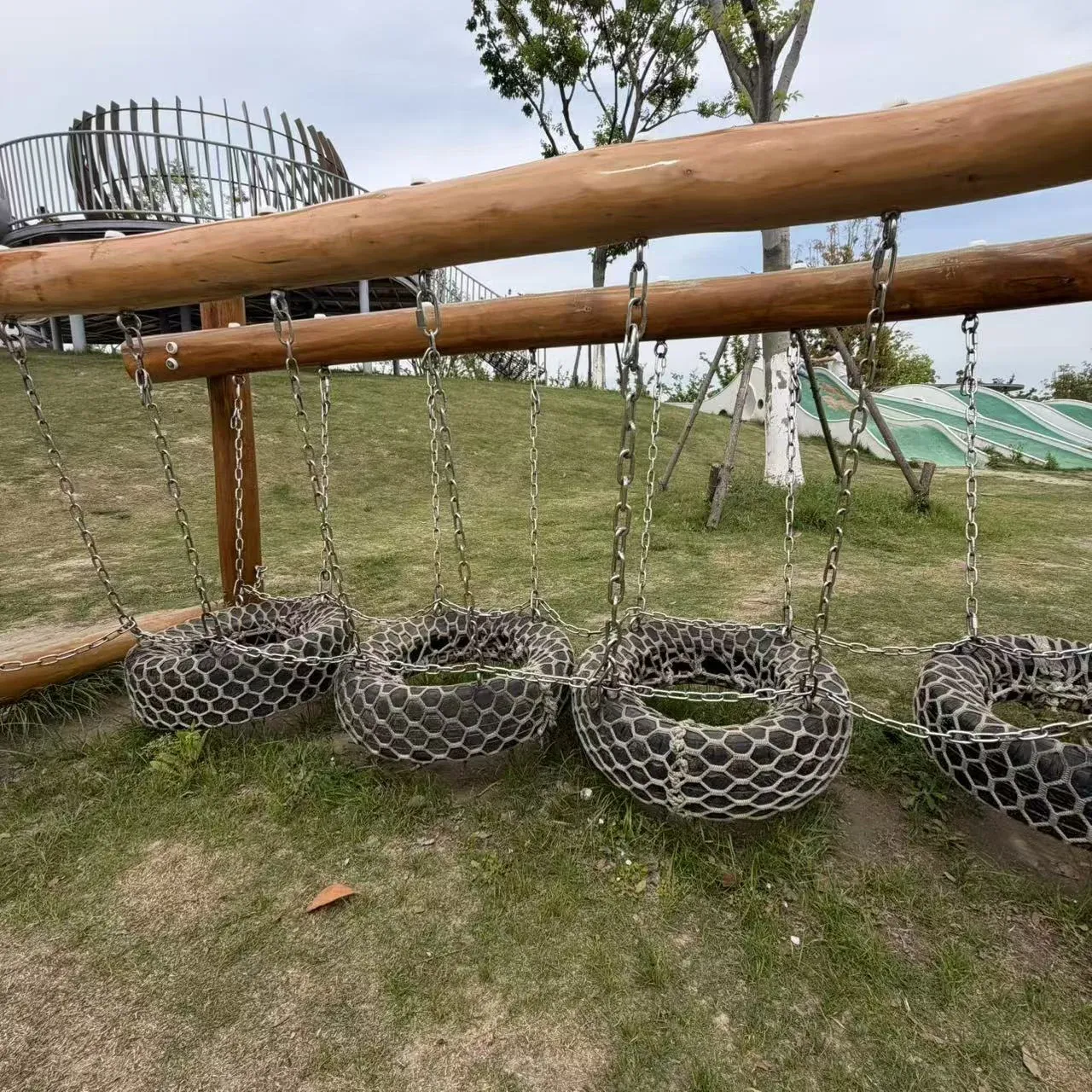
A swing is simple in design, but its safety depends heavily on one small component: the chain. For public playgrounds, school yards, and residential swing sets, the chain must be strong enough to hold children, gentle enough to prevent injuries, and durable enough to withstand sun, rain, and snow.
That is why many playground manufacturers and safety inspectors specify DIN 766 chains – a standard originally developed for calibrated marine chains, but now widely recognised as an excellent choice for suspended play equipment.
What Makes DIN 766 Suitable for Swings?
The DIN 766 standard defines a short‑link chain with a pitch (link length) equal to approximately 2.8 × wire diameter. This relatively short pitch creates a smoother, less “bumpy” ride for children. More importantly, the chain is calibrated – meaning each link is precisely sized to ensure consistent internal dimensions. For playground use, this calibration directly affects safety.
Grade 30: The Right Strength for Playgrounds
Not all chains need to be lifting‑grade G80. For swings and playground structures, Grade 30 (also known as Grade 300 or proof coil chain) is the typical specification. Grade 30 has a minimum breaking strength of 300 N/mm², which provides ample load capacity for the dynamic forces generated by swinging children – while remaining flexible and cost‑effective.
- Typical working load limit (WLL) for a 6 mm Grade 30 chain is approximately 400–500 kg – far above any realistic load from a child.
- Safety factor is built into the design, usually 4:1, meaning the chain will not fail even under unexpected abuse or overload conditions.
Pinch Points: The Critical Inner Dimension
Children’s fingers are small, curious, and easily caught in chain links. The most common playground chain injury is pinching or crushing when a child grips the chain while swinging. To prevent this, the internal width and length of each link must be carefully controlled.
DIN 766 calibrated chains offer consistent internal dimensions. For playground use, additional precautions are often taken:
- Smaller wire diameters (e.g., 4 mm, 5 mm, or 6 mm) reduce the internal opening where fingers could enter.
- Plastic chain covers (polyamide or PVC sleeves) are frequently slid over the chain to completely eliminate pinch points while preserving the swing motion.
- Closed fittings (shackles, eye hooks, or swivels) with minimal gaps are used at attachment points.
When specifying a swing chain, always check the internal link clearance – ideally no more than 8–10 mm to keep small fingers safe.
Outdoor Durability: Stainless Steel or Hot‑Dip Galvanised?
Playgrounds are exposed environments. Rain, humidity, UV radiation, and even salty coastal air will quickly corrode ordinary steel chains. Rust not only weakens the chain but also creates sharp edges and stains children’s hands and clothes.
Two reliable material choices exist for outdoor swing chains:
1. Stainless Steel (AISI 304 or 316)
- AISI 304 offers excellent resistance to rain and atmospheric moisture, making it suitable for most playgrounds.
- AISI 316 (with molybdenum) is recommended for coastal areas or environments with de‑icing salts.
- Stainless steel chains are rust‑free, require almost no maintenance, and retain a clean, bright appearance for years.
- The polished finish is smooth and will not snag skin or clothing.
2. Hot‑Dip Galvanised Carbon Steel
- A more economical choice while still providing good corrosion protection.
- The zinc coating (applied to ISO 1461 standards) bonds metallurgically to the steel, creating a tough, sacrificial layer.
- Over time, galvanised chains may develop white rust (zinc oxidation) or eventually rust if the coating is worn – so regular inspection is recommended.
- Galvanised chains should be passivated (post‑treatment) to reduce surface roughness that could cause abrasion.
Verdict for playground owners: If budget allows, stainless steel is the superior long‑term solution. For seasonal or covered playgrounds, quality hot‑dip galvanised chains also work well.
Additional Safety Considerations
- No sharp edges or burrs – Chains must be deburred after welding and finishing. Stainless steel chains are typically polished.
- Swivels and attachments – Use closed (captive) shackles or threaded eye nuts to prevent disconnection. Open hooks are never acceptable on playground swings.
- Regular inspection – Check for wear elongation (replace if stretched >5%), cracks, corrosion, or damaged chain covers.
- Standards compliance – Where local regulations apply (e.g., EN 1176 for playground equipment), ensure the chain and its fittings meet the required tests, which often include dynamic load and fatigue testing.
Summary: Choosing the Right DIN 766 Chain for Your Playground
Feature | Recommendation |
|---|---|
Chain standard | DIN 766 calibrated (short link, consistent dimensions) |
Chain grade | Grade 30 (proof coil) – sufficient strength for children |
Material | Stainless steel AISI 304 (or AISI 316 for coastal areas) – or hot‑dip galvanised steel for budget projects |
Inner clearance | As small as practical; use plastic chain covers to eliminate pinch points |
Fittings | Closed shackles, safety hooks, or swivels with no exposed openings |
Inspection | Regular checks for wear, rust, and elongation |
Final Word
At Boyuan Metal, we understand that playground chains carry more than just weight – they carry the safety of children. Our DIN 766 chains in Grade 30 are available in stainless steel (AISI 304/316) and hot‑dip galvanised finish, with precise calibration and smooth surfaces. We also supply plastic chain covers and compatible fittings to help you build safer, longer‑lasting swings.
Choose the right chain. Keep the smiles coming.
Frequently Asked Questions
Why is DIN 766 used for playground swing chains?
The DIN 766 standard defines a short-link chain with a pitch (link length) equal to approximately 2.8 times the wire diameter. That relatively short pitch creates a smoother, less bumpy ride, and the chain is calibrated so each link is precisely sized with consistent internal dimensions.
What chain grade does a playground swing need?
Not every chain needs to be lifting-grade G80. For swings and playground structures, Grade 30 (also known as Grade 300 or proof coil chain) is the typical choice. The typical working load limit for a 6 mm Grade 30 chain is approximately 400–500 kg, far above any realistic load from a child, with a safety factor usually of 4:1.
How can pinch points be reduced?
The most common playground chain injury is pinching or crushing when a child's finger is caught in a link. Smaller wire diameters such as 4 mm, 5 mm or 6 mm reduce the internal opening; plastic chain covers in polyamide or PVC are frequently slid over the chain to eliminate pinch points while preserving the swing motion; and closed fittings with minimal gaps are used at attachment points. When specifying a swing chain, check the internal link clearance - ideally no more than 8–10 mm.
Should a playground use stainless steel or hot-dip galvanized chain?
Both are reliable. AISI 304 resists rain and atmospheric moisture and suits most playgrounds; AISI 316, which contains molybdenum, is recommended for coastal areas or where de-icing salts are used. Stainless steel chains are rust-free and their polished finish is smooth, so it will not snag skin or clothing. Hot-dip galvanized carbon steel is more economical, with zinc applied to ISO 1461, but galvanized chains may develop white rust and should be passivated, so regular inspection is recommended.
When should a swing chain be replaced?
Check for wear elongation and replace the chain if it is stretched by more than 5%. Also check for cracks, corrosion or damaged chain covers at each inspection.
What standards and fittings apply to playground chains?
Where local regulations apply, such as EN 1176 for playground equipment, the chain and its fittings must meet the required tests, which often include dynamic load and fatigue testing. Chains must be deburred after welding and finishing. Open hooks are never acceptable on playground equipment - use closed (captive) shackles or threaded eye nuts to prevent disconnection.