Sep 16, 2026News & Insights
Vertical vs. Horizontal Chain Bending Machines: How to Choose
Understanding which one suits your product is essential before investing in equipment or selecting a manufacturing partner
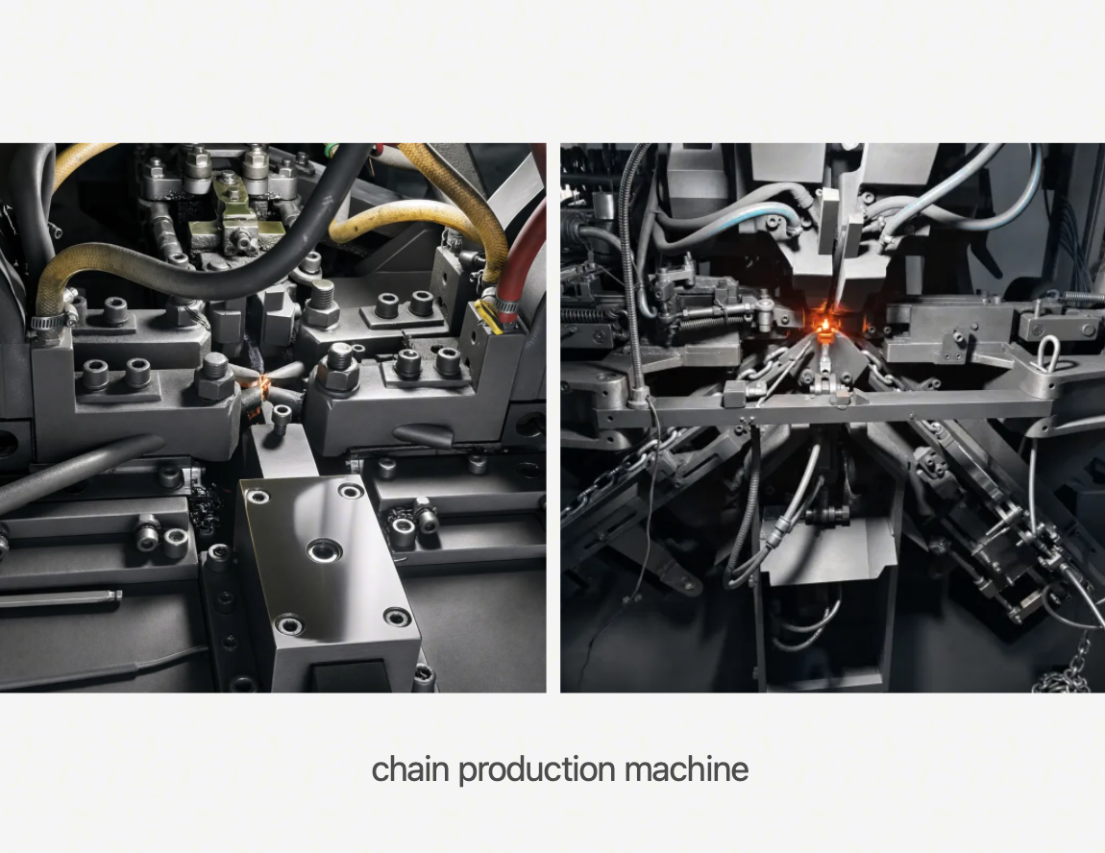
Every chain begins on a bending machine. Whether the finished product is a lifting chain, a marine mooring chain, or a hardware chain for retail, the machine that forms the links determines much of what follows: dimensional accuracy, surface finish, strength consistency, and production efficiency.
Chain bending machines fall into two main types: vertical (立式编链机) and horizontal (卧式编链机).
The Core Difference at a Glance
Aspect | Vertical Machine | Horizontal Machine |
|---|---|---|
Bending orientation | Links formed upright | Links formed flat |
Structure | Simple, fewer components | Complex, high-precision |
Wire diameter range | 1.5–12 mm | 5–24+ mm |
Bending capability | Single-layer | Multi-layer |
Short-pitch chain suitability | Limited | Good |
Link consistency | Moderate | High |
Equipment cost | Lower | Higher |
Production speed | Moderate | Higher on larger diameters |
Vertical Chain Bending Machines
Vertical machines form chain links in an upright position. They are mechanically simpler, easier to maintain, and less expensive to purchase.
What They Do Well
- Small diameter chains from approximately 1.5 mm to 12 mm
- Standard round link chains for hardware, DIY, decorative, and light industrial use
- Lower-volume production where budget or floor space is limited
Practical Production Experience
In day-to-day manufacturing, chains produced on vertical bending machines typically carry a light surface burr at the weld area. For applications where moderate surface finish and standard tensile strength are acceptable, vertical machines are the economical choice. A post-production deburring process can be applied if the burr is a concern, provided the tensile requirements are not demanding.
Limitations
- Short-pitch chains are difficult — the vertical orientation struggles to hold tight tolerances on compact link geometries
- Core (mandrel) breakage occurs more frequently, particularly on harder wire grades
- Link consistency varies more between pieces compared to horizontal machines
Horizontal Chain Bending Machines
Horizontal machines form links flat. They use more complex mechanical systems — often servo-driven with multiple control axes — and require higher precision in component machining.
What They Do Well
- Medium to large diameter chains from 5 mm up to 24 mm and beyond
- High-strength chains where precise geometry affects load distribution
- Short-pitch chains requiring tight tolerances
- High-volume production where consistency across thousands of links matters
Practical Production Experience
Horizontal bending machines produce chains with significantly cleaner welds and minimal surface burr. For applications where high tensile strength is required — such as Grade 80 or Grade 100 lifting chains — or where strict deburring standards apply, horizontal machines deliver a superior result. The multi-layer bending capability and tighter process control produce links with more uniform geometry and better surface quality straight off the machine.
Limitations
- Higher equipment investment
- More expensive maintenance and spare parts
- Larger footprint on the factory floor
- Longer setup time when changing between specifications
How to Decide: A Production Perspective
The choice between vertical and horizontal bending ultimately depends on the end use of the chain.
If your product requires... | Choose... |
|---|---|
Light burr acceptable, standard tensile strength | Vertical — cost-effective, good for small diameters |
Burr-free finish, standard tensile strength | Vertical + deburring process |
High tensile strength (G80/G100, alloy steel) | Horizontal — tighter control, cleaner weld |
Strict deburring requirement + high tensile strength | Horizontal — the only reliable choice |
For Boyuan Metal's Product Lines
Chain Type | Bending Machine | Reason |
|---|---|---|
Hardware chains, barrier chains, swing chains | Vertical or Horizontal | Standard strength, moderate finish acceptable |
DIN766 chains, general-purpose chains | Vertical | Small diameter, cost-efficient production |
Lifting chains (G80/G100) | Horizontal | High tensile strength, strict deburring required |
Marine mooring chains, large diameter chains | Horizontal | Tight tolerances, heavy-duty application |
Summary
Vertical chain bending machines offer simplicity and lower cost. They are the right choice for standard chains where moderate surface finish and tensile requirements are acceptable. Horizontal machines deliver higher precision, better link consistency, and cleaner welds — essential for high-strength chains and applications where burr-free finish is specified.
The decision comes down to a single question: what does the customer's application demand? Match the machine to that requirement, and the rest follows.
Boyuan Metal works with qualified manufacturing partners who select the appropriate bending technology for each chain specification, ensuring the right balance of quality, consistency, and cost for every order. Contact us to discuss your chain requirements.
Frequently Asked Questions
What is the difference between a vertical and a horizontal chain bending machine?
A vertical machine forms links in an upright position: simpler, easier to maintain and lower cost. A horizontal machine forms links flat, using more complex servo-driven systems: higher precision and consistency, at higher investment and maintenance cost.
What wire diameter does each machine suit?
Vertical machines handle small diameters from approximately 1.5 mm to 12 mm. Horizontal machines cover medium to large diameters from 5 mm up to 24 mm and beyond.
Why do vertical machines leave a burr on the weld?
It is a characteristic of the process rather than a defect: chains produced on vertical bending machines typically carry a light surface burr at the weld area. Where moderate surface finish and standard tensile strength are acceptable, that is fine; where a cleaner weld is required, a horizontal machine or a deburring step is used.
Which machine is used for G80 or G100 lifting chain?
Horizontal. High tensile strength chains such as G80 and G100, and any chain with a strict deburring requirement, need the tighter control and cleaner weld that horizontal machines provide.
What about short-pitch chains?
They are difficult on a vertical machine, which struggles to hold tight tolerances on compact link geometries. Horizontal machines handle short-pitch chain well.