Sep 27, 2026News & Insights
What Is DIN 5686 Chain? A Guide to Double Loop Chains Without Quality Requirements
When sourcing chains, not every application requires high strength or certified lifting capacity. Some jobs only need a lightweight, economical chain for hanging, securing, or decorating. That's where
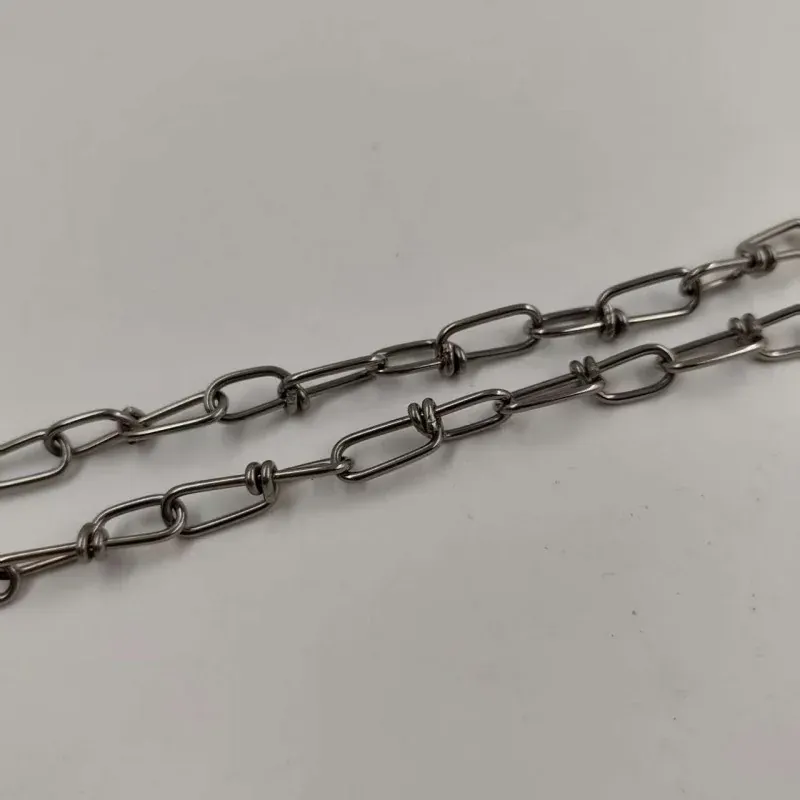
When sourcing chains, not every application requires high strength or certified lifting capacity. Some jobs only need a lightweight, economical chain for hanging, securing, or decorating. That's where DIN 5686 comes in — a German standard for double loop chains that are explicitly not designed for lifting.
What Is DIN 5686?
DIN 5686 is a German standard that covers double loop chains without quality requirements (in German: Rundstahlketten ohne Güteanforderungen). Unlike welded lifting chains, these chains are formed by bending steel wire into interlocking double loops — a "knotted" structure that requires no welding.
The key phrase in the standard is "without quality requirements." This means:
- No heat treatment is required
- No minimum breaking force is guaranteed
- No proof load test is performed
- The chain is not rated for any safe working load (WLL)
DIN 5686 chains are produced from low-carbon steel wire, typically with an electro-galvanized (zinc-plated) finish for basic corrosion resistance. Common wire diameters range from 1mm to 5.5mm.
What Is It Used For?
DIN 5686 chains are designed for non-load-bearing applications where the chain serves a securing, hanging, or decorative function. Typical uses include:
- Retail display: Hanging signage, poster frames, and ceiling decorations in shops
- General securing: Tying down lightweight items, fixing fences, bundling materials
- Safety barriers: Temporary area cordoning in warehouses or event spaces
- Part retention: Preventing loss of pins, caps, or small components with chain tethers
- Decorative purposes: Lightweight chain accents in furniture, lighting, or home décor
- Agricultural use: Non-structural connections where a flexible link is needed
Critical Safety Warning: Never Use for Lifting
This is the most important distinction to understand about DIN 5686:
DIN 5686 chains must never be used for overhead lifting, load bearing, or personnel protection.
They are not suitable for use with:
- Hoists, cranes, or winches
- Sling assemblies or lifting gear
- Any application governed by DIN 15003 (lifting accessories) or DIN 685 (tested chain)
- Dynamic loading or swinging loads
The double loop structure can deform under unexpected loads, and without certified breaking strength, there is no safety margin to rely on.
For reference only, typical maximum static loads for common sizes range from approximately 32 kg to 180 kg — but these are not rated working load limits and should never be relied upon for safety.
DIN 5686 vs. Lifting Chains: Key Differences
Feature | DIN 5686 | Lifting Chain (e.g., G80) |
|---|---|---|
Standard | Without quality requirements | Strict quality and testing requirements |
Construction | Double loop (knotted, no weld) | Welded links |
Material | Low-carbon steel | Alloy steel, heat-treated |
Strength grade | None | G80, G100, etc. |
Safe working load (WLL) | Not rated | Clearly specified |
Testing | Not required | Proof load tested per batch |
Intended use | Hanging, securing, decoration | Lifting, hoisting, rigging |
Which Chain Do You Need?
If your application involves any of the following, you need a chain rated for the application (such as G80 or G100 for lifting, or G43 and G70 for load securement), not DIN 5686:
- Lifting or hoisting loads
- Overhead suspension
- Towing or pulling
- Fall protection or personnel safety
- Marine mooring or anchoring
If you are simply hanging a shop sign, securing a gate, or adding a decorative chain detail, DIN 5686 may be sufficient.
Boyuan Metal Supply Note
While our core business is welded chains in grades 30 to 100 and stainless steel welded chains, we can also supply DIN 5686 double loop chains upon request — primarily in electro-galvanized finish, in standard diameters from 1mm to 5.5mm.
For customers unsure which chain standard fits their application, we are happy to provide technical guidance. Just let us know your working conditions and load requirements, and we will recommend the appropriate product.
Contact Boyuan Metal for a free consultation on chain selection.
Frequently Asked Questions
What is DIN 5686 chain?
DIN 5686 is a German standard covering double loop chains without quality requirements (Rundstahlketten ohne Güteanforderungen). The key phrase means that no heat treatment is required, no minimum breaking force is guaranteed, no proof load test is performed, and the chain is not rated for any safe working load.
Can DIN 5686 chain be used for lifting?
No. DIN 5686 chains must never be used for overhead lifting, load bearing or personnel protection. They are not suitable for hoists, cranes or winches, sling assemblies or lifting gear, any application governed by DIN 15003 or DIN 685, or dynamic loading and swinging loads.
What is DIN 5686 chain used for?
Non-load-bearing applications where the chain secures, hangs or decorates: retail display such as hanging signage and poster frames, general securing and bundling, temporary safety barriers, part retention tethers, decorative accents, and non-structural agricultural connections.
What is DIN 5686 chain made from?
Low-carbon steel wire, typically with an electro-galvanized (zinc-plated) finish for basic corrosion resistance.
What loads can a DIN 5686 chain carry?
For reference only, typical maximum static loads for common sizes range from approximately 32 kg to 180 kg, but these are not rated working load limits. The double loop structure can deform under unexpected loads, and without certified breaking strength there is no safety margin to rely on.