
News & Insights
Wire Rope and Fittings for Fencing and Boundaries: Where Each Part Goes
A fence line pulls in one direction for hundreds of metres, and that changes what the hardware has to do. How terminals, tensioners and corners are handled in a rope fence.
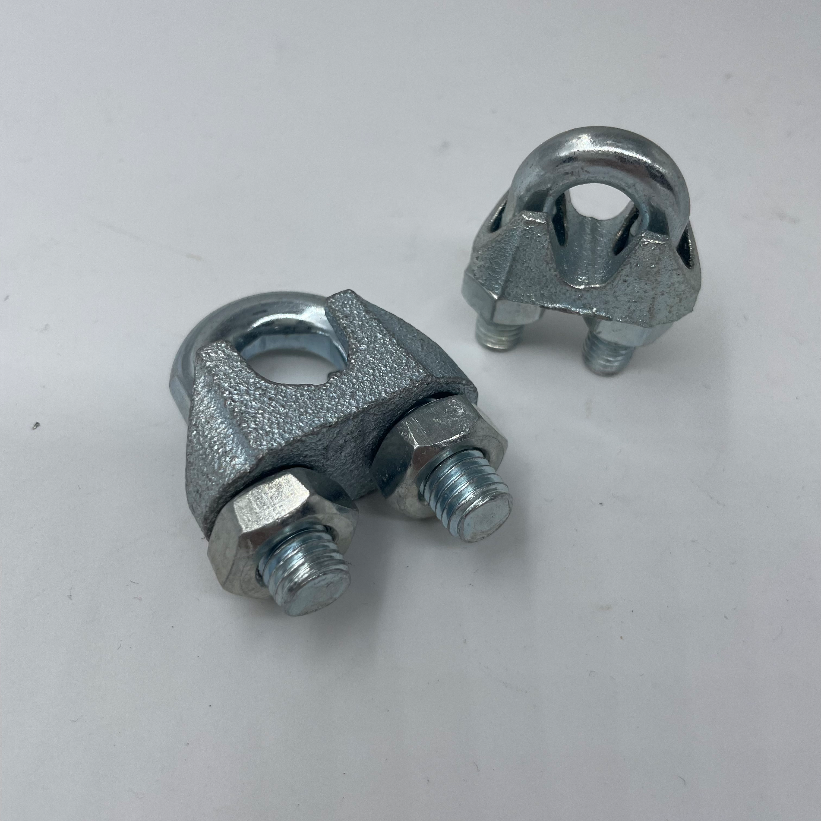
A fence is not a sling. A sling pulls from one point to another and is then taken down. A fence line runs for hundreds of metres, is pulled tight once, and stays under tension for years while wind, temperature and stock work on it. The hardware has to be chosen for that life.
Why Tension Is the Whole Job
Wire rope fencing works because the rope is under tension: that is what stops the line sagging between posts and keeps stock from pushing through. Everything else exists to create and hold that tension. An untensioned rope is a barrier in appearance only.
That explains most of the hardware. Terminals must grip without slipping; tensioners must take up slack as the line stretches and settles; corner posts must resist a sideways pull several times the line tension. Get one wrong and the line goes slack.
Terminations at the Ends
The end of a line takes the full tension of the run, so it is the part worth getting right. Two ways to make the eye: a wire rope clip clamps the rope back on itself, quick and needing no machine; a swaged fitting is pressed on and gives a compact, smooth termination.
Whichever is used, a thimble belongs inside the eye: it holds it open at a controlled radius and protects the rope where it bears on a shackle, hook or pin. Without one the eye collapses and the rope is crushed exactly where it carries the most. Our note on clips and thimbles sets the two side by side.
If clips are used, two details decide whether the termination holds: the right number and spacing for the rope diameter, and the saddle on the load-bearing side. Clips also need re-tightening after the first loading, because the rope settles.
Tensioning Along the Run
A long line is tensioned in sections, not in one pull. A turnbuckle at an intermediate post lets a length be tightened independently, which is how a span that sags after a season is adjusted. Turnbuckles come with hook and eye, hook and hook, or eye and eye ends; the choice follows what each end connects to.
Leave thread in reserve: a turnbuckle run all the way in has no adjustment left, and a fence that cannot be tightened gets replaced early. Our guide to choosing a turnbuckle covers end fittings and sizing.
Corners, Gates and Changes of Direction
A corner post takes not the line tension but the resultant of two runs meeting at an angle, and on a sharp corner that pull is large. That is why corner and end posts are braced rather than simply set, and corner hardware is heavier than mid-span hardware.
What to Specify
Four things carry a fence hardware order: rope diameter and construction, terminal method with thimbles, number and size of turnbuckles, and finish. The finish matters more than indoors because a fence is outside permanently: galvanized is normal, and heavier galvanizing suits coastal or industrial sites.
Frequently Asked Questions
Can I use wire rope clips to make fence eyes?
Yes. Fit the correct number and spacing for the rope diameter, put the saddle on the load-bearing side, and re-tighten after the first loading.
Do I need a thimble in a fence eye?
It is worth fitting one. It holds the eye open at a controlled radius and protects the rope where it bears on a shackle or pin, which is where the load is concentrated.
Boyuan Metal supplies wire rope with US type and DIN 741 clips, thimbles, DIN 1480 turnbuckles in hook and eye, hook and hook or eye and eye form, in galvanized finish. Tell us the run length, rope diameter and how the line is anchored, and we will confirm the set.