Aug 18, 2026News & Insights
Wire Rope Net: Types, Applications & Selection Guide
Wire rope net is a high-strength mesh structure made from galvanized or stainless steel wire ropes, joined at each intersection with metal ferrules, clips, or woven connections
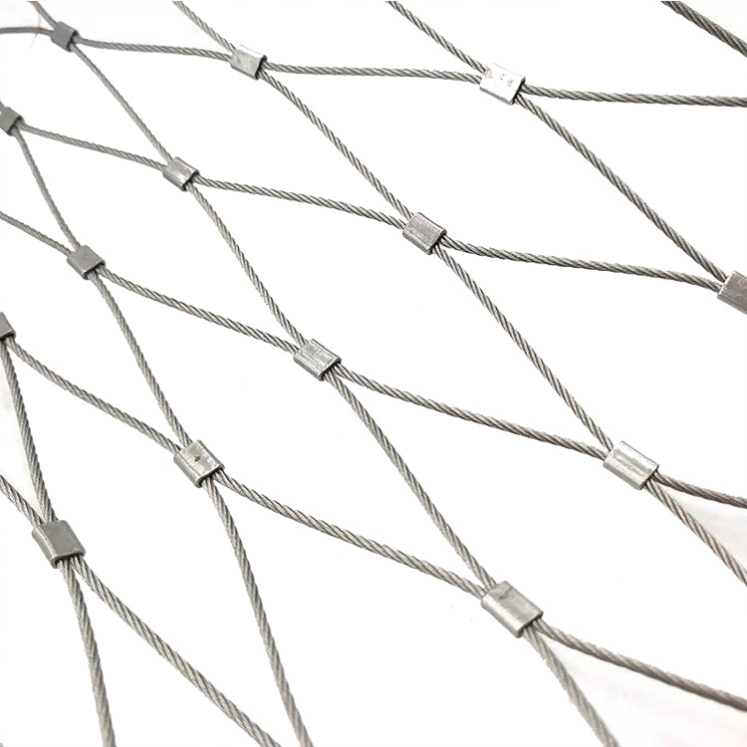
Unlike welded wire mesh or chain-link fencing, a wire rope net combines exceptional tensile strength, flexibility, and impact resistance — making it the preferred solution for safety, protection, and architectural applications where ordinary mesh would fail.
This guide explains the main types, key applications, material choices, and selection criteria for wire rope nets.
What Makes Wire Rope Net Different?
A wire rope net is not a single product but a system. It consists of individual steel wire ropes arranged in a grid pattern and fixed at cross points. The ropes themselves provide the structural strength, while the mesh geometry allows the net to absorb and distribute impact energy over a large area.
This design gives wire rope nets several unique properties:
- High energy absorption — a net can stretch and deform under impact without breaking
- Flexibility — the net follows the shape of the terrain or structure
- Corrosion resistance — galvanized or stainless steel construction suits outdoor and marine environments
- Transparency — open mesh allows light, wind, and visibility to pass through
- Long service life — with proper material selection, a net can last 20 to 50 years
Main Types of Wire Rope Net
1. Rockfall Protection Net
Rockfall protection is the largest application for wire rope nets. These nets are installed on slopes, cliffs, and excavation faces to prevent falling rocks from reaching roads, railways, and buildings.
There are two system types:
Type | Function |
|---|---|
Active system | Covers the slope surface to hold loose rock in place |
Passive system | Stands at the toe of the slope to intercept already-falling rock |
Passive systems are rated by their energy absorption capacity — typically 500 kJ to 2000 kJ or higher — and must be designed according to the specific rockfall hazard at the site. The net, support ropes, posts, and anchors all work together as an engineered system, not as a standalone product.
2. Safety and Fall Protection Net
Wire rope nets are widely used to protect people from falls in construction, industrial facilities, playgrounds, and sports venues.
- Construction safety nets — prevent workers and tools from falling at height
- Playground and adventure park nets — enclose climbing structures and high ropes courses
- Sports barrier nets — contain balls in golf ranges, baseball fields, and stadiums
- Machine guarding nets — protect operators from moving machinery parts
For fall protection, flexibility is critical — the net must absorb the energy of a falling person without causing injury. Smaller mesh openings are used to prevent fingers, limbs, or tools from passing through.
3. Architectural and Green Wall Net
In architecture, wire rope nets have become a design element. Stainless steel nets are used for façade cladding, balustrade infill, green wall support, and animal enclosures.
- Green wall trellis — supports climbing plants to create living walls
- Façade mesh — adds texture and depth to building exteriors while providing safety
- Zoo and aviary enclosures — creates transparent barriers that blend into the landscape
This category typically uses thin stainless steel ropes (1.5 mm to 4 mm diameter) with a highly regular mesh pattern and polished finish for visual appeal.
4. Marine and Offshore Net
Marine environments demand maximum corrosion resistance and high structural integrity.
- Deck safety nets — prevent falls from vessel decks and offshore platforms
- Cargo containment nets — secure loose cargo during heavy seas
- Anti-shark and aquaculture nets — create protective barriers in fish farms
- Helideck perimeter nets — protect helicopter landing areas on ships and rigs
Marine nets are almost always manufactured from AISI 316 stainless steel or heavily hot-dip galvanized carbon steel. The mesh must withstand continuous salt spray, dynamic loading, and UV exposure.
5. Security and Blast Protection Net
High-security facilities use wire rope nets as anti-climb, anti-intrusion, and even blast mitigation barriers.
- Anti-climb fencing — prevents access to ports, prisons, and critical infrastructure
- Blast containment nets — reduce the impact of explosive debris
- Radar camouflage netting — special constructions for military installations
Material Selection
The choice of material determines how long the net lasts and where it can be used.
Material | Corrosion Resistance | Typical Application |
|---|---|---|
Hot-dip galvanized carbon steel | Good — zinc layer 80–120 μm | Rockfall protection, general outdoor use |
Zinc-aluminum alloy coated (e.g., Galfan) | Better — longer life than pure zinc | Harsh outdoor environments |
AISI 304 stainless steel | Good — suitable for most outdoor and architectural use | Building façades, safety nets |
AISI 316 stainless steel | Excellent — resistant to saltwater and chemicals | Marine, offshore, coastal installations |
For wire rope nets, the rope itself usually follows standard constructions such as 7×7, 7×19, 6×19 + FC, or 6×36 + IWRC, with diameters ranging from 1.5 mm to 16 mm depending on the required strength and mesh size.
Key Specifications to Consider
When sourcing a wire rope net, the following parameters must be defined:
Parameter | Typical Range | Notes |
|---|---|---|
Rope diameter | 1.5–16 mm | Determines tensile strength and impact capacity |
Mesh opening | 25 × 25 mm to 300 × 300 mm | Larger openings for rockfall, smaller for safety |
Rope construction | 7×7, 7×19, 6×19, 6×36 | Affects flexibility and strength |
Joint type | Cross clamp, aluminium ferrule, woven knot | Affects structural integrity and appearance |
Finish | Hot-dip galvanized, stainless steel, coated | Determines corrosion resistance |
Energy rating (rockfall) | 500–2000+ kJ | Must match site-specific hazard assessment |
How to Choose the Right Wire Rope Net
Step 1: Define the Application
Is the net for rockfall protection, personnel safety, architectural use, or marine deployment? Each application has different strength, mesh size, and finish requirements.
Step 2: Assess Environmental Conditions
- Coastal or marine → AISI 316 stainless steel or heavily galvanized
- Industrial pollution → zinc-aluminum coating or stainless
- Indoor / mild outdoor → hot-dip galvanized carbon steel
Step 3: Determine Load Requirements
For rockfall, an engineering assessment should quantify the impact energy (kJ). For fall protection, reference standards such as EN 1263-1. For cargo and marine nets, calculate the maximum dynamic load.
Step 4: Specify Mesh Size and Rope Diameter
Finer mesh provides higher containment but costs more and reduces visibility. Match rope diameter to the required breaking force and expected wear.
Step 5: Confirm Joint and Edge Details
The weakest point of any net is its connection. Specify cross clamps, ferrules, or spliced edges according to the load path and expected impact.
Frequently Asked Questions
What is the difference between wire rope net and chain-link mesh?A wire rope net uses flexible steel wire ropes connected at specific points, giving it much higher impact absorption and flexibility than rigid chain-link mesh. Chain-link is a woven wire fence; wire rope net is a structural safety system.
How long does a wire rope net last?With correct material selection, a hot-dip galvanized net can last 20–30 years in a temperate climate. Stainless steel 316 nets can last 40+ years, even in marine environments.
Can wire rope net be custom-made?Yes. Most nets are produced to customer-specific dimensions, mesh openings, rope diameters, and edge finishes.
What standards apply to wire rope nets?Rockfall systems follow guidelines such as ETAG 027. Fall protection nets follow EN 1263-1. Marine applications may require classification society certification (DNV, ABS, LR).
Boyuan Metal supplies high-strength steel wire ropes in galvanized and stainless steel finishes for wire rope net manufacturing, including 7×7, 7×19, 6×19, and 6×36 constructions. We support net fabricators and system integrators with consistent quality, custom lengths, and competitive factory-direct pricing. Contact us to discuss your wire rope requirements.