
Oct 26, 2026News & Insights
Wire Rope vs Synthetic Slings: Which Should You Choose?
Synthetic slings are taking share from wire rope - but neither replaces the other. How heat, abrasion, permanence and handling should drive the choice.
Synthetic slings have taken a growing share of the lifting market, and buyers increasingly ask whether they should replace wire rope and chain entirely. The honest answer: neither replaces the other. Each wins in different conditions, and most well-run operations use both.
Where Synthetic Slings Win
Synthetic slings are light, flexible and gentle on finished surfaces. They are easy to carry, they do not rust, and they will not mar a polished load. For short-term lifts, delicate loads and work where crews handle the sling by hand all day, synthetic is often the more practical choice.
Where Wire Rope Wins
Wire rope keeps its properties in heat, sunlight, abrasive grit and long-term outdoor exposure, where synthetic materials age, melt or are cut. It resists edge damage far better, it is the standard for permanent installations, guy lines, hoist ropes and crane duty, and a swaged wire rope assembly holds its geometry for years of service. For permanent or heavy-duty work, wire rope remains the default.
The Decision Factors That Actually Matter
Four questions settle most choices. How hot and how abrasive is the environment? How long does the assembly need to last in place? Will the load surface be damaged by steel? Who handles the rigging, and how often? Heat, grit and permanence point to wire rope; delicate loads and frequent manual handling point to synthetic.
A Place for Both in One Operation
Many operations use wire rope for the permanent lines, hoists and crane duties, and synthetic slings for the delicate or short-term picks. The two are complements rather than substitutes, and mixing them sensibly is a sign of a mature rigging practice, not an inconsistency.
Our Wire Rope Range
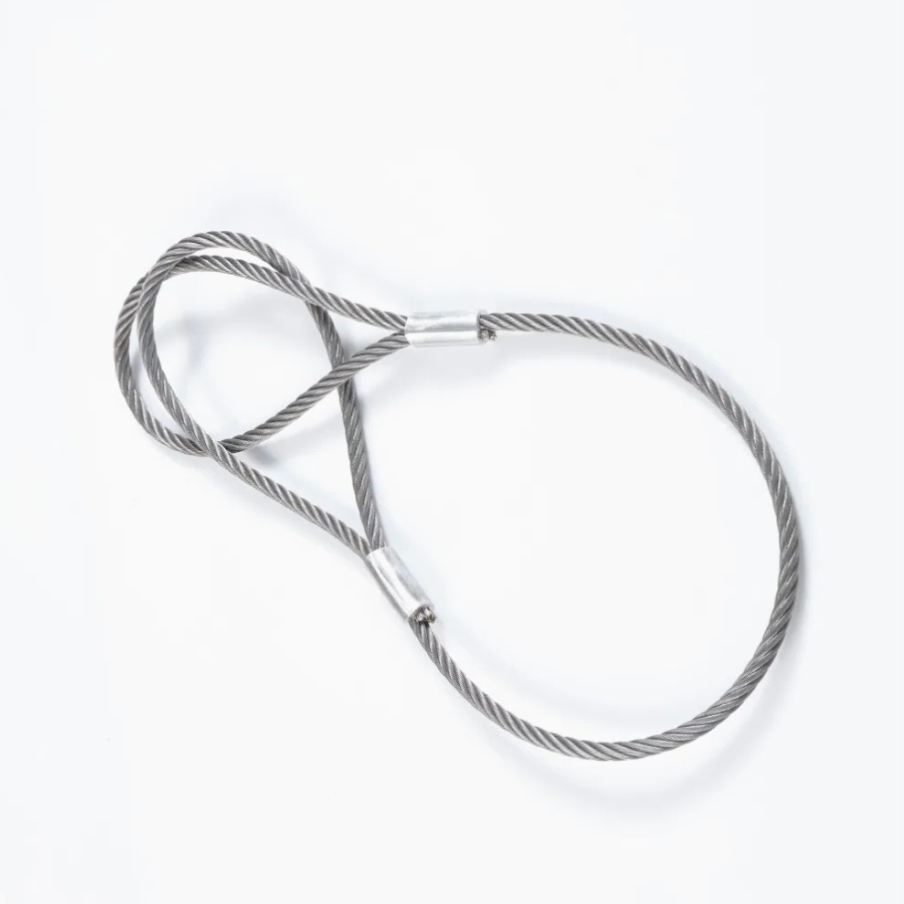
We supply steel wire rope in carbon, alloy and stainless grades across a full range of constructions (1x7 to 6x37+IWRC and more), together with swaged assemblies such as
crane lifting swaged soft loop slings. Tell us the load, the environment and the handling, and we will confirm the right construction for your application.
Frequently Asked Questions
Do synthetic slings replace wire rope?
No. Neither replaces the other. Each wins in different conditions, and most well-run operations use both.
When is a synthetic sling the better choice?
For short-term lifts, delicate or finished loads, and work where crews handle the rigging by hand all day. Synthetic slings are light, flexible, gentle on surfaces, and they do not rust.
When is wire rope the better choice?
In heat, sunlight, abrasive grit and long-term outdoor exposure, where synthetic materials age, melt or are cut. Wire rope also resists edge damage far better, and it is the standard for permanent installations, guy lines and hoist ropes.
Can I use wire rope and synthetic slings in the same operation?
Yes. Many operations use wire rope for the permanent lines, hoists and crane duties, and synthetic slings for the delicate or short-term picks. Mixing them sensibly is a sign of a mature rigging practice.
What decides which one to use?
Four questions: how hot and how abrasive the environment is, how long the assembly must last in place, whether the load surface would be damaged by steel, and who handles the rigging and how often. Heat, grit and permanence point to wire rope; delicate loads and frequent manual handling point to synthetic.