Oct 26, 2026News & Insights
Chain for Egg Conveyors: Clean, Smooth and Quiet
An egg conveyor asks for a chain that runs smoothly, cleans easily and does not damage what it carries. What that means for material, finish and running quality.
An egg conveyor is a gentle-duty application with unusually strict requirements. The load is light, but the product is fragile, the environment is a food handling area, and the line often runs for long periods. A chain that suits a heavier conveyor can be wrong here: the criteria are smoothness, cleanliness and quiet running, not strength.
Why the Criteria Are Different
Three requirements shape the choice. The chain has to run smoothly, because any jerk is transmitted to what it carries. It has to be cleanable, because it works where residues and cleaning agents are routine. And it has to be quiet, because these lines often run continuously where people work. None of those is a strength requirement, so a heavier chain is not automatically better.
Material and Finish
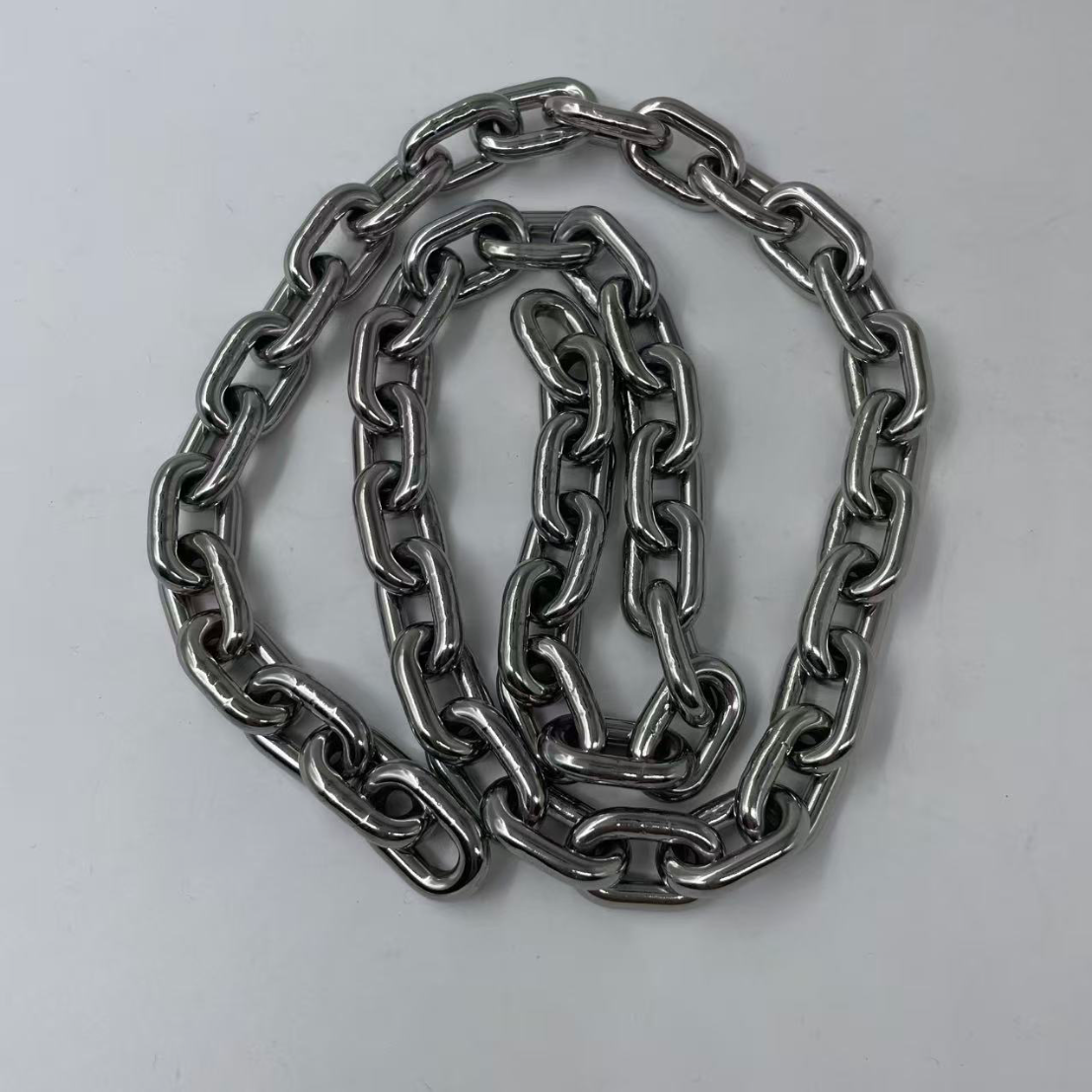
The usual starting point is a calibrated chain in alloy steel, heat treated. Calibration is what makes it run evenly: the links are dimensionally controlled, which matters more here than raw strength, because a light load still runs badly on an inconsistent chain. Heat treatment gives the wear resistance a continuously running line needs at the contacts. A DIN 764 calibrated chain is a general purpose calibrated form. Stainless is the alternative, not the default - right where the line is washed with aggressive agents or the environment is corrosive; there 316 resists chlorides better than 304, and 316L keeps corrosion resistance in the weld area. A polished finish is easier to clean either way.
Running Quality
Smoothness comes from two things: the consistency of the links and the match between chain and drive. Calibrated chain, with links held to controlled dimensions and pitch, runs evenly rather than tightening and slackening. Matching the chain to its sprocket or wheel matters as much - one that does not seat properly runs roughly however well it is made. Our guide to measuring and specifying chain covers the matching side.
What to Specify
Describe the duty rather than naming a chain. What the conveyor carries, how it is driven, how it is cleaned and what the environment is - those four answers set the material, finish and running quality. Add whether the line runs continuously, because that affects wear. One boundary applies throughout: a general purpose chain such as DIN 764 or DIN 5685 is not a grade-marked lifting chain, and even a chain assembled into a sling on site is not a rated lifting assembly.
Frequently Asked Questions
What kind of chain is used on egg conveyors?
Normally a calibrated chain in alloy steel, heat treated - calibration for even running, heat treatment for wear resistance at the contacts. Stainless where washdown or corrosion demands it.
Does the chain have to be stainless?
No. Stainless is right where the line is washed with aggressive agents or the environment is corrosive. Where cleaning is milder, a calibrated alloy steel chain, heat treated, is the normal choice.
Why does a conveyor chain run roughly?
Usually one of two causes: the links are not consistent, so the chain tightens and slackens; or the chain does not match the sprocket or wheel, so it does not seat properly. Both are specification issues - though on a chain in service, elongation from wear gives the same symptom.
Boyuan Metal supplies calibrated link chain in alloy steel, heat treated, and stainless chain where the washdown calls for it. Tell us what the conveyor carries, how it is driven and how it is cleaned, and we will confirm the chain and the finish.