Oct 26, 2026News & Insights
Chain for Manure Handling and Barn Cleaning
Slurry, grit and constant running make barn cleaning one of the hardest duties for chain. Why these chains fail early, and what to specify so they do not.
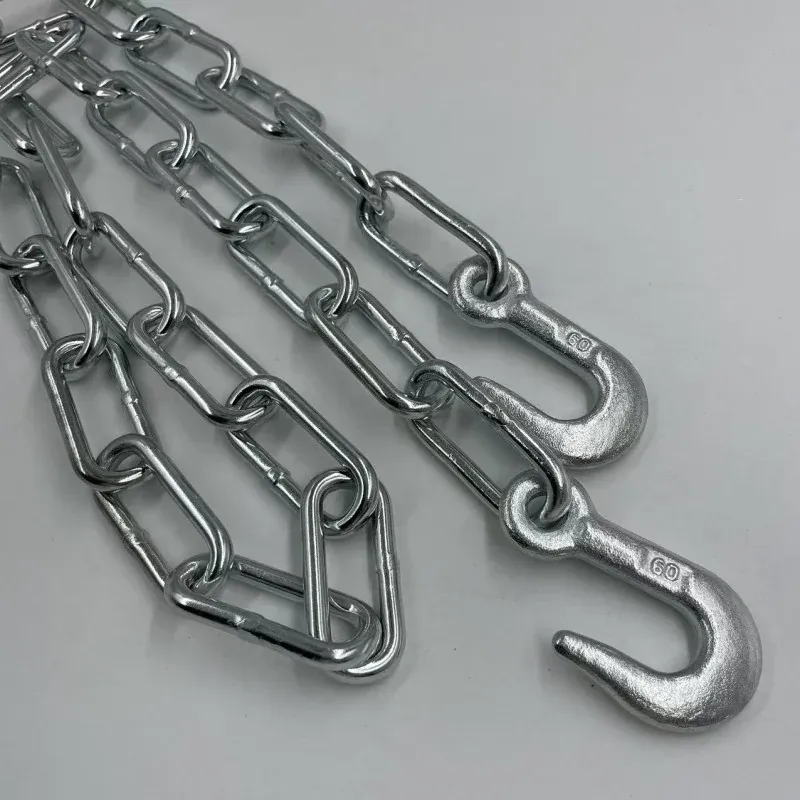
A barn cleaning system is a punishing place for a chain. It runs in slurry, carries grit and abrasive solids, starts and stops under load, and is often out of sight. The chains that survive are specified for that combination rather than picked from a catalogue, and understanding why they fail early is a practical way to specify one that does not.
What Makes This Duty Hard
Three things act at once. The environment is wet and chemically active - slurry, urine, cleaning agents - so corrosion is continuous. The load is abrasive, because grit and bedding work between link and sprocket and grind the contact surfaces. And the running is stop-start under load, so the chain sees repeated shock rather than a steady pull. A chain that handles one of those well can still fail on the combination.
Where These Chains Fail
Failures tend to concentrate in three places: at the contact point between link and sprocket, where abrasive material is trapped and the surface wears; at the link itself, where corrosion thins the section; and at the joints, where repeated shock works on the weakest point. Recognising those three tells you which properties to specify.
What to Specify
Material and surface treatment come first, because the environment is the dominant problem: a finish that resists the slurry can be worth more here than extra strength. Wear resistance at the contact surfaces comes second, since abrasion is continuous. And the chain has to be sized for the shock loads of stop-start running, not the average pull. A DIN 763 agriculture chain is a general purpose starting point for farm equipment. Where the chain runs in slurry, hot dip galvanized is usually the better finish than zinc plated, but the duty should be described, not assumed. DIN 763 is a general purpose chain and is not a grade-marked lifting chain.
Maintenance That Actually Helps
In this duty, inspection is not a formality. Check the chain for section loss from corrosion, for wear at the sprocket contact, and for any link that has begun to deform. Clean and re-lubricate where the system allows it, because abrasive material left in place keeps grinding. And replace a worn chain before it fails, because a failure means downtime and, potentially, damage to the equipment around it.
Frequently Asked Questions
What chain is used in barn cleaning systems?
A general purpose agricultural chain chosen for corrosion and wear resistance, not for lifting grade - the duty is conveying and scraping. DIN 763 is one common form for farm equipment, and it is not a grade-marked lifting chain.
Why do barn cleaning chains wear out so quickly?
Because three mechanisms act at once: continuous corrosion from the wet, chemically active environment; abrasion from grit trapped at the sprocket contact; and repeated shock from stop-start running under load. A chain specified for only one of those will still fail on the others.
Can a lifting chain be used for barn cleaning?
It should not be. A lifting chain is specified and marked for lifting, and using it in an abrasive slurry duty both wastes a rated component and gives no benefit - the properties that matter here are corrosion and wear resistance, not lifting grade.
Boyuan Metal supplies DIN 763 agriculture chain with hooks in zinc plated, electro galvanized or hot dip galvanized finish, and will confirm the material and finish against the duty you describe. Tell us what the chain runs in and what it carries, and we will confirm the specification.