
Oct 28, 2026News & Insights
Chain Weight per 100 Feet or per 100 Metres: Why the Numbers Do Not Match
Two quotations for the same chain can show weights several times apart, because one is per 100 feet and one per 100 metres. How the bases differ and how to compare them.
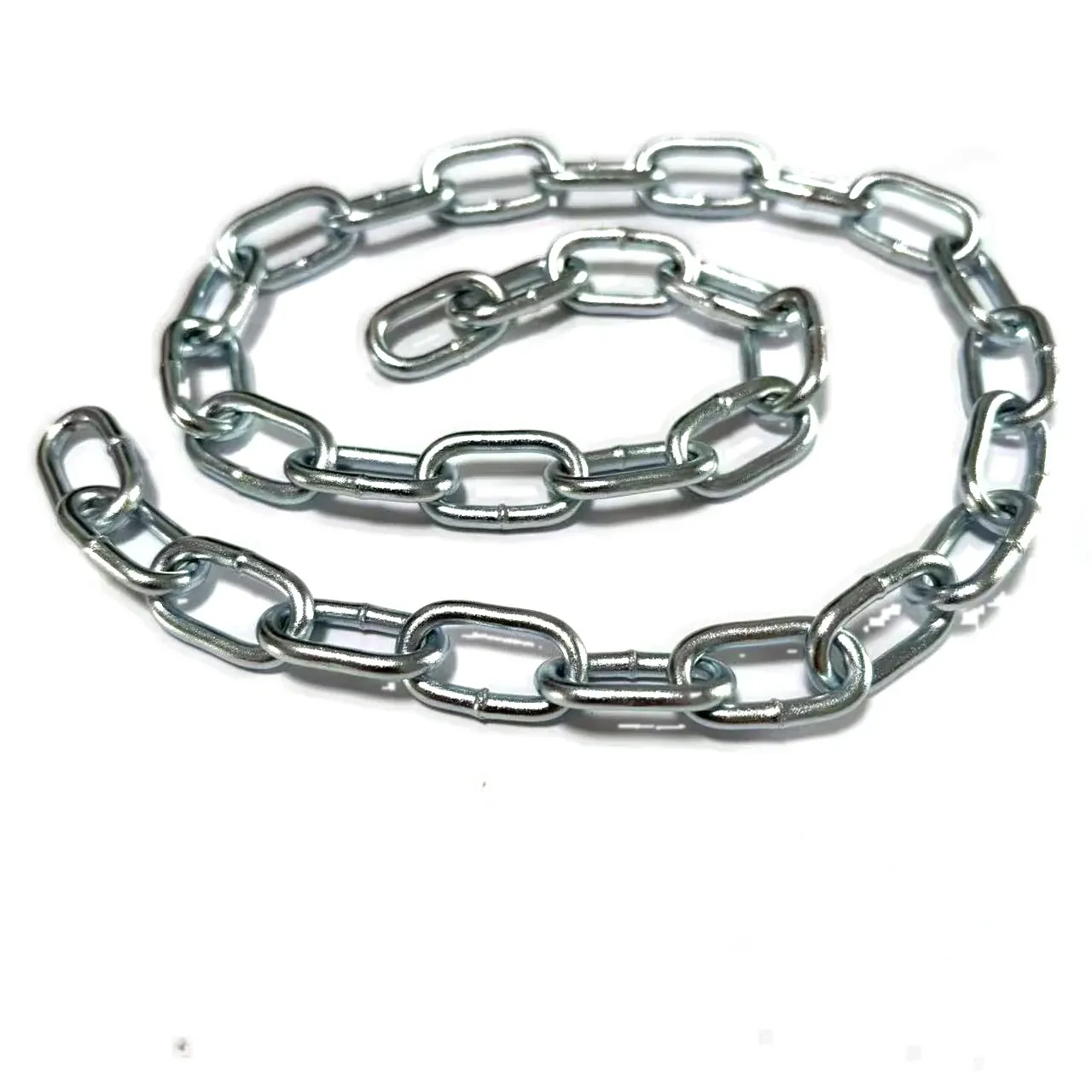
Two suppliers quote the same chain at the same size, and the weights do not agree - one small, one several times larger. Neither is wrong. They quote against different length bases, and a chain weight means nothing until you know which base it sits on.
Three Bases in Common Use
Chain weight is quoted against one of three bases: per 100 feet, per 100 metres, or per single metre. The first is the American convention, the second the European one and standard in German tables. The third is rarer on paper but common in conversation - a buyer thinking about a drum asks what one metre weighs.
A single catalogue can mix all three, because each table follows the standard it describes. The unit sits in the column heading, and it is easy to read the number and skip the heading.
Why the Gap Looks So Large
A per-100-feet figure and a per-100-metres figure differ by roughly a factor of three, because 100 metres is about 328 feet. The same chain weighed over a longer run gives a much bigger number - which explains most discrepancies that look like one supplier offering a far lighter chain.
Converting Without Guessing
One foot is 0.3048 metres, so 100 feet is 30.48 metres. Per-100-feet to per-100-metres: multiply by a little over three. Per-100-feet to per metre: divide by 30.48. Per-100-metres to per metre: divide by 100.
The arithmetic is not the difficulty. The trap is forgetting which base the number was written against, then comparing two figures never on the same footing.
Weight Is Not the Length You Receive
An order is placed either by length or by weight. A chain supplied by length is cut to the length ordered, and the weight shown is an estimate for freight. A chain supplied by weight is weighed out, and the length received depends on the weight per metre. Both are normal, but not interchangeable. For the dimension side of a chain specification, see our guide to measuring and specifying chain size.
What to Ask on a Quotation
Three questions settle it: what length basis the weight is quoted against; whether the order is fulfilled by length or by weight; and what tolerance applies, because a chain is not a machined part - the weight per metre moves within a range. Ask those three and comparison becomes straightforward; skip them and two quotations that look incomparable usually agree.
Frequently Asked Questions
Why does my chain weigh less than the catalogue says?
Almost always a basis difference. A per-100-feet figure converted to per-metre gives a much smaller number, and the same chain described both ways looks like two different products.
Is chain sold by weight or by length?
Either, depending on the product. General purpose chain in small sizes is often sold by weight in bundles or drums, while cut lengths are supplied to order. Confirm which applies before comparing quotations.
Does weight tell me anything about quality?
No. Weight per metre tells you how much steel is in the chain, which follows from wire diameter and link form. It says nothing about steel grade or whether the chain is a rated lifting product. General purpose chains such as the DIN 763, 764, 766 and 5685 forms are not grade-marked lifting chain; overhead lifting needs grade-marked chain such as grade 80 or grade 100 with fittings rated to match.
Boyuan Metal supplies chain in American and German standard forms, with the weight basis named in our tables. Tell us the size and standard you need, and we will confirm the weight basis with the specification.