Sep 27, 2026News & Insights
G43 Chain: Carbon Steel vs Alloy Steel
Grade 43 chain is sold in carbon steel and alloy steel, and they do not reach the same strength. Why a carbon steel G43 behaves like grade 40, and how to specify correctly.
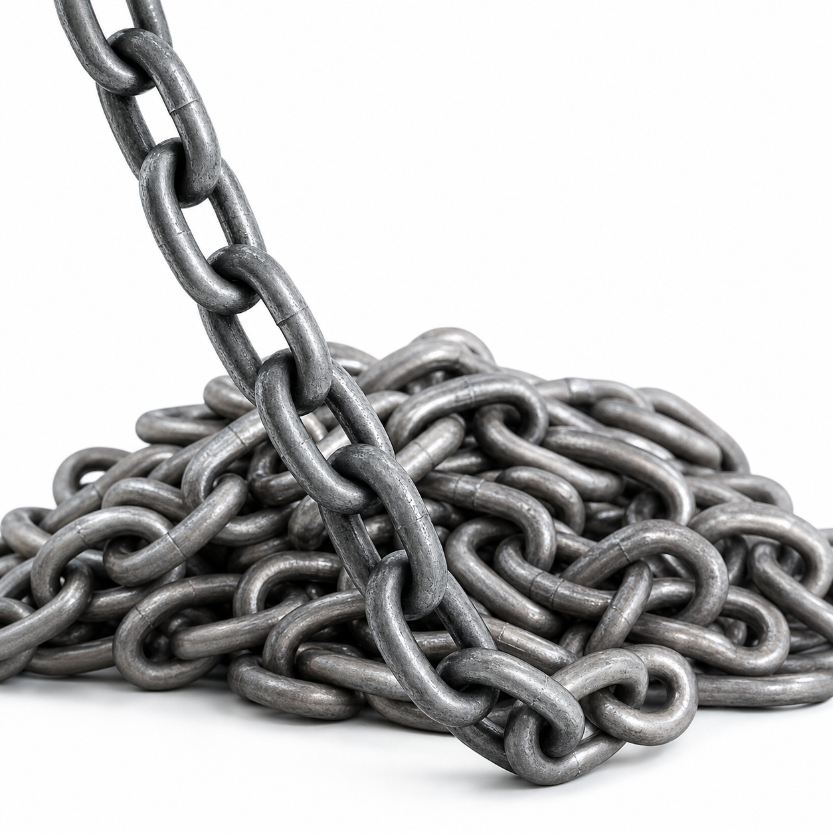
If a G43 chain pulls less than its marked grade, the cause is usually the material, not the manufacturing. Grade 43 chain is sold in two materials, carbon steel and alloy steel, and they do not reach the same strength. Note that Grade 43 is a general-duty and load securement chain, not a lifting chain; for overhead lifting, use EN 818-2 chain.
The Same Grade, Two Materials
A G43 high test chain can be made from carbon steel or from alloy steel, and buyers are rarely told which one they are being offered. In practice a lower-cost carbon steel G43 reaches only around grade 40, while an alloy steel G43 reaches the full grade 43. The grade marking on the chain looks the same. The metal underneath does not.
Why Alloy Steel Reaches the Grade
The lower-cost carbon steel used in the entry version of G43 does not carry enough strength on its own, so that chain only reaches around grade 40. A higher-grade alloy steel carries enough strength on its own, so an alloy steel G43 reaches grade 43 from the material alone. Where the application needs the full grade 43, specify the alloy steel version.
Neither Version Is Heat Treated
Grade 43 chain is not heat treated, in either material: it reaches its strength from the steel itself, not from a heat treatment step. Heat treatment is what produces the higher grades such as grade 70 transport chain. Those higher grades are a different product, not a stronger G43.
How to Specify It Correctly
Three things settle it. First, state the material as well as the grade, because a request for G43 alone can be filled with either. Second, if the duty truly needs grade 43, ask for alloy steel. Third, if the duty is light general purpose and cost matters, carbon steel may be acceptable, but it performs nearer grade 40. For the wider specification, see our complete grade 43 guide.
Grade 43 Is Not a Lifting Chain
One safety point applies throughout. G43 is a general-duty and load securement chain, used for transport, towing, logging and general purpose work. It is not a grade-marked overhead lifting chain. For lifting, use chain made to a lifting standard such as EN 818-2 together with fittings rated for the duty. In service, never exceed the chain's rated working load limit for the duty, inspect the chain before each use, and take it out of service if any link is stretched, cracked, nicked or worn. Do not weld, heat or repair chain links in the field.
Frequently Asked Questions
Why does my G43 chain seem weaker than expected?
The most likely reason is that it is the carbon steel version, which in practice reaches only about the level of grade 40. If the application needs the full grade 43, specify alloy steel when you enquire.
Is G43 chain heat treated?
No. Grade 43 chain is not heat treated, whether it is carbon steel or alloy steel. It gets its strength from the steel, and heat treatment is what produces the higher grades.
How do I make sure I receive a true grade 43 chain?
Specify the material, not just the number: ask for alloy steel. Tell us the load and the duty as well, and we will confirm the grade, the material and the finish.
Boyuan Metal supplies G43 high test chain and the rest of the American standard range, including grade 30 proof coil and grade 70 transport chain. Tell us the material, the grade and the load you need, and we will confirm the chain and the end fittings.