Oct 26, 2026News & Insights
How Heat Treatment Changes a Chain: Quenching, Tempering and Case Hardening
Heat treatment is what turns alloy steel into a higher grade - or a harder-wearing surface. What quenching, tempering and case hardening each do to a chain.
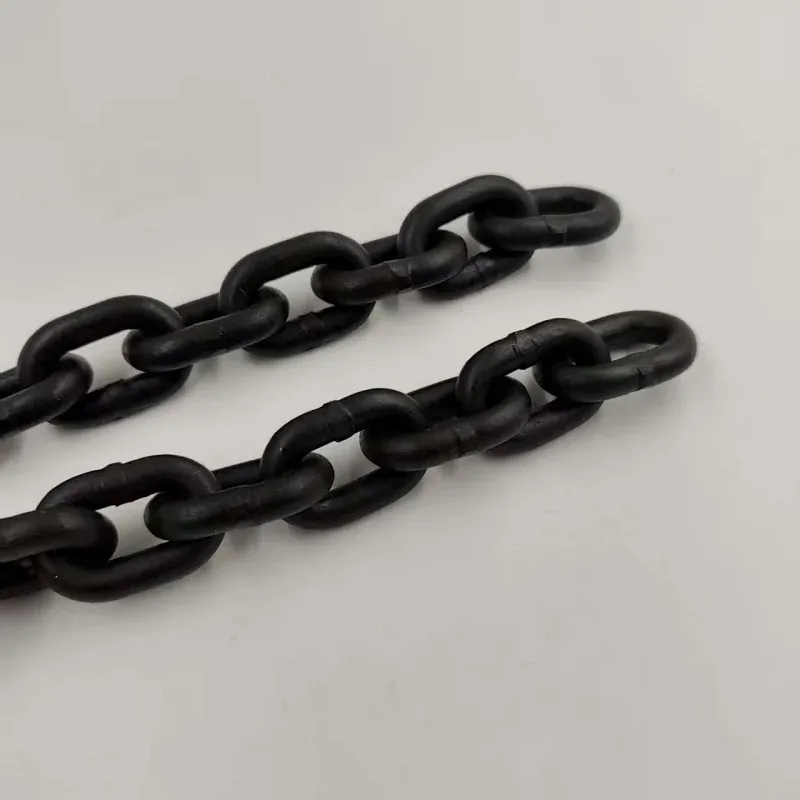
A chain's strength is not fixed by the steel alone. Two chains from the same alloy can behave very differently, because what happens after the links are formed determines much of the result. Heat treatment is that step: controlled heating and cooling that changes the metal's structure, and with it hardness, toughness and strength.
What Heat Treatment Is For
The purpose is to give the steel better mechanical properties than it has as supplied - harder where hardness is wanted, tougher where toughness is wanted, stronger overall. A lifting chain wants strength with enough toughness not to crack. A conveyor chain against an abrasive load may want a hard surface and a softer core.
Quenching and Tempering
Quenching is rapid cooling from a high temperature, which hardens the steel - and makes it brittle. Tempering follows: a controlled reheat at a lower temperature that relieves the brittleness while keeping most of the hardness. The pair is the usual route to a high-strength chain, harder through its section and giving a better strength-and-toughness balance than the untreated state.
Case Hardening
Case hardening hardens the surface layer while leaving the core tougher. The surface is enriched and hardened, so the outside resists wear and the inside resists shock. This suits chain that wears against an abrasive load. The depth of the case can be controlled, which makes the treatment tunable to a duty.
Why It Matters to a Buyer
Three practical consequences. A heat-treated chain differs from the same one untreated, even at identical link dimensions - so a spec saying only 'alloy steel' is incomplete and must state whether the chain is heat treated. Heat treatment produces the higher grades: a grade 80 lifting chain and grade 100 are heat-treated alloy steel. Not every grade depends on it - grade 43 reaches its grade from the steel itself, without heat treatment. That is its general duty design, not a defect. Only grade-marked lifting chain such as 80 or 100 belongs in an overhead lift; grade 43 and grade 70 are not lifting chain.
Measuring the Result
Hardness is the usual check, measured on defined scales, from a workshop bench check to a laboratory measurement. Hardness alone does not give the strength, but confirms a treatment was applied and is consistent. For real verification the test certificate is more useful, reporting the loads the chain was proof-tested against.
Frequently Asked Questions
Does heat treatment make chain stronger?
Yes, when done as quenching and tempering: the chain gains hardness, toughness and a higher breaking load. The gain depends on the steel and the treatment.
What is the difference between quenching and tempering?
Quenching is the rapid cooling that hardens the steel but leaves it brittle. Tempering is the controlled reheat that removes most of that brittleness while keeping the hardness. They are done as a pair - quenching alone is not a finished treatment.
When is case hardening used instead?
Where wear at the surface is the main problem, such as chain running against an abrasive load. Case hardening gives a hard outer layer with a tougher core, so the surface resists abrasion while the chain still takes the load.
Boyuan Metal supplies grade 80 and grade 100 lifting chain, both heat-treated alloy steel, and grade 70 transport chain, plus commercial chain in the general duty grades. Tell us the duty and the load, and we will confirm the grade and whether heat treatment applies.