Sep 17, 2026News & Insights
How to Choose a Shackle: Bow or Dee, Size and Rating
Bow or dee, US or European type, carbon or stainless steel: four questions settle most shackle choices. Here is how to specify the right one.
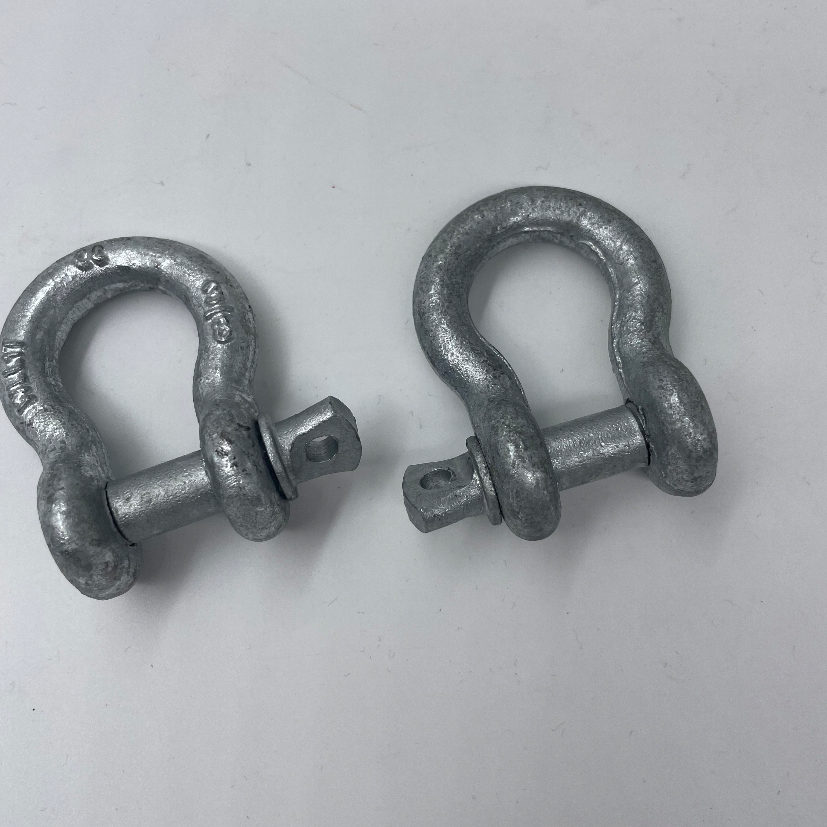
A shackle joins chain, wire rope and slings to a load or anchor point. Four questions settle most choices: shape, size, material and finish, and how the pin is arranged.
Bow or Dee: The Shape Decides the Load Direction
Start here, because it matters most in service. A bow shackle has a wider, rounded body than a dee shackle, so it can take load from several directions without the pin binding. It is the usual choice where the pull may come at an angle: multi-leg slings, mooring lines, and connections that shift.
A dee shackle has a narrower, D-shaped body and is designed for straight-line loading. It is a general purpose connector whose compact body suits tight connections where a bow would not fit.
Whichever shape you choose, one rule applies to every shackle: load should be applied in line with the pin, and the pin must be fully seated and secured.
The Types We Supply
Shackles are named by shape and by the standard system they follow. Our US type range covers bow shackles G209 and G213 at 1/4 in to 2-1/2 in, with working load limits listed by size, plus dee shackles G210 and G215 and the G2130 and G2150 bow types. See our galvanized bow shackle and European dee shackle as examples.
Our European range covers bow and dee shackles sized in millimetres, following the European shackle standard. Snap hooks sit in the same family: DIN 5299C and DIN 5299A with eyelet.
Size, Material and Finish
Size follows from the working load limit rather than the pin diameter alone. Confirm the WLL for the size you need against the load and the safety factor your procedure requires.
Material and finish follow the environment. Carbon steel or alloy steel is the default, available galvanized, zinc plated or plastic coated. Stainless steel suits salt water, weather and chemicals: marine rigging, mooring and outdoor lifting. For a corrosion-resistant example, see our stainless steel bow shackle.
What to Confirm Before You Order
Four inputs settle most enquiries: the working load limit, since size follows from it; the shape, bow where the load direction may vary and dee for straight-line pulls; the environment; and the pin arrangement.
For an assembly, list every component so the set can be checked at one working load limit.
Frequently Asked Questions
When should I use a bow shackle instead of a dee shackle?
Use a bow shackle where the load may come from more than one direction: its wider, rounded body lets it take load from several directions without the pin binding. Use a dee shackle for straight-line loading, where its narrower body fits tighter spaces.
What sizes are available?
US type bow shackles run from 1/4 in to 2-1/2 in, with working load limits listed by size, along with US type dee shackles. European type bow and dee shackles are sized in millimetres.
Should I choose carbon steel or stainless steel?
Carbon steel or alloy steel covers most lifting and rigging work and is available galvanized, zinc plated or plastic coated. Choose stainless steel where the shackle is exposed to salt water, weather or chemicals, such as marine rigging and mooring.
Can a shackle take load at an angle?
Load should be applied in line with the pin, and the pin must be fully seated and secured. If the pull direction changes in service, a bow shackle is the appropriate shape; a dee shackle is for straight-line loading.
Boyuan Metal supplies shackles, hooks, thimbles, wire rope clips and turnbuckles as one rigging range. Tell us the size and the working load and we will confirm the specification.