Oct 27, 2026News & Insights
DIN 5685 Chain: Form A Short Link vs Form C Long Link
DIN 5685 form A short link and form C long link differ in length and weight, not in strength. What the standard table shows, and how to choose between them.
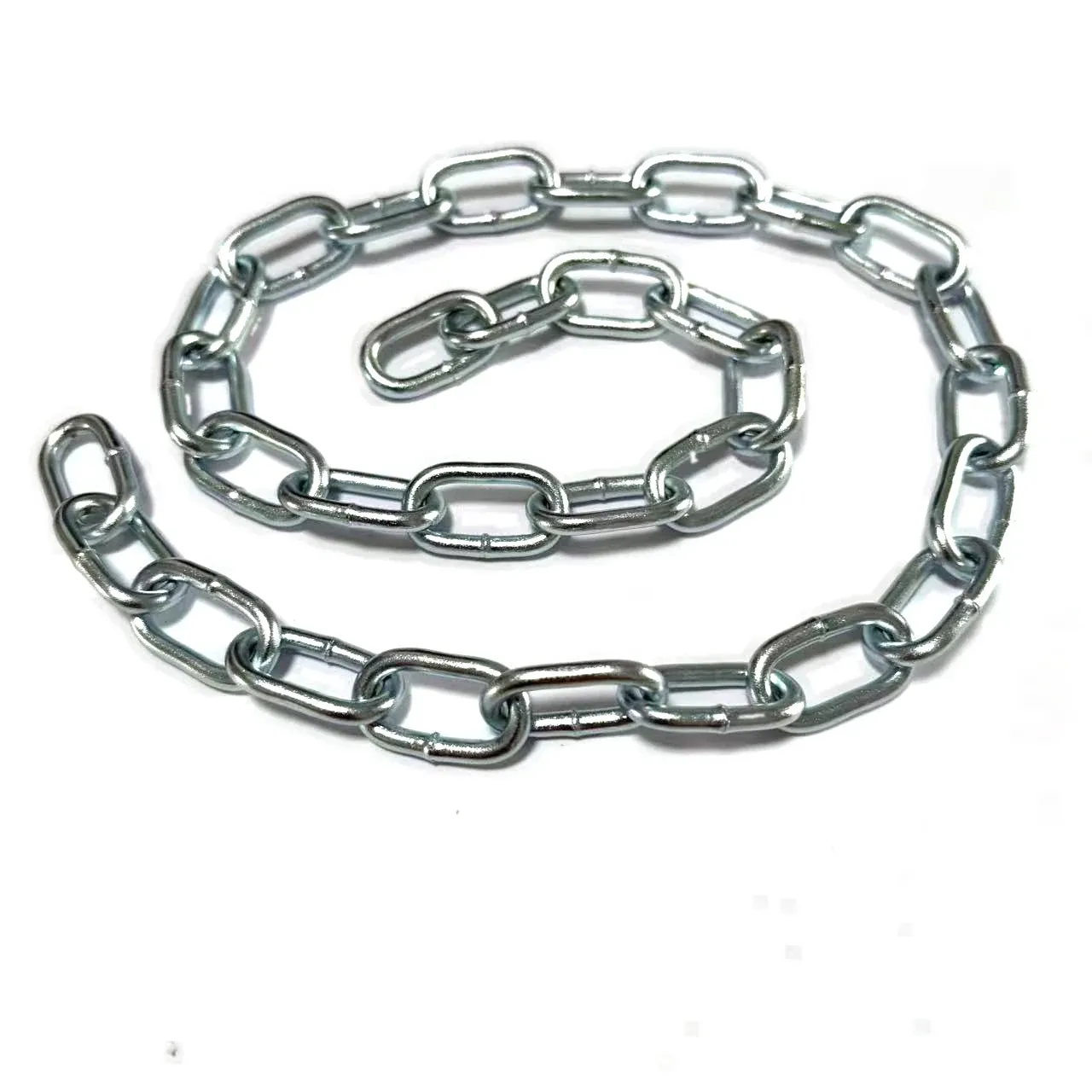
DIN 5685 is one standard with two forms, and the difference between them is often misread. Form A is calibrated short link chain; form C is long link chain. Both are sold in the same size range under the same designation, so on a quotation they look interchangeable. What separates them is link length - which changes weight and handling, not strength.
One Standard, Two Forms
Form A has short links: the inside length is close to the inside width, giving a compact chain that sits well in a hook or over a small sheave. Form C has long links: the inside length is roughly twice the width. Both use the same wire at the same nominal diameter, and neither is a strength grade - they are dimensional forms.
What Changes, and What Does Not
Weight changes. A long link chain carries less steel per metre than the short link chain of the same wire diameter, because fewer, longer links fit in a metre. That makes form C lighter to handle and to hang over a longer span.
Strength does not. Test load and breaking load are set by the wire diameter, and the standard table gives the same values for both forms at each size. A long link is not a weaker chain than a short link of the same diameter - the steel in each link is the same section. Choosing form C does not mean accepting a lower load, and choosing form A does not mean gaining one.
Why the Form Still Matters
If the two forms carry the same load, the choice is geometry and handling. Short links wrap more closely and run more smoothly where the chain follows a small radius - over a wheel, sheave or small sprocket - and sit more compactly in a hook or shackle. Long links give more reach and a more open handhold, which suits hanging, barriers and general utility work.
Reading the Table
Our DIN 5685 table sets both forms against each nominal size, from 2 mm to 13 mm. Length and weight are listed per form, because those differ; test load and breaking load are listed once, because they do not. The long link column is lighter, but not weaker.
Materials and Finishes
DIN 5685 chain is carbon steel as standard, and the finish follows the environment: zinc plated or electro galvanized for general and indoor work, hot dip galvanized where the chain sees weather or moisture, and stainless steel where resistance has to come from the metal itself. Both forms come in the same materials.
Frequently Asked Questions
What is the difference between form A and form C?
Form A is short link and form C is long link. Inside length and weight per metre differ; test load and breaking load for a given wire diameter do not.
Is form C weaker than form A at the same diameter?
No. Both use the same wire section, and the standard table quotes one test load and one breaking load per size. Form C is lighter, not weaker.
Can I use form C where form A is specified?
Only if the specification allows it. Strength is the same but link dimensions are not: a chain that must seat in a hook, sheave or sprocket sized for short links may not fit. Check the dimension, not only the load.
Is DIN 5685 a lifting standard?
No. DIN 5685 is a general purpose chain standard, and chain to this standard is not grade-marked lifting chain. Overhead lifting requires grade-marked chain such as grade 80 or grade 100, with fittings rated to match.
Boyuan Metal supplies DIN 5685 A short link chain and DIN 5685 A hot dip galvanized chain, and can produce the long link form to the same standard. Tell us the form, diameter and duty, and we will confirm the specification and finish.