Oct 26, 2026News & Insights
Galvanized Steel Chain vs Stainless Steel Chain
One is carbon steel with a zinc coating, the other is a corrosion-resistant alloy through and through. How to decide which chain a job needs.
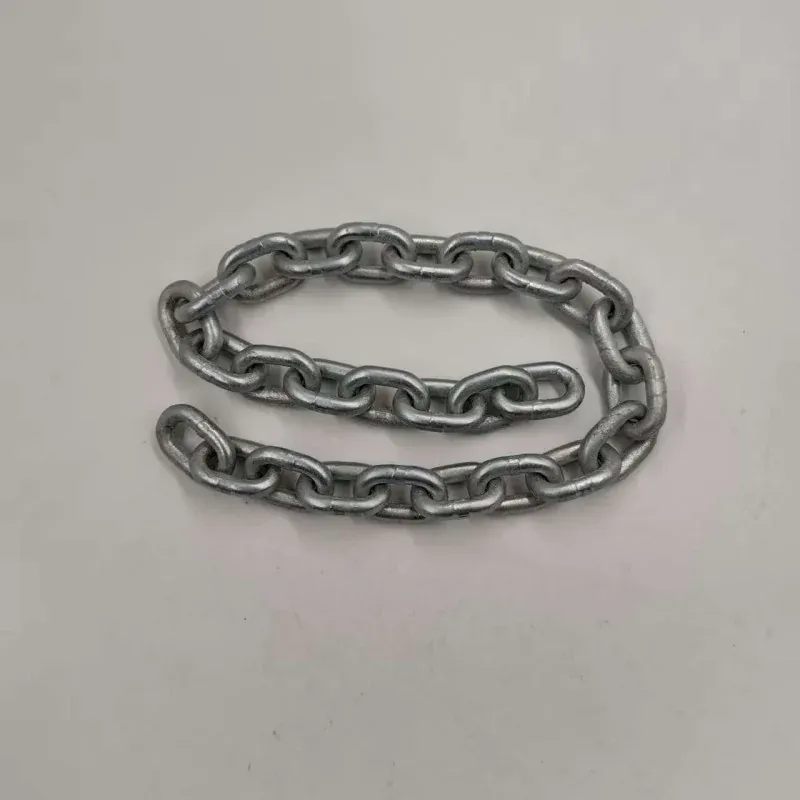
Galvanized and stainless chain solve the same problem - rusting steel - in two different ways. Galvanized chain is carbon steel with a zinc coating that does the protecting. Stainless chain is an alloy that resists corrosion throughout, with no coating to wear off. Which one a job needs comes down to how harsh the environment is.
Galvanized Steel Chain
A hot dip galvanized chain is steel coated in zinc. Hot dip galvanizing carries a thicker zinc layer than electro galvanizing, giving longer protection outdoors, so it handles outdoor, coastal and damp conditions; dry indoor conditions need only electro galvanizing. The zinc protects the steel, so where it is scratched through, the steel under it rusts. Our guide to galvanized finishes compares the coatings in detail.
Stainless Steel Chain
A stainless steel chain is a corrosion-resistant alloy rather than coated steel: SUS304, AISI316 or AISI316L, chosen for resistance in marine, food, chemical and outdoor environments. AISI316 contains molybdenum, making it more resistant to chlorides than 304, so it is the usual choice near salt water. The resistance is in the metal, so there is no coating to chip and expose bare steel. Our guide to 316L for marine chains covers the grades.
The Difference in One Line
Galvanized is a coating on carbon steel; stainless resists throughout the metal. Galvanized is economical for damp or mildly salty conditions, where the chain is inspected and replaced when the zinc gives out. Stainless suits strong salt water, chemicals or food areas, or a chain that must keep its appearance.
How to Choose
Ask two questions. How aggressive is the environment? Dry indoor, electro galvanizing is fine; mild outdoor, coastal or damp suits hot dip galvanizing; strong salt, chemicals or food contact points to stainless. And how long must it last without maintenance? Galvanized protects as long as its zinc lasts; stainless as long as the metal is sound, which suits a chain that is hard to reach.
Not Lifting Chain
A point for both. General purpose chain - galvanized or stainless, in DIN 766 and DIN 5685 forms - is not a grade-marked lifting chain and must not be used for overhead lifting. Overhead lifting needs chain made and marked for it, such as grade 80 or grade 100 with matched fittings. Never weld, heat or repair a load-bearing chain.
Frequently Asked Questions
Is galvanized chain as good as stainless steel?
For ordinary outdoor and damp use, hot dip galvanized chain is an economical, effective choice, and it outlasts electro galvanizing. For strong salt water, chemicals or food areas, stainless steel is more reliable, because its resistance is in the metal, not a coating.
Which lasts longer outdoors?
A hot dip galvanized chain protects the steel with a thicker zinc layer and serves outdoors for years, but a scratch or heavy wear exposes bare steel. A stainless chain resists corrosion throughout the metal, so it holds up better where the chain sees salt or chemicals.
Can I use galvanized or stainless chain for lifting?
Not the general purpose forms. Overhead lifting needs grade-marked lifting chain, such as grade 80 or grade 100, with fittings rated to match. A galvanized or stainless general purpose chain is for securing, mooring and other non-lifting duties.
Boyuan Metal supplies hot dip galvanized and electro galvanized chain, and stainless steel chain in SUS304, AISI316 and AISI316L. Tell us the environment, the duty and the size, and we will confirm the chain and finish.