
Oct 3, 2026News & Insights
Guy Wires and Stay Wires: Choosing and Assembling Wire Rope
A guy wire steadies a mast, pole or frame with nothing but tension. How to build the assembly - rope, thimble, clips and turnbuckle - so the ends hold as well as the rope.
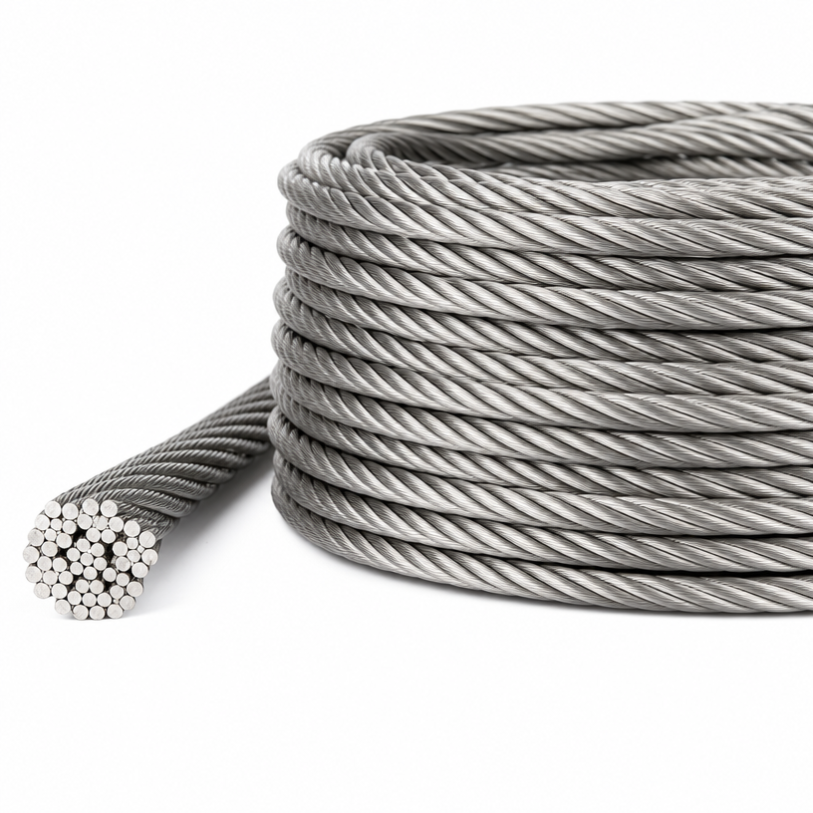
A guy wire steadies a structure that is tall, light or exposed to wind. Run a tensioned wire rope from the top of a mast or frame to a ground anchor, and it takes the sideways pull the structure cannot carry alone. The line is only as strong as its ends, so the terminations matter as much as the rope.
Where Guy and Stay Wires Are Used
Guy wires, also called stay wires, steady anything that must resist a sideways load: masts and lighting columns, antenna poles, signs and flagpoles, or temporary frames. The same idea holds a trellis or a guard wire in tension. The anchor, the terminations and the tensioner all take the pull.
The Parts of a Guy Assembly
A guy assembly grips the rope, protects the eye and holds tension. Stainless steel wire rope suits a line that stays outdoors or near salt water, because it resists corrosion. Each end is formed into an eye, and a wire rope thimble lines that eye so it keeps its shape where it bears on a pin or shackle. A wire rope clip forms the eye by clamping the rope between a U-bolt and a saddle, and a turnbuckle sits in the run so the wire can be tensioned after the structure settles.
Forming the Eye and the Anchor
The eye is the part that is easy to get wrong. Seat the thimble inside the loop, and fit the clip with the saddle - not the U-bolt - on the load-bearing side of the rope; clip count and spacing follow rope diameter. For the full rules, see our wire rope clip vs thimble guide. After the wire has been loaded once, re-tighten the nuts: a rope settles under the initial load, and a loose clip lets the eye slip. At the far end the eye meets the structure through a rated shackle or a purpose-made anchor, loaded in line. The anchor must be as strong as the wire itself, because a weak anchorage is what fails.
Tensioning the Wire
A turnbuckle is threaded at both ends, so turning the body shortens the run and pulls the wire tight. Leave thread showing at each end for adjustment in reserve - a turnbuckle run to its limit cannot be tightened later when the wire relaxes. Tighten enough to remove the slack, not so far that it overloads the anchor.
Checking a Guy Wire
Guy wires live outdoors and need checking. Look for a rope that is kinked, corroded or has broken wires; a slipped clip or a missing thimble; a turnbuckle bent or with seized threads; and an anchor that has moved or corroded. Replace any damaged part rather than welding it: only rated components belong in a load-bearing line.
Frequently Asked Questions
What is the difference between a guy wire and a stay wire?
Nothing in the hardware - both describe a tensioned wire rope that steadies a structure. Guy is the more common term for masts and poles, while stay is often used for towers and posts. The parts are the same.
What is used to tension a guy wire?
A turnbuckle is the usual tensioner: it lets the wire be tightened and adjusted once the structure settles. Choose the ends to suit the connection and leave thread in reserve.
When should a guy wire be replaced?
Replace any part that is kinked, corroded, worn or broken. If the rope has broken wires, a clip has slipped, a thimble is missing or a turnbuckle is bent or seized, that part comes out of service. Never weld or repair a damaged rope or fitting.
Boyuan Metal supplies steel wire rope, thimbles and clips, turnbuckles and shackles for guy and stay wire assemblies, in carbon steel, galvanized and stainless steel. Tell us the wire, the anchor and the load it must hold, and we will confirm the assembly.