Oct 5, 2026News & Insights
Master Link vs Connecting Link: Two Ways to Join Chain
Both join chain, but they sit in different places and do different jobs. What a master link and a connecting link are, how they differ, and which one an assembly needs.
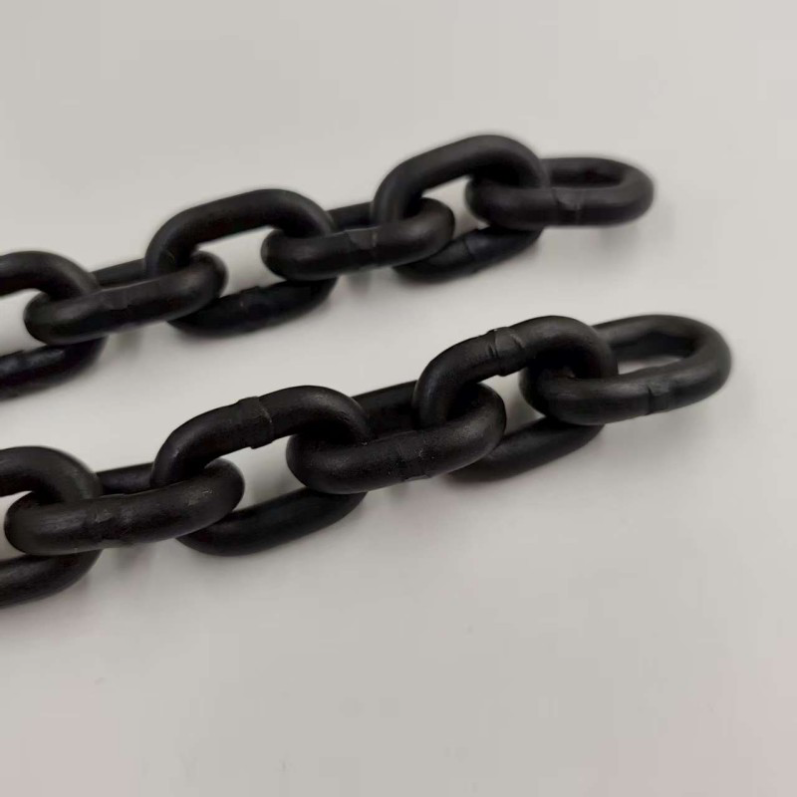
A master link and a connecting link both join chain, so they are easy to confuse, but they are not the same part. One sits at the head of an assembly; the other joins chain in line.
What a Master Link Is
A master link - also called an end link or a master ring - is the single large link at the head of a chain assembly. It gathers the legs of a sling to one point so a hook or shackle can pick up the assembly. Because it heads a chain sling and carries the combined pull of every leg, it is normally a grade-marked component matched to the chain it heads.
What a Connecting Link Is
A connecting link - also called a coupling link or a chain connector - joins chain in line: two lengths into one, or a chain end to a fitting, taking a link's place in the run. Many open so they fit onto existing chain, with a gap closed by a pin or welded shut. Ordinary commercial ones are not lifting components.
The Difference in One Line
The master link gathers, the connecting link lengthens. A master link is a terminal part at the head of an assembly, loaded by everything below it; a connecting link is an in-line part, carrying the same load as the chain it joins. That decides where each belongs: at the top of a sling, or in the middle of a run.
Matching Them to the Job
Two rules keep an assembly sound. The part must fit the chain it joins, and where the assembly lifts, components should be grade-marked and matched, so a grade 80 or grade 100 chain is used with fittings of the same grade. The part must also suit the duty: a heavy lifting assembly needs rated components, while an ordinary commercial connecting link is general purpose, not for lifting. Where a link is the pick-up point, a rated shackle is often the safer connector than a plain chain link.
Safety
Treat both as load-bearing parts. Use only components rated for the duty, matched to the chain, and never mix an unrated general purpose link into a lifting assembly. Check links for wear, cracks, a stretched shape or a pin that will not seat, and retire a worn part. Never weld, heat or repair a link in the field: a damaged link is replaced, not patched. Ordinary commercial chain and its connectors are not lifting products; only grade-marked components belong in a lifting assembly.
Frequently Asked Questions
What is the difference between a master link and a connecting link?
A master link sits at the head of an assembly and gathers its legs to a single point for a hook or shackle. A connecting link joins chain in line: two lengths, or a chain end to a fitting. One is terminal; the other in-line.
Can a connecting link be used for lifting?
Only a grade-marked connecting link rated for lifting, used in a matched assembly, may be used for lifting. An ordinary commercial connecting link is general purpose, not a lifting component, and should be kept out of any overhead lift.
Which should I use to join two chains?
A connecting link, because its job is to join chain in line. If two chains instead have to meet one lifting point, that is a master link's job - or a rated matching fitting chosen with the chain.
Boyuan Metal supplies chain along with the fittings that complete an assembly - master links, coupling links, hooks, shackles, turnbuckles, wire rope clips and thimbles. Tell us the chain, the load and how it is used, and we will confirm the matching components.