Sep 27, 2026News & Insights
German vs American Standard Chain
DIN numbers describe the form of a chain; American grades describe its strength. How the two standards differ, and how to choose between them.
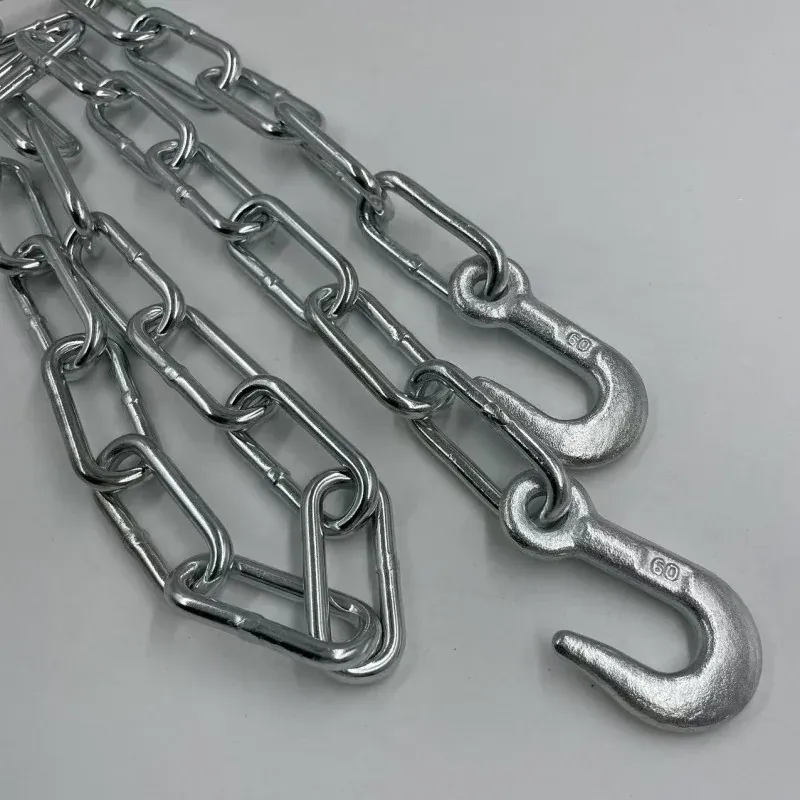
German standard chain and American standard chain are both general-purpose commercial chain, and neither is a lifting chain. They are organised in completely different ways, and which one you buy usually comes down to the job the chain does and the standard your market already works to.
Two Different Standards
The German side is the DIN series: a DIN 763 chain is the German form for general purpose and agricultural chain, in medium link or long link, and the DIN series covers other link forms under their own numbers. The American side is the NACM 90 standard, which grades chain by strength: grade 30 proof coil, grade 43 high test and grade 70 transport.
What the Numbers Actually Mean
This is where buyers trip up. A DIN number identifies the form and tolerances of the chain, so it tells you what the chain looks like and how it is made. A NACM grade identifies the strength class, so it tells you how strong the chain is. The two labels are not interchangeable: one describes shape, the other describes strength. A request for German standard chain normally means a link form such as DIN 763, supplied as general purpose or agricultural chain with hooks.
Sizes and Units
German standard chain is quoted in millimetres: the DIN 763 form runs from about 3.2 mm up to 25.4 mm diameter. American standard chain is quoted in inches by convention, though both can be supplied in either unit. Give us the diameter and the unit you work in, and the size is confirmed without a conversion mistake.
Which One for Which Job
The American grades are tied to road transport and load securement. Grade 70 transport chain is the American standard chain for tying down cargo, and its yellow zinc chromate finish is the conventional colour coding for that grade. Grade 43 high test chain is stronger than proof coil of the same size, and is used for transport, towing and logging. The DIN forms are used more broadly for general purpose, agricultural and mooring work, where the link shape and the fitting matter as much as the strength class.
What They Have in Common
One caution applies to every chain here. Ordinary German and American standard chain is commercial chain, not lifting chain: the American grades carry a grade marking for their own duty, but none of these is a grade-marked overhead lifting chain. For lifting, use chain made to a lifting standard such as EN 818-2 with fittings rated for the duty. Never load chain beyond its rated working load limit, inspect for stretched, bent or cracked links before each use, and retire worn or elongated chain. Never repair or weld chain: damaged chain must be replaced.
Frequently Asked Questions
Is a German standard chain stronger or weaker than an American one?
Not directly. A DIN number describes the form of the chain; an American grade describes its strength class. The two labels cannot be ranked against each other. Compare the working load limit for the size you need, which we will confirm on enquiry.
Can the same chain be supplied to both standards?
The forms are different, so a chain is made to one standard or the other, not both. Tell us which standard your market works to and we will confirm the matching chain, diameter and finish.
Boyuan Metal supplies both German standard chain, such as the DIN 763 form for general purpose and agricultural use, and American standard chain in grades 30, 43 and 70, in carbon steel. Tell us the standard, the diameter and the job, and we will confirm the chain and the end fittings.