
Oct 26, 2026News & Insights
How to Choose a Lashing Chain for Cargo Securement
A lashing chain secures a load to a vehicle, and it is chosen as a system: chain, tensioner and hooks together. What to match to the load, the anchor and the standard.
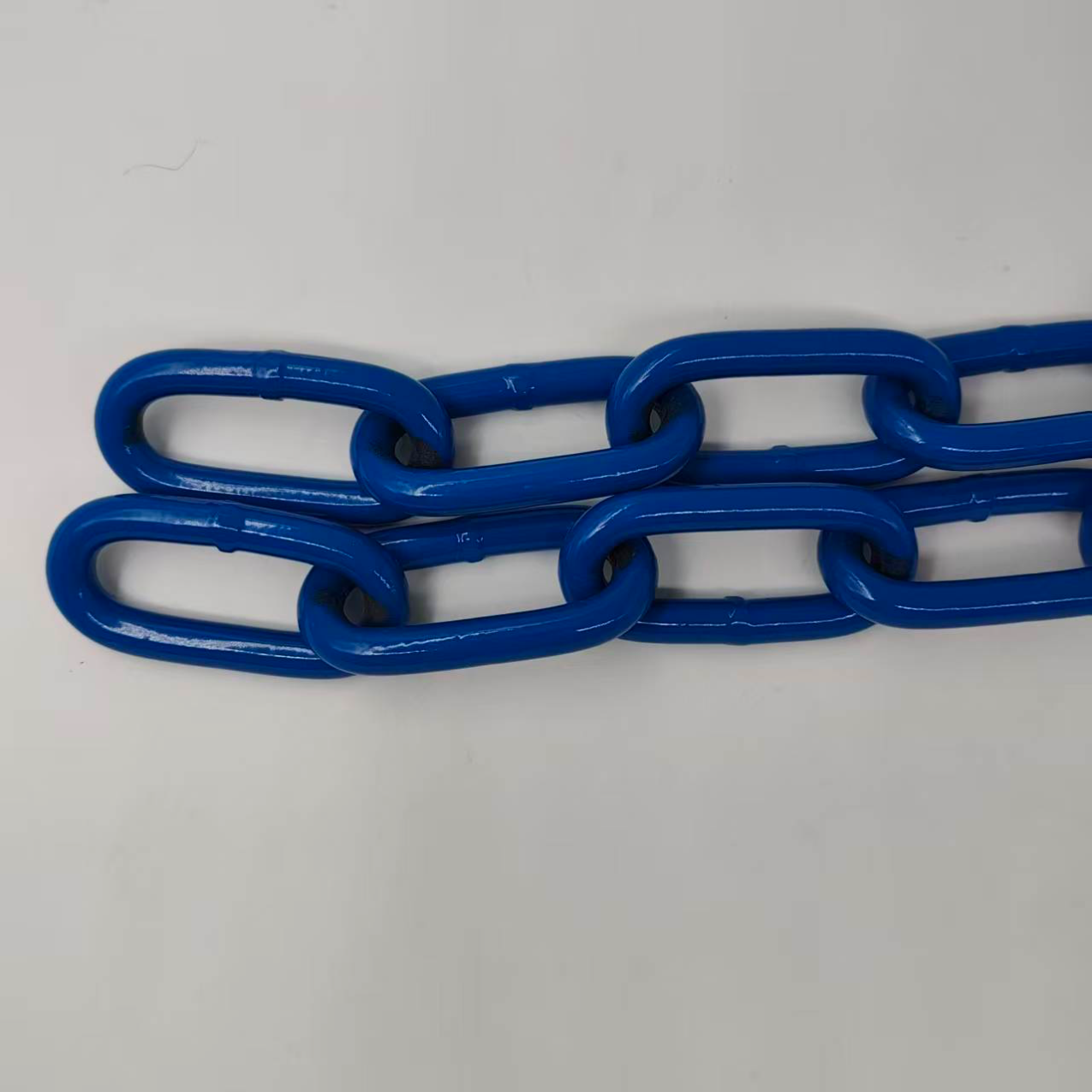
A lashing chain holds a load down on a truck, trailer or flat rack. Unlike a lifting chain, which takes a load at one point, it works in tension between the load and a lashing point, and it is chosen as a system: the chain, the tensioner that pulls it tight, and the hooks at each end all have to suit the load and the vehicle.
What a Lashing Chain Is
A G80 lashing chain is an alloy steel chain with a grade 80 marking, usually blue painted, fitted with hooks and a tensioner to secure cargo. It is the standard chain for load securement systems, used on trucks, trailers, flat racks and containers. Because it carries a grade marking, the chain itself is rated, not a plain commercial chain.
Start From the Load and the Lashing Point
The load decides the chain. Work out what has to be held and how, then match the chain grade and capacity to the load and the strength of the lashing points - the weakest point sets the limit for the system. Lashing and lifting are separate duties: lashing restrains a load in tension, while a lift needs an assembly rated and marked for lifting, with parts matched.
The Assembly: Chain, Tensioner and Hooks
Three parts make a working lashing. The chain runs from the load to the lashing point. A tensioner in the run pulls it tight and adjusts it, so the chain holds without slack. At the ends, a grab hook grips a chain link so the chain can be shortened and fixed at a point, which is how a lashing is tightened to length. Choose the hook to suit the job and keep the pull in line with it.
Grade, Marking and Which Chain to Use
Lashing chain is commonly grade 80, marked on the chain so it can be identified; match the fittings to the same grade, since the assembly is only as strong as its weakest part. If your work also needs grade 100 for a higher strength-to-weight ratio, our guide to grade 80 and grade 100 chain covers the difference. For general purpose and towing work, grade 43 chain is the usual commercial choice, and our guide to chain and fittings for towing covers that side. For North American cargo securement the standard is grade 70 transport chain, covered in our transport chain guide.
Safety and Inspection
A lashing chain is a load-bearing part. Use only a chain and fittings rated for the duty, matched to each other, and never substitute a plain commercial chain or an unrated part. Tension it to remove the slack without over-stressing the load or anchor. Before each use, check for a chain that is kinked, corroded or has stretched links, a hook that is bent or worn, and a tensioner that will not hold; retire a damaged part and never weld, heat or repair it in the field.
Frequently Asked Questions
What is a lashing chain used for?
It secures a load to a vehicle - a truck, trailer or flat rack - by running in tension between the load and a lashing point. It is a load securement chain, not a lifting sling.
What grade is lashing chain?
The common lashing chain is grade 80, with the grade marked on the chain so it can be identified. Match the hooks and tensioner to the same grade.
Can a lashing chain be used for lifting?
Keep the two duties apart. Lashing secures cargo in tension between the load and a lashing point; a lift uses an assembly rated and marked for lifting, with every part matched.
Boyuan Metal supplies G80 lashing chain with hooks and tensioners, alongside grade 43 and grade 70 chain, wire rope and rigging hardware. Tell us the load, the lashing points and the length, and we will confirm the assembly.