Sep 28, 2026News & Insights
Chain and Fittings for Towing
Towing and recovery put sudden, heavy loads on a chain. Which chains and fittings to use, and why none of it is for lifting.
Towing and recovery is hard on a chain. The pull can arrive suddenly and can be many times the weight being moved, so the chain and its fittings have to be rated for the duty rather than chosen by eye. The rule that governs it is simple: the assembly is only as strong as its weakest part.
What the Job Demands
Two things set this work apart. The pull is sudden, so a known working load limit matters more than the look of the links. And the pull must stay in line with the chain and fittings: a chain across a sharp edge, or a hook loaded sideways, can fail well below its rating. Keep the line straight and keep people away.
Choosing the Chain
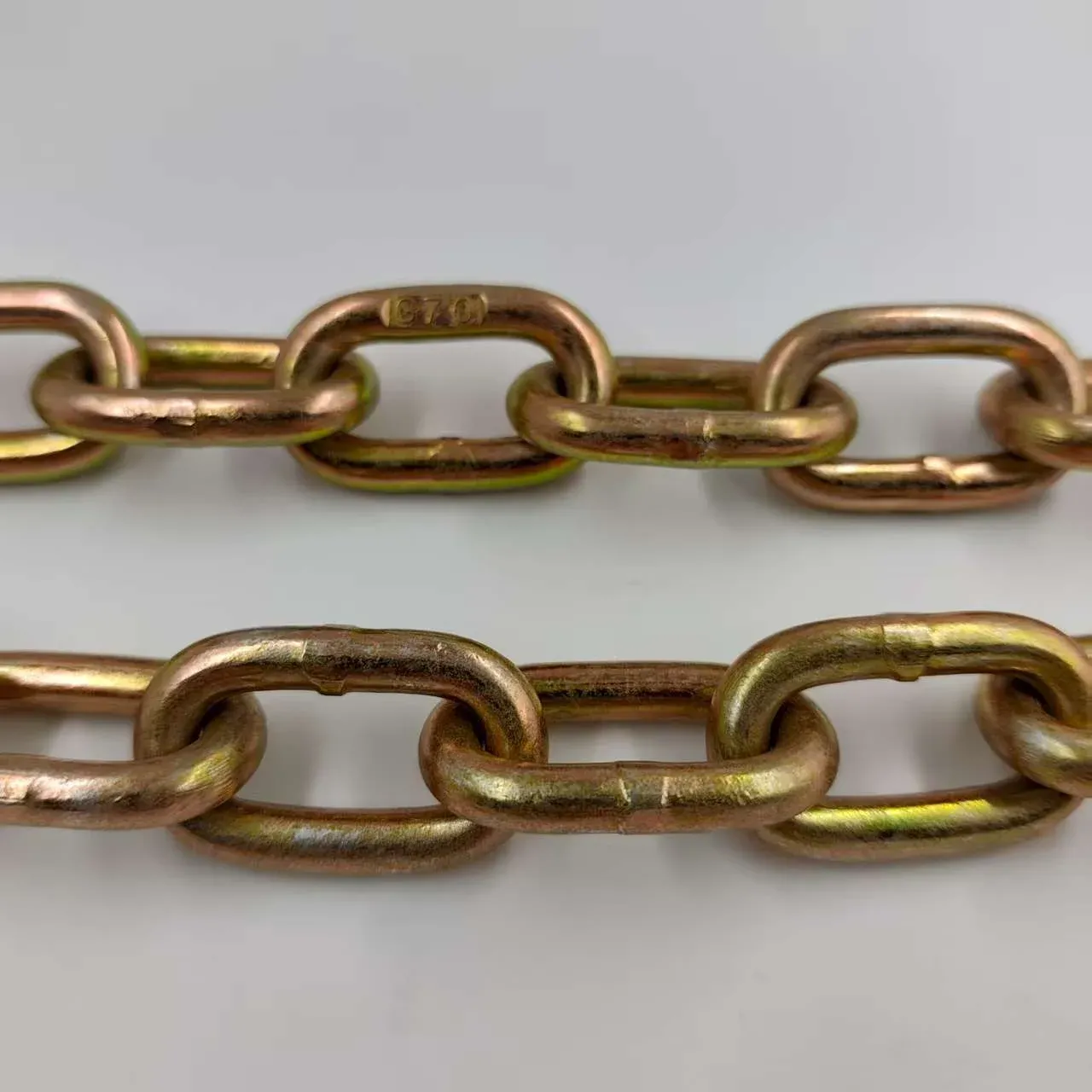
Two American standard grades cover most of this work. G43 high test chain is used for transport, towing, logging and general purpose work needing a higher strength-to-weight ratio than proof coil chain. G70 transport chain is the load securement grade, used for tying down cargo on trucks, trailers and flatbeds and for towing; its yellow zinc chromate finish is the conventional colour coding for the grade.
Lighter pulling work often uses general purpose chain. The German standard forms such as DIN 763 and DIN 5685A are used for general purpose and towing as well as barriers and fencing. None of these chains is for overhead lifting.
The Fittings
The fittings decide whether the assembly holds. A clevis grab hook attaches to transport chain with a clevis pin, and its narrow throat grips a chain link so the hook holds at a fixed point: it is the standard hook for shortening and tensioning a tie-down or tow chain. Where the chain joins a vehicle, trailer or anchor, a bow or dee shackle connects chain, wire rope and slings to loads and anchor points. Choose each fitting by its working load limit, matched to the duty and the chain size.
Rigging the Assembly and Safety
Shorten the chain with a grab hook rather than knotting or twisting it, and use a shackle instead of hooking onto a sharp edge. Never weld, heat or repair a chain or fitting in the field: damaged parts must be replaced. Check the assembly before use, since one worn link or bent hook sets the strength of everything.
One point applies to every chain here. G43, G70 and the general purpose chains are load securement and towing products, not lifting chains, and none is an overhead lifting chain. For lifting, use chain made to EN 818-2 with fittings rated for the duty. Never exceed the rated working load limit, keep the pull in line, and retire any chain or fitting with a stretched, cracked, nicked or worn link.
Frequently Asked Questions
What chain is used for towing?
Grade 43 high test and grade 70 transport chain are the usual choices, both to the American NACM 90 standard, and lighter general purpose chain is also used. Tell us the load and the vehicle and we will confirm the grade and size.
What hook shortens a tow chain?
A clevis grab hook. Its narrow throat grips a chain link so the chain can be shortened or tensioned at a fixed point. Grade 43 grab hooks are for tie-down and towing only, not for overhead lifting.
Can any chain be used for towing?
No. Use chain rated for the duty, keep within its working load limit, and match the fittings. Do not use a lifting chain for towing, or a towing grade for lifting.
Boyuan Metal supplies G43 and G70 chain, clevis grab hooks, bow and dee shackles and general purpose chain for towing and load securement. Tell us the load, the vehicle and the fittings, and we will confirm the grade, size and assembly.