
Oct 29, 2026News & Insights
Where Security Chain Is Used: Applications, Risks and What to Specify
Security chain turns up on gates, bicycles, trailers and site equipment, and each place asks something different of it. How the applications differ and what to settle before ordering.
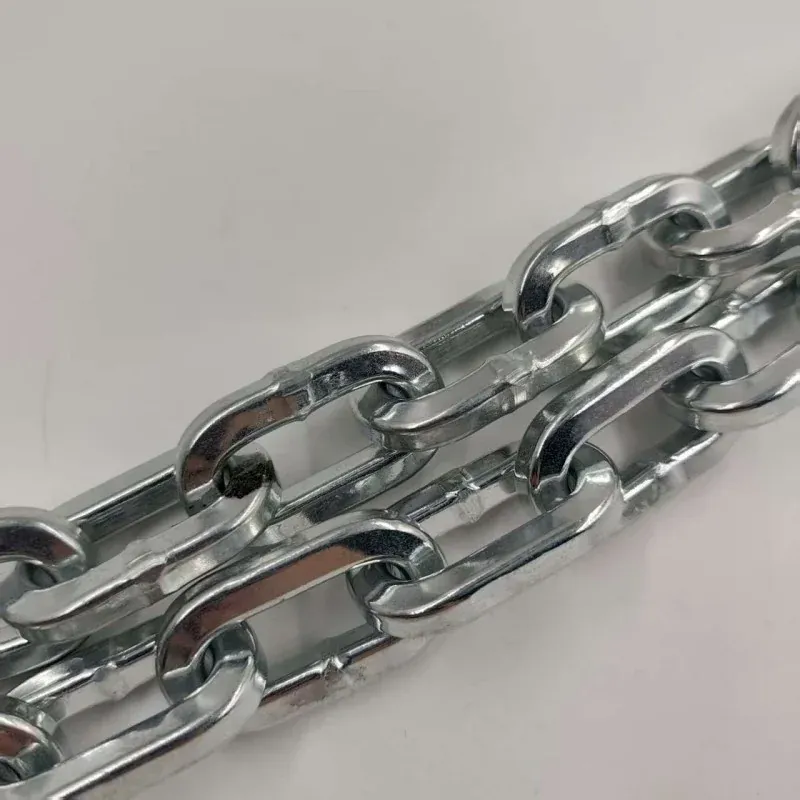
Security chain is bought because something has to stay where it was put overnight: a gate, a bicycle, a trailer, a stack of material on a site. The place it is used decides most of how it should be made.
Gates and Doors
A gate chain has two opposing jobs. It must sit close to the frame when locked, and be short enough that a hand cannot reach through. A chain loose enough to slip over a latch defeats itself, so working length matters as much as diameter.
The second demand falls on the surface beneath. A galvanized chain dragged across a painted gate marks it, and on coated doors those marks come back as complaints. That is the case for a covered chain, chosen for what it protects; see choosing a coated chain.
Bicycles, Motorcycles and Portable Equipment
Here the chain is attacked rather than stressed. A bicycle locked to a rack faces bolt cutters, and link shape decides how well the tool bites. A round link gives a cutter a curved surface to seat on; a square or D-type link gives flat faces, so the jaws slip.
That difference is geometry, not grade. Buyers often ask for higher tensile when what they need is a different profile. Our comparison of round, D-type, square and hexagonal lock chain covers the shapes.
Trailers, Containers and Stored Material
In a yard, chain ties movable assets to something fixed. It stays outdoors for long periods, is handled roughly, and is left under tension for weeks.
Outdoors, the zinc layer does the work. Electro galvanized suits sheltered use; hot dip galvanizing carries a thicker layer and suits chain that stays outside. A plastic sleeve is not a substitute for either. Clean, burr-free cut ends also matter, since a site cut is where rust starts.
What to Specify
Material follows the application. Standard security chain is carbon steel; alloy grades such as 20Mn2 and 20CrMnTi are available where more strength or cut resistance is wanted, with heat treatment where surface hardness matters. Sizing is covered in how to measure and specify chain size; export packing in our guide to chain packaging.
A Limit That Applies Everywhere
One caution holds across every case above. Security chain is general purpose. It is not a grade-marked lifting chain and must not be used for overhead lifting whatever its diameter. Lifting needs chain made and marked for it, with fittings rated to match.
Frequently Asked Questions
What is security chain used for?
Locking and general securing: gates, doors, bicycles, trailers, containers and stored material. It holds an object to a fixed point, and it is not lifting chain.
Which link shape resists bolt cutters best?
Square and hexagonal profiles give a cutter less to grip, so the jaws slip. Round link is the most common and the easiest to cut.
Do I need a covered chain?
Choose a cover for what it protects, not for strength. PVC, nylon or canvas keeps the chain from marking finished surfaces; corrosion resistance comes from the zinc finish underneath.
Can security chain be used for lifting?
No. It is not grade-marked or proof tested as lifting equipment. Overhead lifting requires chain made and marked for lifting, with fittings of matching rating.
Boyuan Metal supplies security chain in round, square and D-type profiles, in carbon and alloy steel, with PVC, nylon or canvas covers, from about 3.2 mm to 25.4 mm, in bundles or cut lengths. Tell us where the chain will be used and what it must resist, and we will confirm the configuration.