Sep 15, 2026News & Insights
How to Choose the Right Steel Wire Rope: Construction, Core, Material and Finish
The same diameter and finish do not mean the same rope. How construction, core, material and finish decide which steel wire rope you should specify.
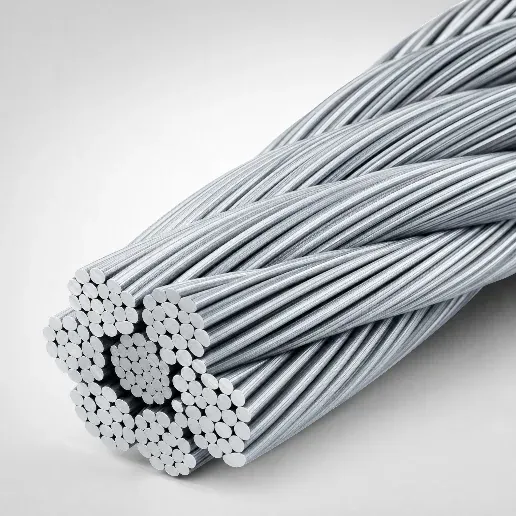
Two steel wire ropes can have the same diameter, the same finish and a similar price, and still behave completely differently in service. The difference lies in four choices that are easy to overlook: the construction, the core, the material and the surface finish. This guide explains each one in the order a buyer should consider them, using the constructions and options available in our standard range. If you are still mapping which rope type fits your industry, our steel wire rope applications guide is a good companion read.
Start With the Job, Not the Spec Table
Before comparing ropes, write down three things: what the rope will do (lifting, pulling, static support or guarding), where it will work (indoors, outdoors, or marine and chemical environments), and how it will run (bending over sheaves and drums, or fixed at both ends). The same rope is rarely right for two different jobs. A hoist line needs fatigue resistance as it bends all day; a guy line sits under constant tension and cares more about strength and stability. Most sizing mistakes come from skipping this step, not from reading the catalogue wrong.
Construction: How Wire Count Shapes Flexibility
Construction describes how the rope is built up: how many wires form each strand, and how many strands close around the core. A 6x19 rope, for example, has six strands of nineteen wires each. Within the common six-strand families the rule of thumb is straightforward. Fewer, thicker wires, as in 6x7, make a stiffer rope with better abrasion resistance, well suited to straight pulls and rough conditions. More, thinner wires, as in 6x36 and 6x37, make the rope more flexible and kinder when it bends over sheaves and drums, at some cost in wear resistance. 6x19 sits between the two and is a very common general-purpose choice.
Our range also covers single-strand ropes such as 1x7, 1x19 and 1x37 for static tension work like guy lines, along with eight-strand, rotation-resistant and other special constructions. If your drawing or tender names a specific construction, it is usually covered. For a worked example of how one construction maps to real uses, see our 6x7 FC wire rope guide.
Core: Fiber or Steel
The core is the foundation the strands wrap around, and it changes how the rope behaves more than most buyers expect. A fiber core (FC) keeps the rope supple and holds lubricant well, which suits lighter duty and general engineering use. An independent wire rope core (IWRC) adds strength and crush resistance and keeps the rope more stable when it spools under tension on a drum. Neither is universally better; the right one depends on load, drum pressure and budget. We compared them in detail in FC vs IWRC: what is the difference and which one to choose.
Material: Carbon Steel or Stainless Steel
For most industrial applications, high-tensile carbon steel is the default: strong, economical and available in every construction. Where corrosion is the main enemy, such as marine fittings, food processing, chemical plants, or any installation washed with salt water, stainless steel takes over. Grade 304 covers most outdoor and humid environments; grade 316, with added molybdenum, is the usual choice for permanent salt-water exposure. One practical note: some stainless ropes are lightly magnetic, which is normal for drawn austenitic wire and not a sign of the wrong grade. We explain why in Why is my stainless steel wire rope magnetic?.
Finish: Bare, Galvanized or PVC-Coated
Finish is the last decision, and the easiest to get right once the first three are settled. Bare (ungalvanized) rope is the choice for dry, indoor or lubricated systems. Galvanized rope handles outdoor humidity and rain at modest cost. A PVC coating goes one step further: it seals the rope against moisture and dirt, protects hands and nearby surfaces, and makes the rope visible, which is why coated rope is widely used in railings, guard lines, light rigging, barrier systems and gym cables. Remember that the coating adds to the outside diameter, so fixings and holes must be sized for the coated dimension. For the differences between coating types, see PVC coated vs PE coated wire rope, or our PVC-coated 6x7/7x7/7x19 product page.
A Quick Way to Decide
Put together, choosing a wire rope is a short checklist. First, duty: moving over sheaves, or static? Second, environment: dry, humid, or salt water? Third, construction: 6x7 for stiffness and wear life, 6x19 for general use, 6x36 or 6x37 where the rope must bend. Fourth, core: FC for flexibility, IWRC for strength and crush resistance. Fifth, material: carbon steel unless corrosion decides otherwise. And finally the finish: bare, galvanized, or PVC-coated. If you are torn between two options, tell the supplier the working load, rope diameter, run length, termination type and environment. Those five facts are usually enough to confirm a safe, economical choice.
Frequently Asked Questions
What does 6x19 mean on a steel wire rope?
It means the rope is made of six strands, each wound from nineteen wires, closed around a core. The same notation describes every construction, such as 6x7, 6x36 or 8x19. A higher wire count generally means a more flexible rope.
Is a more flexible rope always better?
No. Flexibility comes from thinner wires, which are more easily damaged by abrasion and crushing. Flexible ropes suit sheaves and drums; stiffer ropes such as 6x7 last longer in abrasive, straight-pull service. Match the rope to the job rather than maximising one property.
Can I replace a fiber-core rope with an IWRC rope of the same diameter?
Not automatically. An IWRC rope of the same diameter is stronger and stiffer, which changes how it behaves on drums and sheaves and how the system is balanced. Check the equipment design or confirm with the supplier before switching core types.
Choosing between constructions, cores and finishes is easier with a second opinion. Send us your application details and required specification, and we will confirm the most suitable rope from our standard range, or quote it as a custom build.