How Heat Treatment Changes a Chain: Quenching, Tempering and Case Hardening
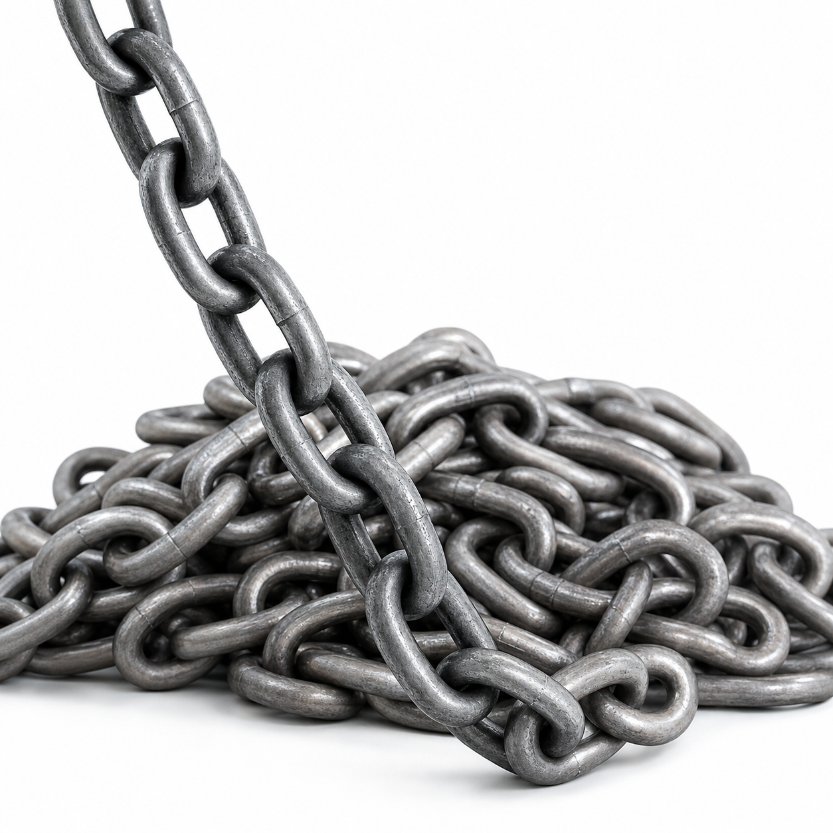
Heat treatment is what turns alloy steel into a higher grade - or a harder-wearing surface. What quenching, tempering and case hardening each do to a chain.
Insights
Technical guides and buying notes on chain grades, wire rope construction, surface treatment, lifting safety and rigging selection.

Heat treatment is what turns alloy steel into a higher grade - or a harder-wearing surface. What quenching, tempering and case hardening each do to a chain.

Three load figures sit behind every rated chain, and they are not interchangeable. What working load, proof load and breaking load each mean, and where the safety factor fits.

A grade marking is not decoration. What the stamps on a chain are for, what a lifting chain should carry, and what an unmarked chain is telling you.

A certificate is only useful if it answers the questions a buyer actually has. What a chain test certificate should state, and what to ask for when it does not.

Slurry, grit and constant running make barn cleaning one of the hardest duties for chain. Why these chains fail early, and what to specify so they do not.

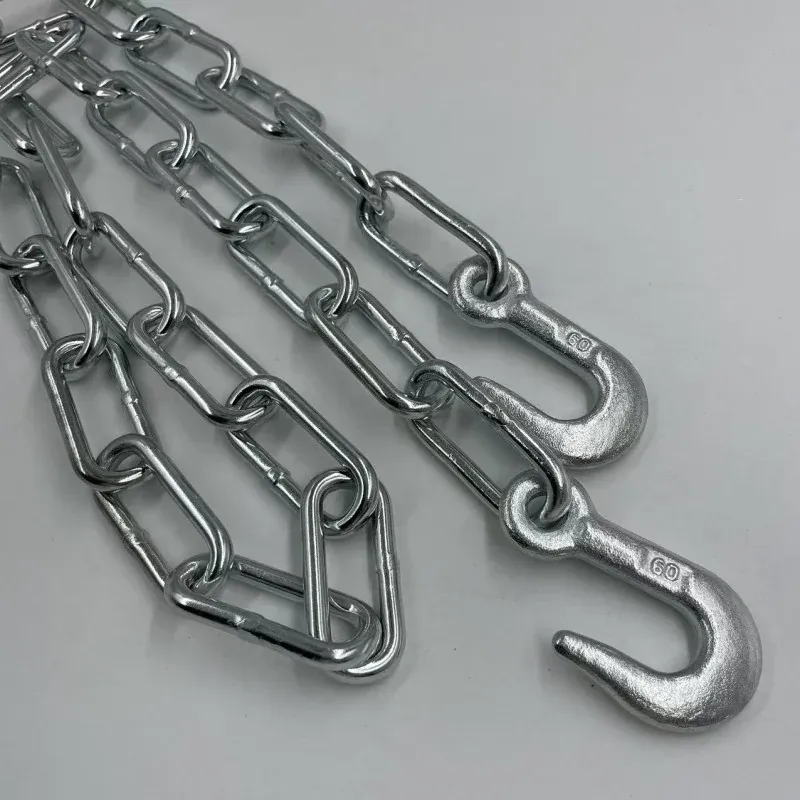
A general purpose chain form sold by size and length, usually low carbon steel and zinc plated. What it is for, how to specify it, and why it is not a lifting chain.

An egg conveyor asks for a chain that runs smoothly, cleans easily and does not damage what it carries. What that means for material, finish and running quality.